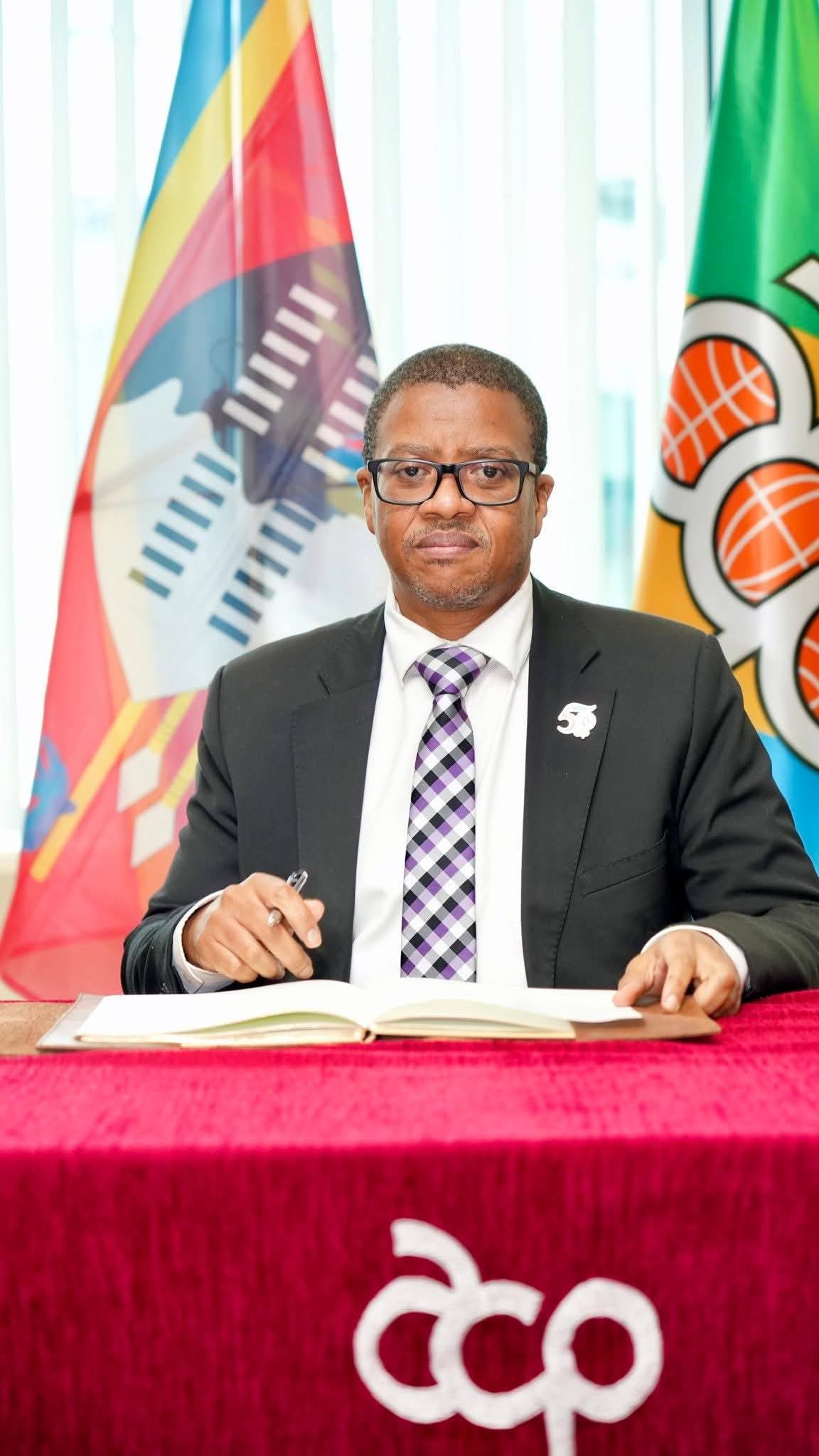
BEIJING — Zimbabwe has received the Gold award in the Internet and Media category at the 2026 Chinese Tourist Welcome (CTW) Awards, in recognition of its destination marketing and tourism engagement with China.
The award was conferred by the China Outbound Tourism Research Institute (COTRI) during an online ceremony held on July 9.
According to the Ministry of Tourism and Hospitality Industry, the award followed a year-long campaign that included a Key Opinion Leader (KOL) programme. Influential Chinese content creators visited Zimbabwe and published content on platforms including Douyin, WeChat, and Xiaohongshu showcasing the country’s natural attractions and cultural sites.
The ministry also cited a Victoria Falls advertorial campaign displayed on China’s national high-speed rail network, which it said reached hundreds of millions of passengers over the past year.
The ministry reported that Chinese tourist arrivals to Zimbabwe surpassed 50,000 in 2025. It added that arrivals in the first quarter of 2026 reached 10,366, a 24% increase from 8,373 in the same period in 2025.
Tourism Minister Barbra Rwodzi said the award was “a proud moment and a testament to Zimbabwe’s strategic focus on the Chinese market.” She attributed the result to “collaborative efforts with partners and the hospitality of Zimbabweans” and reiterated the government’s “commitment to unlocking the full potential of Sino-Zimbabwe tourism cooperation.”
COTRI CEO Prof. Dr. Wolfgang Georg Arlt said Chinese traveler expectations have evolved since the pandemic, with many “seeking closer contact with local cultures and nature.”
Established in 2004, the CTW Awards recognize destinations and service providers in five categories: innovation, service quality, marketing, media/internet, and overall performance. Winners are selected based on industry data, expert assessment, and traveler feedback.
Officials said the award reflects the marketing approach of the Ministry of Tourism and Hospitality Industry and the Zimbabwe Tourism Authority.
HARARE — Etihad Airways and Fastjet Zimbabwe have signed a Memorandum of Understanding to establish an interline, codeshare and frequent flyer partnership, a development expected to drive tourism growth by improving air connectivity to Zimbabwe’s key destinations.
The agreement was signed in Harare on Tuesday. Under the partnership, passengers will be able to book a single ticket and check baggage through to final destinations on both airlines. Sales under the new arrangement will commence on August 24 2026.
The collaboration will enable travellers on Etihad to connect onward on Fastjet Zimbabwe to Bulawayo, Victoria Falls and Johannesburg on one ticket. The deal also builds on Etihad’s upcoming direct service between Abu Dhabi and Harare, scheduled to launch on March 24 2027.
The new route will extend the airline’s reach beyond the capital to Bulawayo and Victoria Falls, giving guests across Etihad’s network a direct way to access Zimbabwe’s major tourism destinations.
Victoria Falls, one of the Seven Natural Wonders of the World, is expected to be a major beneficiary as international visitors will now have seamless connections from more than 70 global destinations via Abu Dhabi.
Speaking after the signing, Etihad Airways Chief Revenue & Commercial Officer Arik De, said Africa remains central to the airline’s growth strategy. “Africa is an important part of Etihad’s growth, and partnerships like this one with Fastjet Zimbabwe are how we extend our reach and open up more of the continent for our guests. From Harare to Victoria Falls, travellers can now plan their journey across Zimbabwe on a single ticket, and we look forward to building on this cooperation,” De said.
Fastjet Zimbabwe Chief Executive said the partnership positions Zimbabwe as a more accessible destination for long-haul source markets in Europe, Asia, the Middle East and Australia. Industry stakeholders noted that the agreement will support Government’s tourism growth targets by reducing travel time, lowering costs for visitors, and increasing hotel occupancy, tour bookings and foreign currency inflows.
As part of the MoU, Fastjet Zimbabwe will become Etihad Guest’s 32nd airline partner, with guests set to enjoy frequent flyer benefits across both carriers in the future.
The partnership aligns with Government’s ongoing strategy to open Zimbabwe’s skies and expand international aviation links.
During the International Civil Aviation Negotiation Event in 2025, Zimbabwe signed several air service agreements aimed at boosting tourism and trade through code-sharing and airline cooperation.
Fastjet Zimbabwe currently operates domestic flights between Harare, Bulawayo and Victoria Falls, and regional services to Johannesburg. Etihad Airways operates daily flights from Abu Dhabi to major global hubs.
The Ministry of Tourism and Hospitality Industry welcomed the agreement, saying improved connectivity is key to making Zimbabwe a competitive destination and to growing arrivals ahead of the peak tourism season.
HARARE – Tanganda Tea Company Limited’s long-serving Finance Director Henry Nemaire has resigned, effective June 30 2026, Express Mail Zim can report .
The ZSE-listed agro-industrial firm announced i n a “Notice to Shareholders” dated July 7 2026.
The Board said Nemaire stepped down “to pursue other opportunities” after 25 years with the company.
Nemaire joined Tanganda in 2000 as Chief Internal Auditor and was appointed to the Board as Finance Director in 2010.
“The Company extends its appreciation to Henry for his dedicated service, commitment and valuable contribution over the course of his tenure and wishes him every success in his future endeavours,” Company Secretary Hillary Kufakunesu said on behalf of the Board.
The exit leaves a key vacancy at Tanganda as the producer of tea, macadamias, avocados and coffee contends with rising input costs, foreign currency constraints and climate volatility affecting Zimbabwe’s agriculture sector.
Tanganda is one of Zimbabwe’s largest horticulture exporters and a significant foreign currency earner. The company trades on the Zimbabwe Stock Exchange under ticker http://TANG.ZW.
Outgoing FD Nemaire
Analysts said the departure comes at a sensitive time with year-end reporting approaching and will be closely watched by investors for continuity in financial management.
HARARE– Government has announced that Air Zimbabwe will resume direct flights between Harare and London by the end of July 2026, Express Mail Zim can report.
The announcement was made by the Minister of Transport and Infrastructural Development, Felix Mhona, following a Cabinet briefing on the airline’s turnaround strategy on Tuesday.
This marks the return of the route after a 14-year hiatus since it was suspended in 2012.
“The President’s engagement and re-engagement policy continues to open doors and rebuild vital international bridges for our nation,” Mhona said. “The nation is advised that the airline will resume operations by the end of July 2026.”
The service will be operated with a leased Airbus A330-300 from Plus Ultra of Spain, with capacity for 302 passengers in a 30 business class and 272 economy configuration. Air Zimbabwe will operate three weekly flights on Wednesdays, Fridays and Sundays.
The revival has been driven by the Mutapa Investment Fund, the state’s sovereign wealth fund and sole shareholder of the airline.
MIF chief executive Dr John Mangudya said the fund was focused on restoring state enterprises to productivity.
“That is why the Mutapa Investment Fund was formed to transform these state-owned enterprises so that they can go back to the glory years by ensuring that we sweat their assets and transform the way they are doing business,” Mangudya said.
The direct route is projected to strengthen connectivity with Zimbabwe’s diaspora in the United Kingdom, boost tourism, and provide a direct export channel for the country’s horticulture sector.
Government said the development is in line with Vision 2030 objectives of economic growth, investment promotion, and improved ease of doing business.
MAZOWE — Government has laid plans to set up a School of Excellence in Tourism as part of its human capacity building drive and efforts to strengthen service standards by industry practitioners in line with ever-changing global trends, Express Mail Zim can report.
This strategic initiative is expected to reshape the tourism and hospitality sector of Zimbabwe, alive to the fact that the bedrock of any thriving tourist destination lies not just in its natural attractions, but in the caliber of its human capital.
In a country blessed with iconic landmarks like Victoria Falls and rich cultural heritage, the establishment of this institution holds critical importance of nurturing a workforce that can deliver world-class service, thereby enhancing the nation’s competitive edge on the global stage.
The School of Excellence is envisioned as a pivotal engine for national economic development, as tourism remains a key pillar for foreign currency earnings and job creation and its success is intrinsically linked to the proficiency and adaptability of its practitioners.
Law Number 1: Deputy Minister of Tourism and Hospitality Hon. Tongai Mnangagwa pays undivided attention as his boss Hon Rwodzi delivers strategy issues to delegates in Mazowe on Monday
Suffice to say it made a 10 percent contribution to the national Gross Domestic Product according to latest statistics.
This was revealed by the Minister of Tourism and Hospitality Industry, Barbara Rwodzi in her engagement with delegates at the National Tourism Strategy Stakeholders’ Consultation workshop (2026-2030) held in Mazowe on Monday.
“We want to catch up with changing trends and improve excellence in all tourism and hospitality sectors. As such we will have a school of excellence in tourism to keep practitioners abreast with changing trends and up the quality of service to push tourism growth,” said Rwodzi.
Tourism Minister Barbara Rwodzi speaks to journalists outside Baradzanwa Culture Centre Conference Room on Monday
The emphasis on continuous learning is further amplified through mandatory refresher courses for existing practitioners, a policy that acknowledges the dynamic nature of the industry where guest expectations and technological advancements evolve rapidly.
These courses are not merely an academic formality but a strategic tool to ensure that the workforce remains relevant, skilled and capable of exceeding the sophisticated demands of modern travelers from digital check-ins to personalized experiential offerings.
“We will have compulsory refresher courses because trends are changing. We can’t have a student as a manager at a hospitality institution where he or she might fail to cope with pressure, but with human capital development we will have wholesome quality service that lures tourists,”* she said.
Linking training to foreign policy, Minister Rwodzi said tourism must be used as a tool of “soft diplomacy” to rebrand Zimbabwe globally.
“Tourism is soft diplomacy. When a tourist comes here and gets excellent service, they go back and tell 10 people. That is how we market Brand Zimbabwe,”* Rwodzi told delegates.
“We need to sell our story. Zimbabwe is open for business and we must use our culture, our people and our hospitality to win friends for the country.”
By institutionalizing lifelong learning, the country aims to eradicate service complacency and foster a culture of excellence that can significantly boost tourist arrivals, repeat visits and positive word-of-mouth, ultimately creating a virtuous cycle of industry growth and economic prosperity.
Beyond the immediate focus on education and training, Minister Rwodzi’s address at the Mazowe workshop painted a comprehensive picture of the government’s holistic vision for the sector, touching on critical areas such as marketing, product diversification and stakeholder collaboration in a “whole of government and society” approach.
She emphasized the need for a robust and aggressive marketing strategy to reposition Destination Zimbabwe, highlighting that while the country is open for business, the narrative must be compelling and consistent to attract both regional and international markets.
“We need to aggressively market our destination and ensure that our products are competitive,”Rwodzi said.
She also zeroed in on the necessity of showcasing the country’s unique selling points, from its pristine wildlife and stunning landscapes to its vibrant culture and warm hospitality.
Furthermore, she stressed the importance of product diversification to extend the tourist season and spread economic benefits across all provinces, encouraging the development of niche tourism products such as cultural tourism, heritage trails, and MICE (Meetings, Incentives, Conference, and Exhibitions) tourism.
In that regard, this year’s Sanganayi/Hlanganani World Expo will be held in Masvingo as part of ‘devolution’ in tourism destinations.
“The world usually only talks about Victoria Falls but Zimbabwe has lots of wonders like the Great Zimbabwe and so on and this year we moved Sanganai/Hlanganani to Masvingo.
“Its gonna (sic) be a big and unique event where we will host a tertiary institutions sports tournament a week before and the winners will neet the national teams in all sporting disciplines.This is inline with boosting our sports tourism,” she told delegates.
Rwodzi also reiterated government’s commitment to creating an enabling environment for investment, streamlining regulatory frameworks and fostering public-private partnerships to unlock the full potential of the sector.
She highlighted that the success of the strategy hinges on a whole-of-government approach, where all ministries and departments work in synergy to address infrastructure deficits, improve ease of doing business and ensure the safety and security of tourists.
“Tourism is a multi-sectoral industry; we need collaboration from all stakeholders, including local communities, to realize our vision,” she said.
She called for collective ownership of the strategy to ensure its successful implementation and the realization of a US$5 billion tourism economy by 2030.
The deliberations at Mazowe thus painted a forward looking roadmap, with the School of Excellence, mandatory refresher courses
and soft diplomacy serving as the foundational pillars for a transformed, resilient and prosperous tourism industry that can significantly contribute to Zimbabwe’s wide socio-economic development goals under NDS2 as envisaged by President Mnangagwa ‘s vision.
MAZOWE — Houseboat operators on Lake Kariba are calling on the government to establish a one-stop shop for registration and licensing procedures, citing the cumbersome regulatory framework that requires them to navigate multiple government offices to meet over 20 statutory obligations before they can legally operate, Express Mail Zim can report.
The operators who aired their challenges at the National Tourism Sector Strategy Stakeholders Consultation Workshop held at Baradzanwa Cultural Village on Monday, argued that the current fragmented system is stifling business growth and deterring potential investors from entering the lake tourism sector, which they say has immense potential to contribute to Zimbabwe’s economic development.
“There are 21 statutory obligations for one to operate a houseboat and one has to move from office to office,” said Cephas Shonhiwa chairperson of Kariba Tourism and Business Indaba .
Deputy Minister of Tourism and Hospitality Hon Tongai Mnangagwa follows proceedings
He expressed frustration at the bureaucratic hurdles that characterise the current licensing regime.
“There is a need for a one-stop shop and duplication of requirements from ZimParks, EMA, ZTA and so forth,” he added.
The operators’ concerns come amid government efforts to streamline tourism sector regulation. The Tourism and Hospitality Industry Ministry has said it is working to consolidate permits and simplify the licensing process for operators, as it moves to facilitate the growth and sustainability of the tourism sector. Under new reforms, the Zimbabwe Tourism Authority has been designated as the primary regulatory authority for all tourism businesses.
Inclusivity:ZTA officials brainstorming with stakeholders at the consultative seminar at Baradzanwa Culture Village on Monday
Tourism and Hospitality Industry Minister Barbara Rwodzi acknowledged the challenges operators face, saying that licensing processes have previously forced operators from Masvingo, Hwange, or Binga to travel long distances to Harare.
“Time and money are being lost as people pursue the process, repeating the same procedures now and again.
One-stop-shops are the best way forward” as part of the government’s ease of doing business drive.
The government has taken concrete steps to address the cost burden on operators. Finance, Economic Development and Investment Promotion Minister Mthuli Ncube recently announced a package of Ease of Doing Business reforms targeting the tourism sector in Statutory Instrument 27 of 2026, including the scrapping of the US$600 annual Commercial Boat Permit and a 50 percent cut to the Houseboat Permit, now US$1,250, down from US$2,500. The External Tour Operators Licence was also reduced from US$3,000 to US$1,500. All local authority licence fees were also reduced by 50 percent.
Despite these fee reductions, operators maintain that the administrative burden remains a significant obstacle. According to operators, a permit to operate a boat from the Zimbabwe Parks and Wildlife Management Authority costs about US$1,500, while other statutory fees including those from the Zimbabwe Tourism Authority and the Postal and Telecommunications Regulatory Authority add to the total cost. These costs, combined with the time lost travelling between offices, have been blamed for the high charges for tourism activities in Kariba. The ZTA has set boat and houseboat registration fees at US$300 under the new schedule.
The houseboat industry plays a vital role in both local and international tourism in Zimbabwe. Lake Kariba, one of southern Africa’s most iconic water bodies, draws thousands of tourists annually, with houseboat charters forming a cornerstone of the lake’s tourism offering. Tourism is the main economic activity in Kariba, creating jobs and sustaining livelihoods for many households.
The lake’s fleet includes vessels ranging from four-berth houseboats to luxury craft with 18 or more cabins, each staffed by captains, cooks and deck hands.
For international visitors, houseboat holidays on Lake Kariba offer a signature African experience with slow, serene journeys through wild, untouched landscapes where travellers can spot elephants, crocodiles and hippos along the shore.
The lake’s warm, year-round climate appeals to international travellers and its proximity to major regional tourism circuits including Victoria Falls, Hwange, and Livingstone enhances its appeal.
Meanwhile, the global cruise industry is valued at over US$64 billion, and Zimbabwe has the potential to leverage Lake Kariba as a competitive cruise and lake tourism powerhouse.
Locally, houseboats provide employment for communities around the lake and support a value chain that includes catering, fuel supplies, boat servicing and transfers. The vessels are popular for family holidays, fishing expeditions and even corporate events. However, operators warn that without meaningful regulatory reform, the industry’s potential will remain unrealised.
The operators’ call for a one-stop shop aligns with the government’s stated commitment to improving the ease of doing business. Cabinet has approved the review of the boating services value chain specifically to “remove unjustifiable licences and permits” and “streamline duplicative and overlapping licences”. As one operator summed up the frustration shared by many in the industry: “We are not asking for favours. We are asking for efficiency so that we can focus on growing our businesses and contributing to the economy.”
Harare- STATE-owned mobile operator NetOne has expanded its network coverage to between 85 and 90 percent of Zimbabwe’s population, Group Chief Executive Engineer Raphael Mushanawani said, framing digital infrastructure as a driver of national economic productivity.
Speaking at the Mid-Term Economic Review and High-Level Policy Dialogue in Harare this week, Eng Mushanawani said the company’s subscriber base now exceeds 4.1 million users citing ongoing investment in network modernisation and resilience.
“These are not just investments in connectivity. They are investments in national productivity,” Mushanawani said.
“Our philosophy is simple: Every investment in network expansion must translate into economic expansion.”
The figures align with data from the Postal and Telecommunications Regulatory Authority of Zimbabwe (POTRAZ).
NetOne recorded 4,
101,492 active subscribers in the fourth quarter of 2025, up from 4,062,894 in the previous quarter.
The operator remains Zimbabwe’s second-largest mobile network.
NetOne’s coverage claims are consistent with earlier statements. At the company’s annual general meeting, Mushanawani said 2G coverage stood at 87% of the population, 3G at 76%, and 4G at 41%.
The operator has deployed 264 4G/LTE sites nationwide and launched 5G and eSIM services in 2024.
He cited rural reach as NetOne’s competitive edge, and said the company accounts for 46.14% of Zimbabwe’s rural base stations.
“Our competitive advantage lies in our rural coverage with quality network,” he said.
Mushanawani said improving economic conditions, including a drop in annual ZiG inflation to 4.1% in January 2026 are increasing demand for voice, data and digital financial services. NetOne is rolling out ICT labs in rural schools, community hubs and 4G expansion in underserved districts as part of its “Digitalise Zimbabwe” initiatives.
The company positions itself as a “co-author” of Zimbabwe’s digital transformation agenda under the Fourth Industrial Revolution.
HARARE —CERNIC Holdings Chief Executive and Zanu PF legislator Hon. Chamu Chiwanza has issued a strong rebuke against the use of sexual favours for professional advancement, calling on female entrepreneurs to reject “dependency syndrome” and instead build legitimate social capital.
Speaking at the Cultured Republic Cocktails and Conversations networking event at Denga, Highland Park, on Tuesday evening, Hon. Chiwanza said long-term business success is rooted in hard work, formalization and meritocracy not transactional relationships.
In a direct address to women navigating the corporate and business landscape, Chiwanza warned against pressure to trade personal dignity for professional gain. He stressed that capital should be pursued through established financial and government channels, not through the exploitation of one’s body.
“Do not be lured into sexual relationships by men in exchange for capital or resources,” Chiwanza said.
“Your business is not your body. Capital comes from contracts, from banks, from government programs, and from hard work. Protect your dignity. Build net worth, not dependencies. Formalize, document, and compete on merit.”
Chiwanza also challenged the wider business community to dismantle gender stereotypes. He urged men to abandon outdated attitudes that relegate women to subordinate roles and called for a more equitable business environment.
“To the women here, do not see yourselves as inferior to men in business,” he said.
“To the men, stop treating women entrepreneurs like subordinates. We are building the same economy.”
He added that the growth of the national economy depends on the professionalism of its participants. He urged entrepreneurs to prioritize formal business registration and maintain rigorous financial records to access credit facilities and national empowerment programs.
The Cocktails and Conversations platform serves as a networking hub for the local business community, aiming to foster the exchange of ideas to support Zimbabwe’s economic recovery.
The Eswatini Investment Promotion Authority (EIPA) has launched a regional activation drive aimed at securing meaningful investment commitments for the upcoming Eswatini Investment Conference, with chief executive Sibani Mngomezulu stressing the need for early partner alignment to ensure tangible outcomes.
Addressing delegates at the Activation Roadshow for the second Eswatini Investment Conference (EIC 2026) in Harare on Thursday, Mngomezulu said the engagement was designed to deepen regional collaboration and position Eswatini as a preferred investment destination.
“Today is really about connection. It is about bringing partners together early, aligning expectations, and creating a shared vision for what we want this conference to achieve,” he said.
The conference, scheduled for July 29 to 31, is expected to build on the inaugural event by attracting investors, financiers and business leaders from across the region and beyond.
Mngomezulu described the conference as more than a business gathering, saying it was intended to create tangible investment opportunities.
“This brief information session will provide a guide on how to participate in the Eswatini Investment Conference 2026. The Conference… is a real platform where vision meets opportunity, and ideas will be transformed into reality.”
He said the Harare roadshow reflected Eswatini’s commitment to strengthening ties with regional and international partners.
“Today, we are not just here to talk about the investment conference; we are here to ignite partnerships, to look at Eswatini as a strategic investment destination.”
Mngomezulu said the turnout demonstrated the strength of Eswatini’s growing international relationships.
“Your presence here speaks to the strength of the relationships that Eswatini continues to build with the international community and our neighbours. More importantly, it reflects a shared commitment to partnership, collaboration, and the desire to share a common future.”
He said EIPA was counting on stakeholders to broaden the conference’s reach and enhance its impact.
“We anticipate that this conference will build on the success of the previous conference. As a host institution for the conference, we are cognisant of the value that it will take partners like you to play a role in broadening our reach and strengthening our engagement with the international business community.”
The chief executive said EIC 2026 would provide a platform to showcase Eswatini’s investment potential while connecting projects with investors capable of financing them.
“For us, this is not just an event, it is an opportunity. An opportunity to showcase the Kingdom’s potential, to highlight priority sectors, and most importantly, to facilitate meaningful engagements that translate into quality investment outcomes.”
Mngomezulu urged delegates to become ambassadors for the conference by promoting the event within their business networks.
“We want to request for your specific roles as ambassadors for our conference as well as key delegates. We see you as key enablers in helping us reach the right audiences, attract quality participation, and build lasting economic linkages.”
He added that EIPA had launched a dedicated conference website to support stakeholder engagement and participation.
“Today’s session is therefore both an update and an invitation to work with us, to collaborate with us, and to shape the success of EIC 2026 together.”
Mngomezulu said the conference was guided by a clear objective of linking investment opportunities with capital to generate sustainable economic growth.
“As we prepare for EIC 2026, we are guided by a simple but powerful idea to connect investors and funders with projects. For us, this means more than facilitating investment. It means bringing together the right partners, the right ideas, and the right environment to unlock meaningful and sustainable growth.”
He said Eswatini offered strong opportunities across multiple sectors and appealed for continued regional support to make the conference a success.
“Eswatini offers real opportunities across key sectors… We kindly therefore beseech you to work with us to make this event a catalyst for quality investment, real partnerships, and lasting value.”
Harare- ZIMBABWE has commissioned a specialised honey testing laboratory aimed at unlocking European and international market opportunities for the country’s honey industry, officials announced on Wednesday.
The state-of-the-art facility, established under the Zimbabwe Bee for Economic Empowerment (Zim-BEE) Project, will provide analytical services including pesticide residue analysis, honey adulteration detection, and verification of botanical and geographical origin in line with Codex Alimentarius standards.
The EUR 1.5 million initiative is funded by the Trade Capacity-Building Program of the Agence Française de Développement (AFD) and implemented
by Expertise France in partnership with ZimTrade, Zimbabwe’s national trade development organisation.
ZimTrade Chief Executive Allan Majuru said the facility addresses growing demands from international buyers who now require certified laboratory reports rather than general quality assurances.
“International buyers no longer rely solely on general quality assurances but require certified laboratory reports that verify product integrity,” Majuru said.
“The establishment of this laboratory will enable locally produced honey to meet the requirements of major international markets while supporting rural communities to participate more effectively in global trade.”
The Department of Veterinary Services will manage the laboratory as the national competent authority, providing testing services aligned with international market requirements.
Since its launch on March 3 2025, the Zim-BEE Project has supported more than 650 beekeepers across production clusters in Matabeleland North, Mashonaland East and Manicaland through training in modern apiculture techniques, business management, and improved beekeeping equipment.
AFD Project Manager Lou Cambarrat-Roux said the initiative demonstrates the potential of the honey sector to drive economic resilience.
“Through this grant, AFD is proud to support the Zimbabwean honey sector that has a strong capacity to be a lever for economic resilience and development,” Cambarrat-Roux said.
“The Zim-BEE project highlights the importance of building sustainable value chains, paving the way for future high-impact commercial partnerships that deliver positive outcomes for both people and the planet.”
The laboratory commissioning marks a milestone in developing Zimbabwe’s national quality infrastructure, with officials expecting the facility to support increased honey exports and improve incomes for local beekeeping communities.
The Zim-BEE Project, running through to 2027, includes Training-of-Trainers programmes in apiculture, support for developing a National Residue Monitoring Plan and the establishment of the testing facility. The initiative aims to strengthen Zimbabwe’s prospects of expanding honey exports to international markets.