Category: Harare Metropolitan

  • Harare residents enjoy a winter of running water.

    Harare residents enjoy a winter of running water.

    Staff Reporter

    For over a decade, Harare’s winter nights told a story of endurance.

    Thousands would rise as early as 0400 hours to queue at boreholes, braving the cold to secure water.

    This winter, the story is different, multitudes across the capital are heaving a collective sigh of relief as taps flow with a consistency unthinkable just years ago.

    Yet even as residents celebrate, a legal storm is brewing.

    On 15 June, the Zimbabwe Lawyers for Human Rights filed a High Court application seeking to suspend the prepaid water meter rollout, arguing it is unlawful under the Harare Water By‑Laws of 1913 and the Urban Councils Act.

    The ZLHR contends that the city cannot introduce a new billing regime without amending existing by‑laws through proper legislative processes.

    But on 16 June, the Zimbabwe National Organisation of Associations and Residents Trust (ZNOART) issued a statement firmly backing the initiative.

    “Prepaid water systems have the potential to improve revenue collection, reduce billing disputes, eliminate estimated charges, minimise water losses, encourage responsible water consumption and generate resources necessary for infrastructure rehabilitation, maintenance and expansion,” said ZNOART National Chairman Shepherd Chikomba.

    The voices of residents themselves tell a story of profound gratitude.

    In Warren Park 1, Elvis Mukawa said, “I am delighted by the fact that as residents we will only get water that we paid for, which means there are no fears of being overcharged.”

    In Westlea, Sharon Mhlanga echoed, “We are happy with the prepaid water meters as they will make residents responsible, at the same time people will receive what they would have paid for, thus reducing estimates which most residents did not agree with.”

    Fellow Westlea resident Tinashe Moyo added, “Now, I only pay for what I actually use. It brings fairness back to the community.”

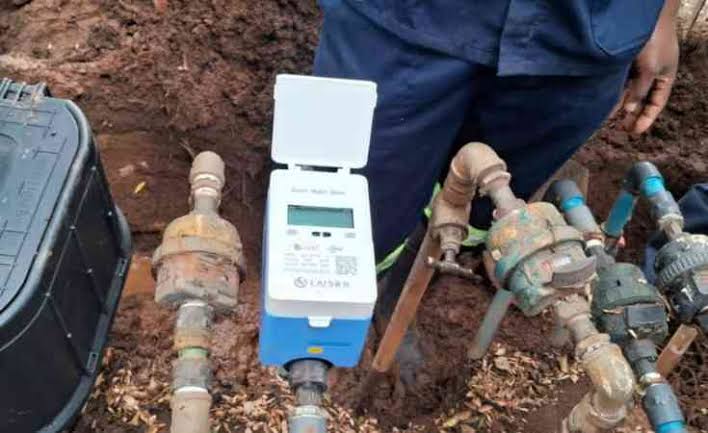
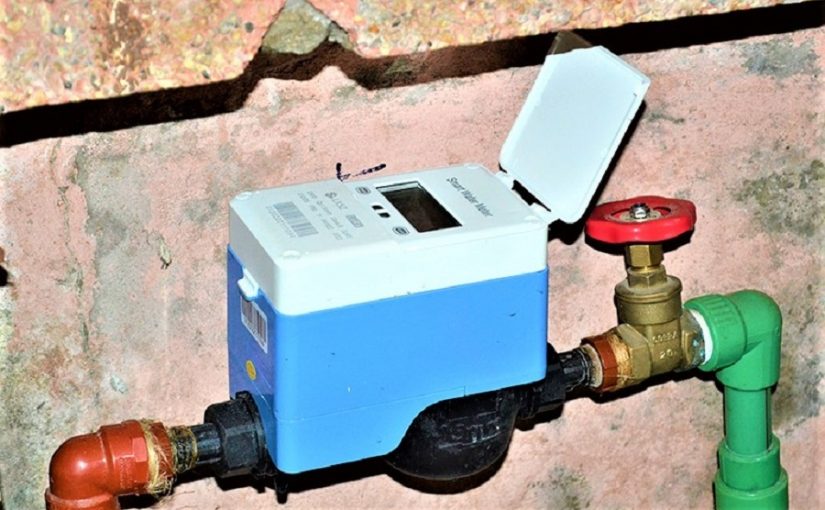
    The system, similar to prepaid electricity, allows residents to buy water credits via mobile platforms, eliminating contentious estimated bills.

    More than 23 000 smart meters have been installed, with suburbs including Warren Park, Westlea, Belvedere, Mabelreign and the Avenues already benefiting.

    Over 21 000 meters and 20 kilometres of new piping have been laid, and Helcraw Water is replacing 106 kilometres of ageing pipes.

    Harare Mayor Jacob Mafume has called it “the best solution for Harare residents.”

    ZNOART Chairman the human rights argument head‑on:

    “Water is a fundamental human right. However, that right can only be fully realised when local authorities possess the financial and technical capacity to treat, distribute, maintain and expand water infrastructure. Sustainable financing mechanisms are therefore essential,” he said.

    “As residents’ representatives, we believe that Public‑Private Partnerships (PPPs) offer a practical and sustainable model for improving service delivery.”

    The juxtaposition is stark.

    In the same week that ZLHR argues prepaid meters commercialise a basic right, residents in suburbs like Westlea and Warren Park celebrate a winter of running water, something many had not experienced in decades.

    For those who once spent freezing pre‑dawn hours queuing at boreholes, this winter has brought the simple dignity of turning on a tap and finding water.

    As one elderly resident reflected on four decades of struggle, “For all the years since I started staying here, more than 40 years ago, this is the first time I have managed to see water coming from our taps.”

    Whether the courts will halt the rollout remains to be seen.

    But for now, across Harare’s sprawling suburbs, the queues at boreholes have dwindled, the early morning chills no longer carry the dread of a waterless day, and residents are quietly enjoying a winter that feels, for the first time in years, like a season of hope.
  • Harare residents enjoy a winter of running water- despite ZHLR legal aul

    Staff Reporter

    For over a decade, Harare’s winter nights told a story of endurance.

    Thousands would rise as early as 0400 hours to queue at boreholes, braving the cold to secure water.

    This winter, the story is different, multitudes across the capital are heaving a collective sigh of relief as taps flow with a consistency unthinkable just years ago.

    Yet even as residents celebrate, a legal storm is brewing.

    On 15 June, the Zimbabwe Lawyers for Human Rights filed a High Court application seeking to suspend the prepaid water meter rollout, arguing it is unlawful under the Harare Water By‑Laws of 1913 and the Urban Councils Act.

    The ZLHR contends that the city cannot introduce a new billing regime without amending existing by‑laws through proper legislative processes.

    But on 16 June, the Zimbabwe National Organisation of Associations and Residents Trust (ZNOART) issued a statement firmly backing the initiative.

    “Prepaid water systems have the potential to improve revenue collection, reduce billing disputes, eliminate estimated charges, minimise water losses, encourage responsible water consumption and generate resources necessary for infrastructure rehabilitation, maintenance and expansion,” said ZNOART National Chairman Shepherd Chikomba.

    The voices of residents themselves tell a story of profound gratitude.

    In Warren Park 1, Elvis Mukawa said, “I am delighted by the fact that as residents we will only get water that we paid for, which means there are no fears of being overcharged.”

    In Westlea, Sharon Mhlanga echoed, “We are happy with the prepaid water meters as they will make residents responsible, at the same time people will receive what they would have paid for, thus reducing estimates which most residents did not agree with.”

    Fellow Westlea resident Tinashe Moyo added, “Now, I only pay for what I actually use. It brings fairness back to the community.”

    The system, similar to prepaid electricity, allows residents to buy water credits via mobile platforms, eliminating contentious estimated bills.

    More than 23 000 smart meters have been installed, with suburbs including Warren Park, Westlea, Belvedere, Mabelreign and the Avenues already benefiting.

    Over 21 000 meters and 20 kilometres of new piping have been laid, and Helcraw Water is replacing 106 kilometres of ageing pipes.

    Harare Mayor Jacob Mafume has called it “the best solution for Harare residents.”

    ZNOART Chairman the human rights argument head‑on:

    “Water is a fundamental human right. However, that right can only be fully realised when local authorities possess the financial and technical capacity to treat, distribute, maintain and expand water infrastructure. Sustainable financing mechanisms are therefore essential,” he said.

    “As residents’ representatives, we believe that Public‑Private Partnerships (PPPs) offer a practical and sustainable model for improving service delivery.”

    The juxtaposition is stark.

    In the same week that ZLHR argues prepaid meters commercialise a basic right, residents in suburbs like Westlea and Warren Park celebrate a winter of running water, something many had not experienced in decades.

    For those who once spent freezing pre‑dawn hours queuing at boreholes, this winter has brought the simple dignity of turning on a tap and finding water.

    As one elderly resident reflected on four decades of struggle, “For all the years since I started staying here, more than 40 years ago, this is the first time I have managed to see water coming from our taps.”

    Whether the courts will halt the rollout remains to be seen.

    But for now, across Harare’s sprawling suburbs, the queues at boreholes have dwindled, the early morning chills no longer carry the dread of a waterless day, and residents are quietly enjoying a winter that feels, for the first time in years, like a season of hope.

  • Budiriro sewer pond deaths lead to arrest of 4 City Officials

    Budiriro sewer pond deaths lead to arrest of 4 City Officials

    By Nyasha Chuma

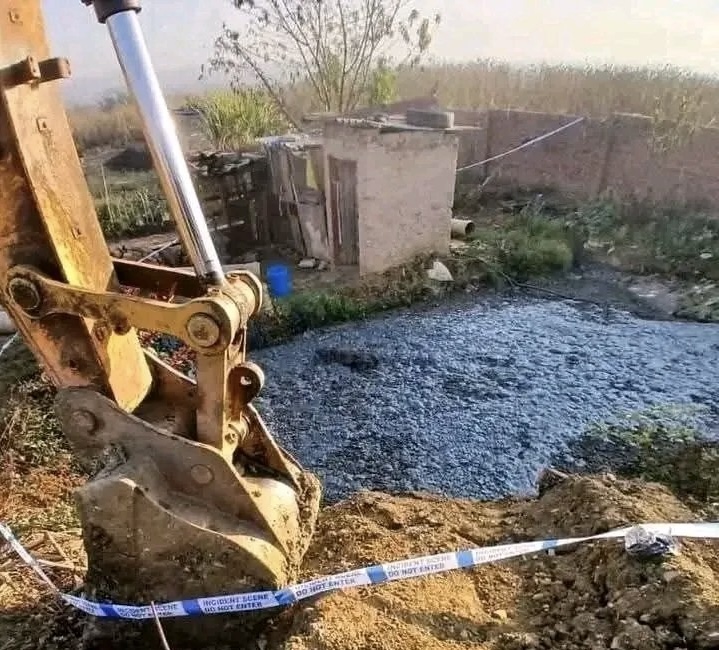
    HARARE – Police have arrested four City of Harare Council officials on negligence charges following the drowning deaths of three people in a sewer pond in Budiriro last week.

    National police spokesman Commissioner Paul Nyathi confirmed the four were taken into custody for “negligently causing the three deaths through acts of omission and commission leading to the tragic incident.”

    Those arrested are Engineer Tapiwa Richard Kunyadini, 58; Moses Dicko, 57; Thomas Rwakatiwana, 52; and Tineyi Chihwai, 41.

    According to investigators, the victims died hours apart after falling into an open sewer pond left exposed by incomplete excavation work carried out by the local authority.

    Police have released the names of the deceased, all from New Stands, Budiriro 3 Extension. They are 19-year-old Saul Karakadzai, 17-year-old Talita Munda, and 34-year-old Vimbanashe Shalom Chihota.

    The drownings occurred on June 7.

  • Untitled post 6417

    Staff Reporter

    For years, the rhythmic squeak of empty buckets and the shuffle of tired feet before dawn was the only soundtrack Martha Dube knew.

    Today, she turns a brass tap in her kitchen and dances to a different beat: the gush of clean, affordable water.

    “I used to wake up at 3 AM to fight for a spot at the communal borehole,” says Dube, 58, a mother of five. “Now, I wake up, swipe my card, and water sings from my tap. It is not just water, iti s life that has been returned to us.”

    That return is courtesy of a bold partnership between Helcraw Private Company and the Harare City Council, which has rolled out prepaid water meters across the long-neglected suburb of New Malborough.

    The initiative, aimed at modernising water availability, has turned a parched, frustrated community into a model of reliable access.

    Before the meters, residents endured weeks of dry pipes, burst mains left unfixed, and illegal connections that drained the system dry.

    Those who could afford it paid extortionate prices to water vendors, often for dirty, unsafe supply.

    Now, a simple top-up at local vending stations puts clean, treated water directly into household tanks.

    “We realised the old model was broken. Debt was high, leaks were everywhere, and residents had zero leverage,” explains a Helcraw project supervisor. “Prepaid meters give control back to the customer. You pay for what you use, no bills, no disputes, no dry months.”

    The transformation has been swift. Burst pipes are repaired within hours because every liter now generates revenue for maintenance. Illegal connections have plummeted.

    And for the first time in a decade, New Malborough’s children are drinking clean water from home taps, not fetching it from muddy puddles.

    “I have a garden again!” beams Chenai Moyo, 34, pointing to thriving tomatoes and kale. “My vegetables used to die. Now I water them every evening. That’s my small business revived, all because of a little plastic meter.”

    The jubilee is palpable on Every Street, where residents gathered last Saturday to sing and share tea—made from their own tap water. Elderly grandmothers, once forced to haul 20-liter jerrycans, now sit in shade with cups in hand.

    “The council and Helcraw have washed away our shame,” says Kudzai Ndlovu, 45, a shop owner. “We were a forgotten place. Now we feel like real citizens. Water is dignity—and we finally have it.”

    While some critics worry about affordability for the poorest, the partners have introduced a lifeline tariff and free emergency credits. For now, though, New Malborough is simply enjoying the flow.

    As dusk falls, Martha Dube fills a kettle and laughs. “No more queueing. No more bribes. Just water, on my terms. That’s modern. That’s freedom.”

    And across the suburb, taps keep running. The water of life has finally come home.

  • ZANU PF Chair Blames Harare Council for ‘Criminal Negligence’ After Three Drown in Open Sewer Pit

    ZANU PF Chair Blames Harare Council for ‘Criminal Negligence’ After Three Drown in Open Sewer Pit

    HARARE – ZANU PF Harare Provincial Chairman Cde Goodwills Masimirembwa has accused the Harare City Council of criminal negligence following the deaths of three people who drowned in an unguarded sewer pit in Budiriro 3, describing the tragedy as a direct consequence of the local authority’s failure to secure hazardous municipal works.

    The three bodies – a young woman, a second man, and a young man whose fall was initially reported – were retrieved from a sewage pond in the high-density suburb after emergency services raced to the scene late Monday. The recovery operation, led by the police sub-aqua unit and the City of Harare Fire Brigade, concluded in the early hours of Tuesday following a gruelling night search in treacherous conditions.

    Cde Masimirembwa, who visited the scene shortly after the bodies were recovered, expressed deep sorrow over what he termed a preventable catastrophe.

    “Our hearts are shattered for the families who have lost their loved ones in this unimaginable tragedy,” Cde Masimirembwa said. “No family should have to endure such pain, and we stand with you in this darkest hour, praying for strength and comfort.”

    But the provincial chairman quickly turned his ire on the municipality, alleging that the open excavation had been left exposed and unmarked for several months – a hazard that residents had repeatedly flagged to local leadership.

    Cde Goodwills Masimirembwa
    8

    “This is a clear case of criminal negligence by the Harare City Council,” Cde Masimirembwa charged. “How can a massive open pit be left unsecured in a residential area? The council has blood on its hands.”

    He called for an urgent audit of all municipal work sites across the capital and demanded that officials found responsible be held to account without delay.

    “These were precious lives of young people with dreams and futures. Their deaths did not have to happen,” he added.

    In response, Harare Mayor Jacob Mafume has ordered an urgent investigation into the incident, demanding a preliminary report within hours. Police have also launched an inquest, with detectives interviewing residents and council workers.

    In a brief statement, the City of Harare extended its condolences to the families of the three deceased, describing the deaths as “tragic and deeply regrettable”. The council promised to cooperate fully with investigators.

    However, residents of Budiriro 3 expressed outrage, saying they had warned the local authority on numerous occasions about the danger posed by the unfenced pit, which had filled with rainwater and sewage sludge.

    “We told them someone would die here,” said one neighbour, who asked not to be named for fear of reprisals. “They did nothing. Now three people are gone. It’s not an accident – it’s murder by neglect.”

    Despite his sharp criticism of the council, Cde Masimirembwa took time to praise the emergency personnel who worked through the night under perilous conditions.

    “I want to also extend my profound gratitude to the brave rescue teams,” he said. “The divers, the fire brigade, and the volunteers showed incredible courage working through the night under dangerous conditions to retrieve the victims, and we owe them our deepest thanks.”

    The recovery effort was hampered by thick mud and poor visibility, with divers forced to search by touch alone. One firefighter was treated for exhaustion at the scene.

    Cde Masimirembwa urged Government to step in and provide immediate burial assistance to the bereaved families, and to consider compensation for what he called “unlawful loss of life due to state-council negligence”.

    “The families must not be left to bear the cost of this tragedy alone,” he said. “This council must be made an example. If we do not act decisively, how many more will die before we learn?”

    The bodies have been taken to Harare’s central mortuary for post-mortem examinations. Family members were still being identified by police at the time of publication and formal identifications are expected later today.

    This latest incident has reignited long-standing concerns over the collapse of infrastructure maintenance in Harare, where unmarked trenches, open manholes and exposed stormwater drains have claimed multiple lives in recent years. Critics say the city council has routinely ignored safety protocols, prioritising political turf wars over basic service delivery.

  • City Parking boss earns PhD, lauded by ICDZ

    City Parking boss earns PhD, lauded by ICDZ

    By Nigel Pfunde

    HARARE – City Parking chief executive Simon Muzviyo has graduated with a Doctor of Philosophy (PhD) from the University of Zambia, adding a major academic milestone to his growing list of professional achievements.

    Dr Muzviyo’s PhD thesis focused on

    “The effect of innovation on financial performance of firms listed on the Zimbabwe Stock Exchange.”

    The City Parking boss is credited, among other things, with recently leading his company to ISO 9001:2015 certification as part of its wide modernisation drive and overseeing technological upgrades across the firm’s operations.

    Meanwhile, the Institute of Corporate Directors of Zimbabwe (ICDZ) issued a congratulatory message on Dr Muzviyo’s PhD attainment.

    “Your dedication, hard work and commitment to excellence continue to inspire many,” ICDZ said.

    “This remarkable achievement is a true testament to your vision, leadership and passion for professional growth.

    “Wishing you continued success as you lead, inspire and make an even greater impact in the business world and beyond.”

    Fountain of knowledge: Dr Muzviyo’ Kodak moment in front of the University of Zambia library

    Muzviyo’s doctorate comes at a time City Parking is pushing a modernisation agenda, with ISO certi?fication and tech-driven systems aimed at improving efficiency and customer service in Harare’s parking management .

  • Dr Nguwaya calls for residents’ behaviour change as Geo Pomona takes delivery of new trucks

    Dr Nguwaya calls for residents’ behaviour change as Geo Pomona takes delivery of new trucks


    By Nigel Pfunde

    HARARE – Geo Pomona Waste Management has added 10 new compactor and front loader trucks to its fleet, but its chief executive officer and executive chairman Dr Dilesh Nguwaya says equipment alone will not solve the capital’s waste problems without a shift in residents’ habits and behaviour,Express Mail Zim can report.

    Speaking after taking delivery of the trucks in Harare Dr Nguwaya said the new vehicles would bolster operations, while stressing that the company now wants to widen its focus to “triggering behaviour change” among residents.

    “First let me start by acknowledging our government led by President Emmerson Mnangagwa and thank him for supporting the waste management project. As you are aware we started in 2022 but as you can see we have made a lot of progress,” Dr Nguwaya said.

    He confirmed the latest consignment brings additional capacity to the firm’s operations. “Remember in December we procured 45 compactor trucks and these 10 trucks will complement the fleet we have, it’s 10 compactor trucks and front loaders.”

    However, Dr Nguwaya emphasized that expanding the fleet is only part of the solution. The company is now prioritizing public education on household waste handling.

    “What we need is behaviour change so that residents know how to manage waste until it gets here to us,” he said.

    Dr Nguwaya said Geo Pomona wants residents educated on managing waste “from the residence to the dumpsite,” highlighting that improper handling at household level undermines collection efforts even as truck capacity increases.

    Geo Pomona took over the Pomona dumpsite in 2022 under a government-backed waste management project. The company has since invested in landfill upgrades and collection equipment, including the 45 compactors acquired in December.

    The 10 new trucks are expected to improve waste collection efficiency in Harare suburbs, while the company’s behaviour-change campaign will target how residents store, separate and put out waste for collection.