The Eswatini Investment Promotion Authority (EIPA) has launched a regional activation drive aimed at securing meaningful investment commitments for the upcoming Eswatini Investment Conference, with chief executive Sibani Mngomezulu stressing the need for early partner alignment to ensure tangible outcomes.
Addressing delegates at the Activation Roadshow for the second Eswatini Investment Conference (EIC 2026) in Harare on Thursday, Mngomezulu said the engagement was designed to deepen regional collaboration and position Eswatini as a preferred investment destination.
“Today is really about connection. It is about bringing partners together early, aligning expectations, and creating a shared vision for what we want this conference to achieve,” he said.
The conference, scheduled for July 29 to 31, is expected to build on the inaugural event by attracting investors, financiers and business leaders from across the region and beyond.
Mngomezulu described the conference as more than a business gathering, saying it was intended to create tangible investment opportunities.
“This brief information session will provide a guide on how to participate in the Eswatini Investment Conference 2026. The Conference… is a real platform where vision meets opportunity, and ideas will be transformed into reality.”
He said the Harare roadshow reflected Eswatini’s commitment to strengthening ties with regional and international partners.
“Today, we are not just here to talk about the investment conference; we are here to ignite partnerships, to look at Eswatini as a strategic investment destination.”
Mngomezulu said the turnout demonstrated the strength of Eswatini’s growing international relationships.
“Your presence here speaks to the strength of the relationships that Eswatini continues to build with the international community and our neighbours. More importantly, it reflects a shared commitment to partnership, collaboration, and the desire to share a common future.”
He said EIPA was counting on stakeholders to broaden the conference’s reach and enhance its impact.
“We anticipate that this conference will build on the success of the previous conference. As a host institution for the conference, we are cognisant of the value that it will take partners like you to play a role in broadening our reach and strengthening our engagement with the international business community.”
The chief executive said EIC 2026 would provide a platform to showcase Eswatini’s investment potential while connecting projects with investors capable of financing them.
“For us, this is not just an event, it is an opportunity. An opportunity to showcase the Kingdom’s potential, to highlight priority sectors, and most importantly, to facilitate meaningful engagements that translate into quality investment outcomes.”
Mngomezulu urged delegates to become ambassadors for the conference by promoting the event within their business networks.
“We want to request for your specific roles as ambassadors for our conference as well as key delegates. We see you as key enablers in helping us reach the right audiences, attract quality participation, and build lasting economic linkages.”
He added that EIPA had launched a dedicated conference website to support stakeholder engagement and participation.
“Today’s session is therefore both an update and an invitation to work with us, to collaborate with us, and to shape the success of EIC 2026 together.”
Mngomezulu said the conference was guided by a clear objective of linking investment opportunities with capital to generate sustainable economic growth.
“As we prepare for EIC 2026, we are guided by a simple but powerful idea to connect investors and funders with projects. For us, this means more than facilitating investment. It means bringing together the right partners, the right ideas, and the right environment to unlock meaningful and sustainable growth.”
He said Eswatini offered strong opportunities across multiple sectors and appealed for continued regional support to make the conference a success.
“Eswatini offers real opportunities across key sectors… We kindly therefore beseech you to work with us to make this event a catalyst for quality investment, real partnerships, and lasting value.”
Harare – ZIMBABWE has committed US$1 million to support the Africa-led response to the Ebola outbreak and endorsed the “One Plan, One Budget, One Team” framework, Express Mail Zim can report.
The pledge was announced by President Mnangagwa Tuesday during a virtual meeting of African Heads of State, government officials and health partners convened by the Africa Centres for Disease Control and Prevention and the World Health Organisation.
The meeting was called following confirmed Ebola cases in the Democratic Republic of Congo and Uganda.
President Mnangagwa said Zimbabwe would work with regional and global partners to strengthen disease surveillance, emergency preparedness and rapid response.
“In line with our mandate, Zimbabwe pledges one million U.S. dollars to Africa CDC for immediate containment and regional preparedness,” he said.
Zimbabwe has not recorded any confirmed Ebola cases. The Ministry of Health and Child Care has heightened screening at ports of entry and reinforced capacity at provincial isolation centres as a precautionary measure.
The summit resolved to fast-track vaccine deployment and logistical support to affected areas.
SOUTH AFRICA has become a battlefield between locals and foreigners as the locals feel foreigners are invading their space and taking their jobs.
The foreigners in this instance are fellow Africans, who for various reasons, mainly economic ones have found themselves seeking greener pastures in South Africa.
Dear reader, it is an open secret that tensions are at an all time high, with the March and March Movement, an anti-immigration organization founded by Jancinta Ngobese – Zuma in 2025 having declared that all ‘undocumented’ foreign nationals should leave South Africa by the 30th of June using the #Abahambe!
The deadline, though not government sanctioned has sparked panic and raised tensions among major South African cities such as Johannesburg, Pretoria and Durban.
Most African embassies have already started offering their citizens willing to leave escape plans by providing transport for their repatriation back home.
However, many people still do not see how those with proper documentation will survive should this vigilante group ,which is not sanctioned by the government,keep putting matters in their hands.They will obviously be ‘blind’ and attack all foreign nationals.
One just prays that the forces of reason will somehow prevail and prevent what seems likely to be a bloody face-off between the proponents of #Abahambe and the perceived illegal immigrants.
I digress now to the real story behind this write up.
There is a story by a foreigner that has been adapted into a series with 22 episodes on Netflix. The aforementioned series has been the talk of the town all weekend and is still trending on number 1; even as the Soccer World Cup is ongoing.
Imagine trending more than the most premier world football showcase!
The series titled ‘The Polygamist” is an adaptation of Zimbabwean author, Sue Nyathi ‘s 2012 debut best selling book going by the same title.
After years of trying to find a willing publisher to publish her book without success, Nyathi eventually took a bet on herself and self – published her book in 2012.
Without doubt, when she did this she just wanted satisfaction of having her book published no matter the reception it would receive from readers.
If you had asked her back then whether or not she ever dreamt of her book being adapted into a series,let alone on Netflix, Nyathi would have prolly laughed you off ….
However, as fate would have it, a decade plus later Nyathi’s book found its way on to our screens as a 22 episode Netflix series adapted by Stained Glass Productions, a South African film production company.
I repeat with deliberate emphasis South African production house!
Capturing global attention within hours of its release, the series has many attesting to its relatability to our society today.
“The Polygamist” has received rave reviews from critics and fans alike as it brings everyday experiences to life; experiences where the wealthy and powerful get their way using their influence and money.
It mirrors our African society where women hide their troubles, worries and insecurities despite them tearing them on the inside and literally internalise oppression.
The series follows wealthy, self-made CEO Jonasi Gomora. His seemingly perfect marriage to social media influencer Joyce begins to unravel as his secret second wife, mistresses and hidden webs of deceit collide in spectacular, explosive fashion.
So many are asking, had it not been because of this riveting story by a foreigner, Sue Nyathi; would such a super series have been possible? Talk about the numerous jobs created by Stained Glass Productions because of this foreigner’s novel?
By optioning a Zimbabwean novel and centralising it into a global Netflix release, Stained Glass Productions created work for South African crew and cast members. The production also opened doors for upcoming South African talent like Sibusisiwe Shangase (Essie), Linda Mkhize (Magesh Gomora) and Lwazie Tsebesha (Sarah) who critics have singled out for breakout performances.
Add to that, the veterans Gugu Gumede (Joyce) and Sdumo Mtshali (Jonasi) finally got the recognition their talents deserve as they set the pace with heart stopping performances on the number 1 trending supernovela.
Truth of the matter is we are now living in the age of globalization where people move to where their talents are most appreciated.
The earlier the proponents of #Abahambe get a grip of this fact, the better society will become alive to the power of collaborations across our people.
To my sister, Sue; the sky is the limit! You outdid yourself on this one, and many thanks for betting on yourself taking that leap of faith to self publish your book.
Now that the world’s attention is laser focused on you ,not even the sky is the limit my Sis, your name shall echo in many corridors..
Onto the next…Hoping more of your work especially Gold Diggers get to be adapted on to the screen.
#Mbokodo!
Dr. Mbuyiseni Ndlozi often argues that “the African market is still untapped.” This statement suggests that Africa possesses some of the world’s most underdeveloped and least saturated markets, offering significant opportunities for entrepreneurship, investment, and economic expansion compared to many other continents.
Ndlozi’s observation is reflected in the experiences of many African immigrants who arrive in South Africa and identify business opportunities despite the country’s sluggish economic growth and persistent structural challenges. Many migrants have demonstrated remarkable entrepreneurial ability by establishing small enterprises and creating livelihoods in sectors that are often overlooked.
A press release issued by Altron FinTech on 11 June 2026 highlighted the severity of South Africa’s labour market crisis. According to the report, the number of employed South Africans barely exceeds the number of unemployed citizens. The data indicates that approximately 12.1 million South Africans are formally employed, while around 12 million remain unemployed, underscoring the country’s deep unemployment challenge.
Although South Africa’s economy has experienced prolonged periods of low growth, it continues to be viewed as a destination of opportunity by migrants from across the African continent. Many immigrants contribute to economic activity through participation in the informal sector and small business development. Some have established cleaning services, detergent manufacturing businesses, transportation and removal companies, and various other enterprises that generate income and employment. Others arrive with technical skills and work as artisans, contributing to sectors where specialised labour is required.
The construction industry is one sector where immigrant labour has become particularly visible. Due to the labour-intensive nature of construction work, some local workers are reluctant to enter the industry. Consequently, construction firms often employ both documented and undocumented migrants to meet labour demands.
However, growing immigration has become a politically sensitive issue. Civil society groups such as Operation Dudula and March and March, led by Jacinta Ngobese-Zuma, have protested against the influx of undocumented immigrants. The movement argues that illegal immigration places pressure on public resources and contributes to poor service delivery. Members of the group have staged demonstrations at schools and hospitals, advocating for the prioritisation of South African citizens in the allocation of public services. Their central message is that South Africans should be placed first in employment opportunities and access to state resources.
The mounting public pressure has compelled the government to address concerns surrounding migration. Speaking during the Presidency Budget Vote in Parliament, President Cyril Ramaphosa emphasized the importance of enforcing migration laws while acknowledging the economic role that properly managed migration can play.
“As we work together to build a safer, more stable and more prosperous society, we need to address the challenge of migration. When it is well managed and regulated, migration can help drive economic growth and create opportunities for South Africans.”
The President also noted that illegal immigration places additional strain on public services and can undermine efforts to create decent employment opportunities.
“We need to deal with illegal migration. We have seen how illegal immigration can put pressure on our public services and undermine our efforts to create decent work.”
Despite these concerns, several economists have criticised the tendency to attribute South Africa’s socio-economic challenges primarily to immigration. They argue that many of the country’s current problems stem from historical inequalities inherited from the apartheid era, as well as persistent structural weaknesses within the economy.
Former Statistician-General Pali Lehohla has argued that poverty in South Africa remains disproportionately concentrated among the black majority, while significant economic assets continue to be controlled by a relatively small segment of the population. According to Lehohla, reducing unemployment requires addressing deeper economic issues, including capital flight and the externalisation of funds, which limit domestic investment and constrain long-term economic development.
Lehohla further contends that removing immigrants from South Africa would not resolve the country’s underlying economic problems. In his view, poverty and unemployment will persist unless fundamental structural issues within the economy are addressed.
Among the key economic reforms frequently proposed by economists are reducing economic extraction, increasing investment in critical infrastructure, strengthening district-level development programmes, establishing a sovereign wealth fund, and promoting mineral beneficiation to ensure that more value is added to South Africa’s natural resources before export. Such measures could stimulate industrialisation, boost productivity, and create sustainable employment opportunities.
As pressure mounts on immigrants to leave South Africa before the proposed deadline of 30 June, uncertainty continues to grow. There are fears that anti-immigrant sentiment could escalate into violence, placing many African migrants at risk. Most of the citizens partaking in the anti-immigrant marches are misinformed as to what the drive is, which creates intensified xenophobic attacks, especially in areas such as Kwa-Zulu Natal. Attacks on SMEs such as Somalian\Pakistani spaza shops and other foreign owned businesses blurs the line and leads to the question, whether the protests are against illegal immigrants only or both documented and undocumented.
Ultimately, Africa’s greatest asset is not its minerals, land, or natural resources, but its people. The vision of Pan-Africanism has always been rooted in the belief that Africans share a common destiny and that the continent’s economic transformation depends on unity, cooperation, and regional integration. As Dr. Mbuyiseni Ndlozi argues, Africa remains home to some of the world’s most untapped markets, presenting enormous opportunities for entrepreneurship, innovation, trade, and inclusive economic growth. Realising this potential requires the free exchange of skills, ideas, and investment across African borders.
At the same time, xenophobia and Afrophobia must be unequivocally condemned. Targeting fellow Africans for South Africa’s socio-economic challenges not only undermines the spirit of Ubuntu but also distracts from the structural economic reforms needed to address poverty, unemployment, and inequality. Ubuntu teaches us that “a person is a person through other people,” while Pan-Africanism reminds us that Africa’s future is a shared one. Violence, discrimination, and hostility towards fellow Africans weaken the very foundations of continental unity and economic development. If Africa is to unlock its vast economic potential, it must reject division and embrace solidarity, ensuring that the dream of a prosperous, integrated, and borderless Africa becomes a reality rather than merely an aspiration on paper.
Egypt’s national team has been dealt a surprising blow just before their World Cup opener against Belgium.
FIFA has banned their jersey design. The world governing body ruled that Egypt cannot wear the shirt featuring stars representing their seven Africa Cup of Nations titles. The gold colour used for player names and numbers must also be changed.
The stars on Egypt’s jersey symbolise their record seven AFCON championships, the most of any nation in African football history. The Pharaohs won titles in 1957, 1959, 1986, 1998, 2006, 2008 and 2010.
However, international media reports say FIFA’s strict kit regulations prohibit any “political, religious, or personal statements” on match uniforms.
The governing body treats unauthorised stars or emblems as violations of these rules even when they celebrate legitimate sporting achievements.
Beyond the stars, FIFA took issue with the gold metallic finish used for players’ names and squad numbers.
The regulation requires high contrast between characters and the shirt background to ensure readability for officials, broadcasters, and fans. Egypt must now redesign these elements to comply before taking the pitch against Belgium.
The Egyptian Football Association has been given a narrow window to produce compliant jerseys. With the Belgium match looming, they face a logistical challenge to modify or replace the shirts in time. For Egyptian players and fans, the ruling strips away a badge of pride worn to honour decades of continental dominance. But with World Cup points on the line, compliance leaves no room for negotiation. Egypt will take the field just not as they planned.
However, according to a Egyptian sports tabloid, the Egyptian football mother body has not yet received formal communication to that effect.
Harare – Zimbabwe is set to make history as it hosts what many believe will be one of the most important business and technology events ever held in the country.
Youthful entrepreneur, investor and visionary leader Mudiwa Hood is bringing internationally recognized AI Strategist, Software Engineer, Tech Founder, and author of Think AI: Building Africa in the AI Economy, Cee Jay Besa, together with Jamaican entrepreneur and branding strategist Kerry-Ann Besa, to Zimbabwe for the country’s first-ever AI Business Makeover Summit.
The event will take place on Saturday, August 8th at MH Arena located at Travel Plaza.
For Mudiwa Hood, the idea was born after witnessing firsthand the rapid transformation Artificial Intelligence is creating across businesses in the United States.
During his visits to America, he saw companies becoming leaner, faster, smarter and more profitable through the use of AI-powered systems and automation.
Rather than simply admire the technology from afar, Mudiwa began asking a bigger question:
“How do we bring this opportunity home to Zimbabwe?”
That vision led him to connect with Zimbabwean-born U.S.-based technology entrepreneur Cee Jay Besa, who has spent years helping businesses become AI-ready across multiple industries including banking, insurance, healthcare, customer service, compliance, and data protection. https;//a.co/d/01cXrSPE
Joining him is his wife, Jamaican entrepreneur and branding strategist Kerry-Ann Besa, who has helped businesses and professionals develop powerful brands that attract customers, opportunities, and influence in the digital economy.
Together, they bring a unique international perspective that spans Africa, the United States, and the Caribbean. https;//zimdiasporaweek.com
Organizers believe this global blend of business experience will be one of the most fascinating aspects of the summit.
The book that demystifies AI and serve as a tool for paradigm shift
Attendees will have the rare opportunity to learn from a husband-and-wife team whose work has helped businesses leverage technology, branding, systems, and innovation to create growth in today’s rapidly changing economy.
Organizers are quick to point out that the AI Business Makeover Summit is not a technology conference.
It is a business transformation event.
The focus is simple:
How can African businesses use Artificial Intelligence to become more efficient, more profitable, and more competitive?
As Artificial Intelligence continues reshaping industries around the world, businesses that fail to adapt risk falling behind.
The summit aims to help Zimbabwean entrepreneurs, executives, professionals, churches, schools, healthcare organizations, and business owners understand exactly how AI can help them grow.
Attendees will learn how to:
• Create and monetize content using AI
• Automate repetitive tasks
• Generate more leads and sales
• Improve customer service
• Build stronger brands
• Increase productivity
• Reduce operational costs
• Create systems that work even when they are not working
• Use technology to solve everyday business problems
Meet Your New AI Employees
One of the major concepts being introduced at the summit is the idea of AI Employees, also known as AI Agents.
While Artificial Intelligence often sounds complicated, Cee Jay Besa explains it in simple terms.
“An AI Employee is simply giving AI instructions to do things you don’t want to do but know you should be doing. The things that, if done consistently and correctly, would make you more money, save you time, and help your business grow.”
Instead of spending hours responding to inquiries, following up with customers, scheduling appointments, creating content, managing information, or handling administrative tasks, businesses can now train AI systems to perform many of these functions.
The result is increased efficiency, lower costs, and more time to focus on growth.
Why Data Is Becoming Africa’s Most Valuable Asset
According to Cee Jay Besa, one of the biggest shifts happening in the global economy revolves around data.
“The businesses that understand data will have an enormous advantage over those that don’t. Data is becoming one of the most valuable assets in the world.”
Nearly every organization today manages sensitive information.
Churches.
Hospitals.
Restaurants.
Radio stations.
Schools.
Pharmacies.
Insurance companies.
Banks.
Funeral homes.
Law firms.
Accounting firms.
Every one of these organizations depends on data.
The challenge is managing that data effectively, securely, and responsibly.
Throughout his work in the United States, Cee Jay has helped organizations implement systems that improve compliance, build customer trust, and reduce operational risk.
Attendees will discover how modern AI tools can help organizations manage information more effectively while reducing complexity and increasing efficiency.
For many businesses, technology has often felt intimidating, expensive, or out of reach.
The summit aims to change that perception.
One example attendees will explore is how AI can assist organizations with data governance, compliance processes, documentation, reporting, and operational oversight. Rather than requiring every organization to hire expensive specialists, AI can help automate many of the repetitive tasks involved in managing information responsibly and efficiently.
Fix the System, Fix the Cash Flow
One of the most anticipated lessons of the day comes from Cee Jay’s belief that many businesses misunderstand their biggest challenge.
“Most businesses don’t have a cash flow problem. They have a systems problem. When you fix the systems problem, cash flow often fixes itself.”
The summit will explore how broken processes, poor follow-up systems, inconsistent marketing, inefficient operations, and outdated workflows quietly drain revenue from businesses every day.
Participants will learn practical ways to identify those bottlenecks and use AI to eliminate them.
Africa Must Become Builders, Not Just Consumers
Perhaps the most important message behind the summit is a larger vision for Africa’s future.
For decades, Africans have largely consumed technology developed elsewhere.
The organizers believe the next chapter must be different.
The AI conversation should not only be happening in Silicon Valley.
It should be happening in Harare.
It should be happening in Bulawayo.
It should be happening across Africa.
And it should be led by Africans.
The vision behind the AI Business Makeover Summit is to empower African entrepreneurs, innovators, creators, and business leaders to become builders of technology solutions rather than simply users of them.
During the summit, attendees will get a first look at AI-powered tools and solutions specifically designed with Zimbabwean and African businesses in mind.
According to organizers, these solutions have been built to solve real African business challenges while creating opportunities for local innovation and economic growth.
A historic one for Zimbabwe!
While Cee Jay and Kerry-Ann Besa regularly conduct AI Business Summits and business transformation events in the United States, this marks the first time the experience will be brought to Zimbabwe.
Organizers believe the significance extends far beyond a single event.
This is about introducing a new way of thinking.
A new way of building businesses.
A new way of competing globally.
And a new way of preparing Africa for the future.
A Powerful Week for Zimbabwe
The AI Business Makeover Summit also takes place during the same week as ZimDiaspora Week, hosted by Conrad Mwanza.
For more visit:
Many are excited by the possibility that the ideas, relationships, and opportunities emerging from both gatherings could create a powerful cross-pollination of innovation, entrepreneurship, and investment. As visionary leaders such as Mudiwa Hood, Conrad Mwanza, and Cee Jay Besa bring their communities together, the result may help inspire new pathways toward a stronger future for Zimbabwe and Africa.
A Message From Mudiwa Hood
Mudiwa Hood believes this is a moment Zimbabwe cannot afford to miss.
“The world is changing faster than ever before. Every industry is being transformed by Artificial Intelligence, and the businesses that understand these changes early will have a significant advantage. My vision is simple. Zimbabwe should not be watching from the sidelines. We should be participating. We should be building. We should be leading. This summit is an opportunity to hear directly from experts who are implementing these systems every day. Whether you are a business owner, executive, professional, entrepreneur, student, church leader, or simply curious about the future, I encourage you to be in the room. History is often recognized after it happens. This is your chance to be part of it while it is being created.”
The AI Business Makeover Summit promises to be a defining moment for Zimbabwe’s business community and a powerful step toward ensuring that Africa participates fully in the AI economy.
For those who have ever wondered how Artificial Intelligence can help them grow their business, create new opportunities, improve efficiency, increase profits, and compete globally, August 8th may be one of the most important dates on the calendar.
London — THE Unity Cup has been hailed as a powerful symbol of diaspora unity, with Cultural Ambassador Chipo “Chichi” Sabeta describing it as a celebration of identity, heritage and international pride.
The London-hosted football tournament brings together national teams with strong diaspora communities in the UK, blending sport with culture, community pride and heritage celebration. First launched in 2002, the Unity Cup returned in 2004 before being revived in 2025 after a long break. The competition has seen the Nigeria national football team emerge as its most successful side, also lifting the 2025 title after beating the Jamaica national football team in the final. That edition also featured Ghana and Trinidad & Tobago.
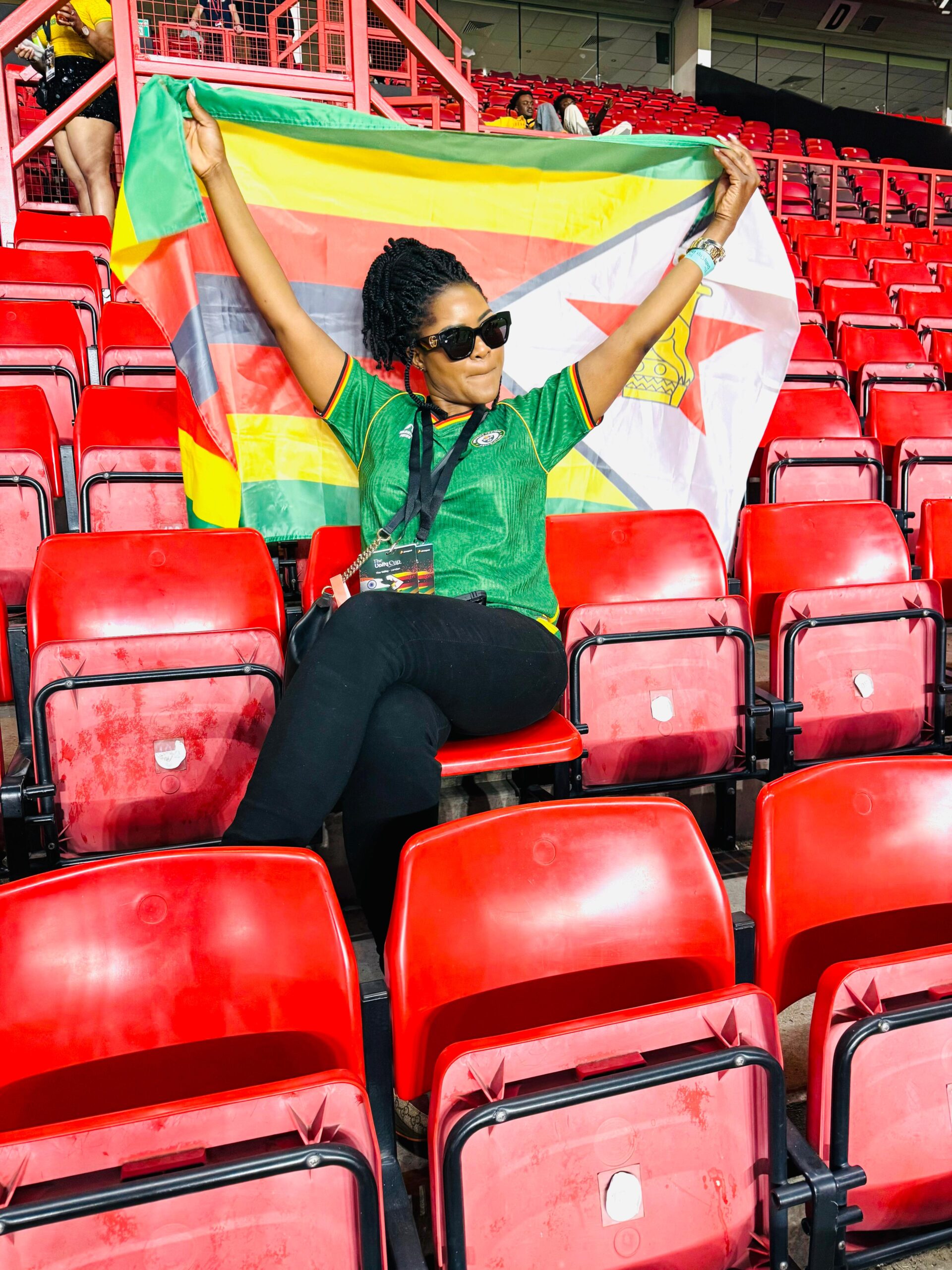
The latest tournament, staged at The Valley in Charlton, included India, Jamaica, Nigeria and Zimbabwe, further boosting its reputation as a unique football and cultural showcase.
Zimbabwean sports journalist and FIFA/CIES graduate Chipo “Chichi” Sabeta served as Cultural Ambassador, alongside high-profile figures including British-Nigerian FIFA-accredited agent Dr Andrew Uyioghosa and British-Jamaican lawyer Kaydene Reenne.
For Sabeta, the competition is about far more than football.
When sport unites Nations
“The tournament goes beyond sport , it celebrates cultural identity, African and Caribbean heritage and community pride in Britain,” she said.
“It is not just competition, but networking, heritage reconnection, and talent pipelines between diaspora football and national teams. With over a million Zimbabweans in the UK, it was a chance to connect through sport.”
She added that the event is becoming a key platform for spotting talent and building global links.
Zimbabwe made their historic debut, with the tournament now officially recognised as a FIFA Tier 1 international event and Sabeta praised the exposure given to young players ahead of AFCON qualifiers.
Zimbabwe finished third after losing 2–0 to Nigeria in their opening match before beating India 1–0 in the third-place playoff. Nigeria’s dominance once again underlined their strength in depth, while Zimbabwe’s participation was seen as a development step, opening doors for scouting, agents, and future opportunities.
Sabeta summed up the spirit of the event, saying the Unity Cup continues to grow as a “festival of football, culture and community pride” linking diaspora communities with their roots.
Organisers’ representative and sports investor Franklin Peters said the prosperity of Africa lies in its unity and in creating opportunities within the creative and sports industries, noting that football remains the world’s number one sport.
He said the Unity Cup is one of their key investment platforms, focused on identifying talent, expanding the game and creating opportunities around football.
“The Unity Cup is an international football tournament created in London, England, designed to celebrate and unite nations with strong diaspora communities in the UK especially African and Caribbean nations,” he said.
“It’s bringing Africa outside the continent to the world,” he added.
People’s Unity Party (PUP) leader Herbert Chamuka has warned that growing public frustration over illegal immigration, unemployment, crime, and pressure on public resources could fuel violence if the South African government fails to act decisively.
Chamuka said South African President Cyril Ramaphosa risks losing public confidence as many South Africans increasingly feel their concerns are being ignored.
He cautioned that the planned anti-immigrant demonstrations scheduled for 30 June could escalate into violence if authorities do not address the underlying issues through lawful means.
“President Ramaphosa must understand that when citizens feel ignored for too long, frustration eventually boils over,” Chamuka said.
“The government cannot continue pretending that public concerns do not exist. South Africans have been raising issues around illegal immigration for years, yet many believe little has been done. If government institutions fail to act, some people will inevitably attempt to enforce the law themselves, and that is extremely dangerous,” he highlighted.
Chamuka acknowledged that South Africa has every right to enforce its immigration laws, but argued that responsibility rests upon the government and its security institutions, not ordinary citizens.
“The state exists to maintain law and order. Citizens should not be forced into situations where they feel they must become immigration officers, police officers or judges. When that starts happening, it is evidence that government systems are failing,” he said.
According to Chamuka, the governement’s failure to provide clear and effective solutions to immigration challenges has allowed public frustration to reach dangerous levels.
“If South Africans are becoming increasingly angry and preparing for demonstrations, government must ask itself why. Leaders cannot ignore people’s concerns and then act surprised when tensions rise,” Chamuka remarked.
While describing concerns over undocumented immigrants as legitimate, Chamuka strongly condemned violence and vigilantism.
“Two wrongs do not make a right. Illegal immigration concerns should be addressed through stronger border controls, immigration reforms and professional law enforcement, not through violence or vigilantism,” he reiterated.
Chamuka warned that failure by authorities to manage the situation could have serious consequences for South Africa’s stability and international reputation.
“South Africa has experienced xenophobic violence before, and we know the damage it causes. Lives are lost, businesses are destroyed, communities become divided and the country’s image suffers. Government must act now before history repeats itself,” he said.
He added that Ramaphosa’s handling of the situation would become a defining test of his leadership.
“The responsibility lies with the President and his government. If they cannot guarantee law and order and cannot provide lawful solutions to challenges facing citizens, then people will naturally begin questioning whether those in power are still capable of leading effectively,” highlighted.
Chamuka also urged regional and international bodies, including the Southern African Development Community and the United Nations, to closely monitor developments and encourage peaceful solutions that respect both national sovereignty and human rights.
“South Africa is too important to the region for this situation to be ignored. We need leadership, dialogue and lawful enforcement of immigration policies. What we do not need is violence.”
As the country prepares for the planned demonstrations, pressure continues to mount on Ramaphosa’s administration to address public concerns while ensuring that no individual, regardless of nationality, becomes a target of unlawful intimidation or attack.
ByTafadzwa Muranganwa HARARE- After failing his O-Level examinations in 2024, Tanaka Mudzonga from Bocha in Marange turned to free online revision materials because he could not afford extra lessons. A few months later, after rewriting his examinations in November 2025, he passed.
“In 2024 I failed my O-Levels. Last year I repeated my studies and decided to use the internet for revision after failing to afford extra lessons. I am happy that I eventually managed to pass my examinations,” he said.
Tanaka’s experience reflects a growing national debate: is internet access becoming a hidden factor behind educational success in Zimbabwe?
Education experts increasingly argue that internet connectivity is no longer a luxury but an essential learning tool, providing access to research materials, online revision platforms, digital libraries and virtual learning opportunities. Yet access remains uneven, with thousands of learners in rural communities still disconnected from digital resources available to their urban counterparts.
A Pattern Emerging in the Data
Statistics from the Ministry of Primary and Secondary Education’s 2025 Annual Statistical Report reveal a striking pattern.
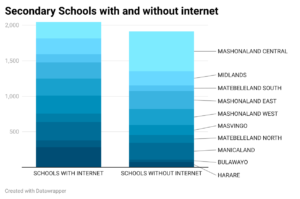
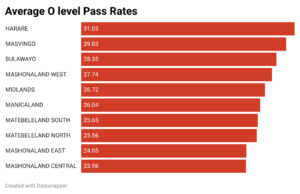
Harare and Bulawayo provinces recorded the highest levels of internet connectivity in secondary schools, with more than 70 percent of schools connected. Coincidentally, these provinces also recorded the highest average pass rates in the 2025 Zimbabwe School Examinations Council (ZIMSEC) O-Level examinations.
Sources:Ministry of Primary and Secondary Education Annual Statistical Report and Zimsec 2025 Provincial Average Pass Rates.
In contrast, Mashonaland Central and Matabeleland North provinces, where more than half of secondary schools remain without internet access, were among the country’s lowest-performing provinces in national examinations.
While the figures do not prove a direct causal relationship between connectivity and academic performance, they have intensified concerns among education stakeholders that access to digital learning resources may be increasingly influencing educational outcomes.
Internet and the Heritage-Based Curriculum
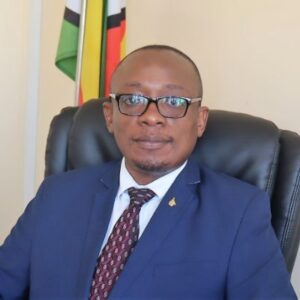
Ministry of Primary and Secondary Education’s Director of Communications and Advocacy, Mr. Taungana Ndoro.
Speaking in an interview, the Ministry of Primary and Secondary Education’s Director of Communications and Advocacy, Mr. Taungana Ndoro, said the observations mirror findings emerging from the ministry’s own monitoring systems.
“The debate that internet access in schools contributes to better educational performance aligns closely with what our own monitoring and evaluation systems are beginning to show. It reinforces exactly why expanding meaningful connectivity remains a central pillar of the ministry’s digital learning strategy,” said Ndoro.
He cautioned, however, against attributing examination success solely to internet access.
“Teacher quality, learning infrastructure, parental support and the availability of learning materials remain equally important factors influencing educational outcomes,” he said.
Ndoro explained that internet connectivity is now central to the implementation of Zimbabwe’s Heritage-Based Curriculum.
“Internet access is not treated as an add-on but as a critical enabler of our Heritage-Based Curriculum. The Ministry’s ICT in Education Policy Framework identifies connectivity as a prerequisite for delivering interactive digital content, virtual science laboratories and online continuous assessment tools,” he said.
The ministry is currently working with mobile network operators and development partners to expand digital infrastructure, particularly in under-served rural communities.
Rural Schools Left Behind
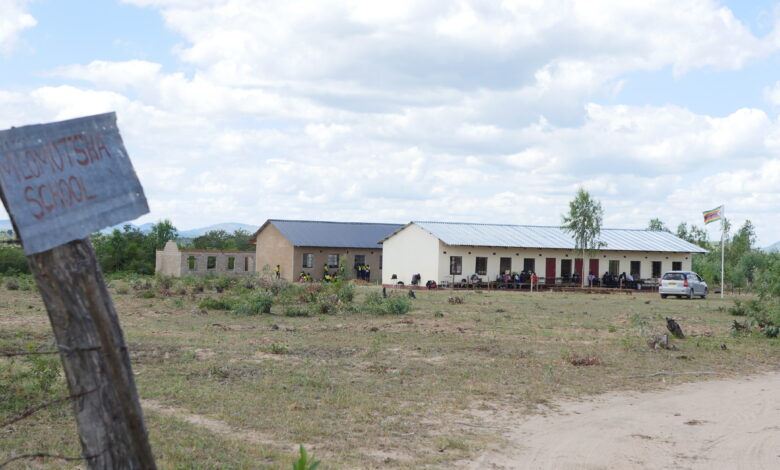
For many rural schools, however, internet access remains a distant reality.
A headmaster at a high school in Honde Valley, who requested anonymity, said connectivity could significantly improve learning outcomes where educational resources are scarce.
“The internet is very vital in improving the quality of education. Rural schools often have very few textbooks and high teacher-to-student ratios, so connectivity can make learning easier for students,” he said.
“The digital divide remains a major concern. We are not surprised that schools with no internet or erratic connectivity continue to record poor pass rates.”
He added that many rural learners enter examinations at a disadvantage because they have limited exposure to digital learning tools that are increasingly common in urban schools.
The challenges extend beyond students.
Josphat Chand, a teacher at Honde River Primary School, said poor connectivity affects his ability to access teaching materials.
“Most of the time I rely on WhatsApp to receive teaching material from colleagues in urban areas who have better internet access. Here, we are yet to be connected,” said Chando.
The Electricity Challenge
Even as government and development partners push to expand connectivity, another obstacle remains.
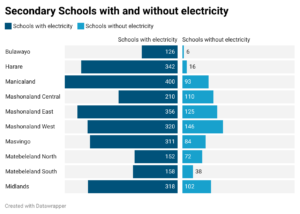
According to the Ministry’s 2025 Annual Statistical Report, 792 schools across Zimbabwe still do not have electricity. Although 2,693 schools,representing 77.27 percent of secondary schools, are electrified, the remaining 22.73 percent continue to face significant barriers to digital learning.
Without reliable electricity, internet connectivity alone cannot guarantee meaningful access to online educational resources.
Source:Ministry of Primary and Secondary Education 2025 Annual Statistical Report.
The report also shows that much of Zimbabwe’s school connectivity depends on satellite technologies due to inadequate broadband infrastructure in many parts of the country.
Harare dominates the distribution of broadband services, accounting for 26.78 percent of all ADSL-connected secondary schools, 29.5 percent of fibre-optic connected schools and 30.25 percent of LTE-connected secondary schools nationwide.
More Than Just Internet Access
Education analysts caution against reducing poor educational outcomes solely to internet shortages.
Secretary-General of the Amalgamated Rural Teachers Union of Zimbabwe, Robson Chere, said the urban-rural digital divide is a significant issue but only one of several factors affecting performance.
“There is an urgent need to address the yawning urban-rural internet divide so as to reduce disparities in pass rates,” said Chere.
“However, it would be an injustice to identify internet access as the only factor contributing to poor results. We know of schools, particularly in rural areas, where classes have more than 50 learners due to teacher shortages.”
South Africa-based educationist and university lecturer Danmore Chuma echoed similar concerns.
“In Zimbabwe, many teachers avoid working in rural areas because of poor working conditions. As a result, some schools end up relying on less qualified teachers, which contributes to lower pass rates,” he said.
A Growing Educational Divide
The available evidence does not prove that internet access directly causes improved examination performance. However, it does reveal a consistent pattern: provinces with stronger digital infrastructure generally record better educational outcomes than those where large numbers of schools remain disconnected.
As Zimbabwe accelerates its digital transformation agenda, the challenge extends beyond simply connecting schools to the internet. Ensuring reliable electricity, improving teacher deployment, strengthening digital literacy and distributing educational resources more equitably may prove just as important.
For learners like Tanaka Mudzonga, internet access opened a pathway to academic success. For thousands of others in disconnected schools across Zimbabwe, that opportunity remains out of reach.
Disclaimer:Tafadzwa Muranganwa is a NUST/HRE POLY,BTech MassCom student.The article is a project under the Data Journalism module and hence this publication sorely reserves the rights of the story to the aforementioned parties.
By Staff Writer HARARE – The United African National Council (UANC) has called on the government to withdraw Constitution Amendment Bill No. 3 (CAB3) or subject it to a national referendum, arguing that public consultations have revealed widespread opposition to the proposed constitutional changes.
The party’s call comes amid growing resistance to the Bill, including opposition from retired liberation war commanders and generals who issued a statement on Tuesday rejecting the proposed amendments.
In a press statement, UANC Secretary General and party spokesperson Aliphios Mapuranga said the outcome of the 90-day public consultation process showed that Zimbabweans were not in favour of the Bill.
“The ninety days of public consultation on the CAB3 Bill are over and the public has spoken their will. Political stakeholders have also spoken, civil society has also put its weight and above all the international community has also spoken their hearts out,” said Mapuranga.
“The one resolution is clear: drop it or go to the referendum period.”
Mapuranga accused Cabinet of creating a political crisis by endorsing constitutional changes without a clear mandate from the people.
“As UANC we warned that Cabinet had no mandate to push for constitutional change. Today the country is at a crossroads because of that. Cabinet has put both ZANU PF and government in a very precarious position,” he said.
The opposition party also welcomed the intervention of retired military commanders who publicly opposed the Bill, saying their position reflected growing national concern over the proposed amendments.
“As UANC we would like to thank the retired generals who have stood their ground and said no to the Bill. It is clear that the Bill is not welcome,” Mapuranga said.
He added that former liberation fighters from different political and military formations had fought for democratic principles that should not be compromised.
“Despite the fact that we went to the liberation war in different groups and affiliations, we were all fighting for our land and above all for one man, one vote, not what the Bill advocates for,” he said.
The party urged President Emmerson Mnangagwa to heed public sentiment and abandon the proposed amendments.
“As UANC we would like the President not to try the people who claim to have given him the mandate to lead. He should listen to them and do the right thing by dropping the Bill. The voice of the people is the voice of God, so respect it,” said Mapuranga.
UANC also called on Members of Parliament to support calls for a referendum, arguing that elected representatives should respect the wishes of their constituents.
“The people you represent are saying bring the Bill back to us to decide through a referendum. We warn you to respect the people who trusted you by standing with them and voting for the Bill to go back to a referendum,” he said.
The party further argued that constitutional amendments affecting the office of the sitting President should be subjected to a referendum and should not directly benefit the incumbent.
As UANC we believe the Constitution is clear that such matters involving the sitting President should go to a referendum. Also, the law is clear that the sitting President should not benefit from such an amendment,” Mapuranga said.
The debate over CAB3 has intensified in recent weeks, with civil society organisations, opposition parties and some former senior military figures expressing concern over provisions they argue could alter key constitutional safeguards and governance principles.
UANC concluded by urging Zimbabweans to remain united in defending constitutional democracy.
“We urge the whole country to remain united and say no to this controversial Bill that seeks to silence you in choosing your leader,” said Mapuranga.