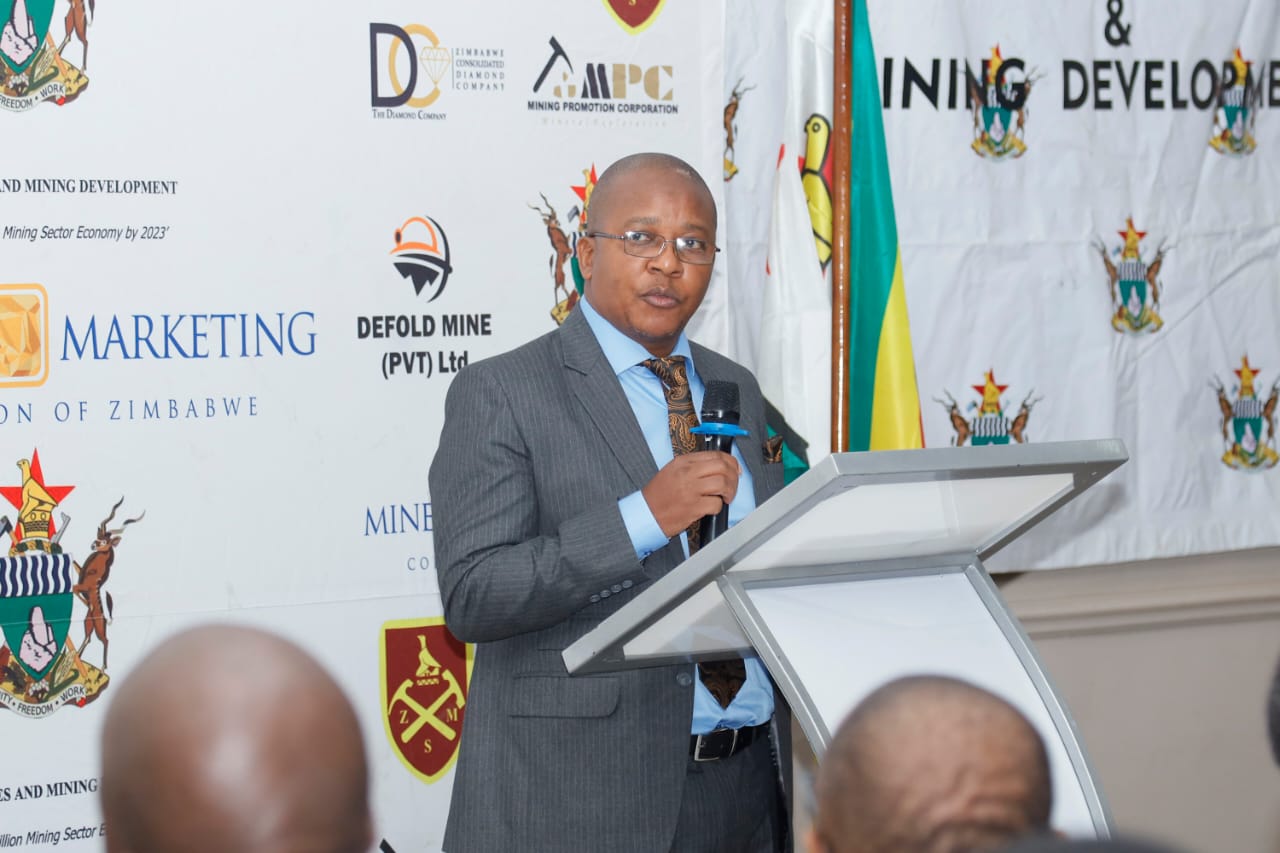
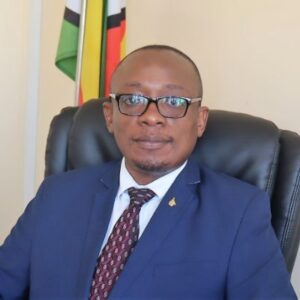
HARARE – Mines and Mining Development Minister Dr.Eng Polite Kambamura on Thursday issued a direct challenge to his ministry’s staff, declaring that “good enough is no longer good enough” and setting a hard deadline for the ministry to become the best-performing in the entire Government by the close of 2026.
Addressing senior officials, directors, and provincial officers at Jameson Hotel, Kambamura said the ministry’s ambition to help drive Zimbabwe towards an upper-middle-income society under Vision 2030 would fail unless the institution itself underwent a fundamental change in work culture and mindset.
“If we want a world-class mining industry, we must first become a world-class Ministry,” Kambamura told the gathering. “Excellence is not an accident; it is a discipline. It is built one well-handled file, one honest decision and one met deadline at a time.”
The Minister, who was speaking under the theme “Towards the Best-Performing Ministry in Government – 2026”, said the target would be measured strictly by results – not promises. He demanded punctuality, presence, mastery of the Mines and Minerals Act, and uniform service for all citizens regardless of their connections.
“The citizen who walks into our offices, or the miner working far from this building, must receive the same standard of service as the most powerful applicant,” he said.
Kambamura also declared zero tolerance for corruption, warning that any officer who solicited a bribe, traded a decision for a favour, or leaked privileged information would be treated as having betrayed the nation.
“Any officer who solicits a bribe, who trades a decision for a favour, who leaks privileged information or who looks the other way for personal gain, betrays not only this institution but the nation itself,” Kambamura said.
“A clean Ministry is a strong Ministry.”
In a separate major announcement, the Minister revealed the immediate establishment of a 24-Hour Mining Accident Response Call Centre, following the deaths of 64 artisanal and small-scale miners in the first quarter of this year alone.
“When a miner is trapped underground at two o’clock in the morning, the speed of our response will be measured in lives,” Kambamura said. “Let it never be said that help came too late because no one was listening.”
The centre will operate a single national number, logging every report of collapse or entrapment and coordinating rescue services around the clock.
Kambamura ended with a direct appeal to staff to abandon mediocrity and embrace personal accountability citing drinking during working hours by some staffers.
“What remains is the resolve of every man and woman in this room,” he said. “Let us go out and make this the finest year in the history of this Ministry.”
“When you thought you had seen it all,” said a colleague last week. He had visited his sister’s house and asked for his mzukuru (nephew). “She’s gone for ‘Recents’,” the sister replied.
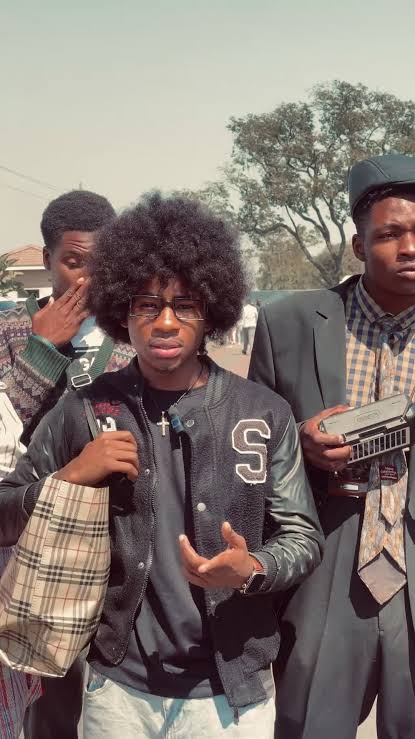
“Recents” is not a person. It is a place. Across Harare and in many urban centres, teenagers now flock to photo studios and boutiques styled as “Recents” which are spaces where they hire designer clothes, pose for curated photoshoots, and post the Kodak moments on Instagram, TikTok and WhatsApp statuses.
The goal is not the moment. It is the image.
The phenomenon exposes a deeper collision that is adolescence in the age of digital and social media. Teenage years have always been marked by identity searching, peer pressure and rebellion.
Long back, young adolescent boys would exchange clothes and bandanas as they went to floss at clubs Circus, Archipelago, Sarahs (later Wiggle then Synergy), Tube and Jobs etc.
Those in rural areas would borrow ‘black horse’ bicycles to ride to the growth point and show off to the girls. They would also look for mpfanha wembudzi – a herb that stimulated the fast growth of pubic hair, which was a sign of manhood from boyhood.
The game has changed.
The smartphone has added a 24-hour audience. Developmental psychologists call it the “imaginary audience” effect which is the belief that others are constantly watching and judging.
Social media makes that audience real. Likes, shares and comments become currency, like what cigarettes do in remand prison!
For many teens, self-worth is now quantified by engagement.
Yet the picture is not one-sided. Digital platforms have expanded learning, activism and entrepreneurship. Teens now run online thrift stores; makeup tutorials and coding clubs which are flourishing.
Mental health support groups on WhatsApp have helped teens in Mabvuku and Highfield access counselling.
“Social media is not inherently destructive,” said Tafadzwa Chikumba, a sociologist specialising in youth and digital culture. “It amplifies existing social inequalities and desires. The same teen hiring a dress for ‘Recents’ might be using TikTok to learn graphic design. The problem is not the platform. It is the lack of digital and financial literacy around it.”
But the risks are equally real. The Ministry of Health’s 2025 Youth Mental Health report flagged “social comparison” as a leading stressor – the gap between online portrayal and offline reality fueling anxiety, depression and low self-esteem. Police and school authorities note a pattern of teens stealing to fund their online presence in Glen Norah, Chitungwiza and Bulawayo. Girls especially face pressure to transact sex for gifts, photoshoots or cash to buy into specific social brackets. Harmful trends have evolved from Vuzu Parties – teenage sex parties at homes to “Mjeje” –sex parties in kombis after police clampdowns.
“What we’re seeing is the commodification of identity,” said Thamsanga Mhlanga, sociologist and graduate from the University of Zimbabwe. “Adolescents are no longer just growing up. They are branding up. The digital economy has turned self-presentation into a product and ‘Recents’ is the factory floor.”
Dr Patience Gombedza, a Harare-based adolescent psychologist, says the digital shift has compressed identity formation. “Adolescents used to experiment with identity in private, with friends. Now they do it in public, permanently recorded. The pressure to perform a perfect life is constant.”
‘Recents’ studios have monetised that pressure. For US$5 to US$20, a teen can rent a dress, suit, or sneakers, get studio lighting and leave with 10 edited photos. The clothes go back on the rack. The photos go online to “fake the funk” and portray a world of make-believe wealth, travel and lifestyle.
It is performance, not reality. But the performance has real consequences. Teachers report that students are more invested in content creation than classwork, with ‘Recent’ photoshoots scheduled during school hours.
“Social media is a knife,” said Tinashe Gumbo (17) who runs a photography page.
“It can cut you or cut your path. I started at ‘Recents’ as a client. Now I shoot for them and pay my school fees.”
The evolution of social media has outpaced parenting, schooling and policy. Banning phones is not the answer. Digital literacy is. The Ministry of ICT has piloted digital wellness programmes in several schools, teaching teens about online image, privacy and financial scams. Churches and community groups in Mbare are running “Reality Check” sessions for parents.
Adolescence has always been confusing. Social media did not invent insecurity or peer pressure. But it amplified them, gave them a marketplace and attached a price tag. As one parent put it after hearing about ‘Recents’: “We used to worry about where they went at night. Now we have to worry about where they go online.”
The photos are fake. The pressure is real. And society is still loading its response.
The debate surrounding the Medical Services Amendment Bill in Zimbabwe has reached a critical flashpoint, characterised more by corporate friction and defensive maneuvering than by a shared vision for national health.
As the funders and service providers clash over the mechanics of the law, the discourse has become entirely bogged down in the mechanics of revenue, business models, ownership, and regulatory turf wars.
In the middle of all the corporate crossfire over cash flow, anti-trust laws, and vertical integration, the patient has essentially been reduced to an afterthought—a line item or a bargaining chip.
Both medical aid funders and medical service providers operate, on paper and in principle, to serve the patient. Yet, listening to the current noise, one would think this was a battle over corporate empires rather than human lives. Cool heads must now prevail to pivot the conversation back to where it belongs: the ordinary Zimbabwean seeking care.
To understand how the patient got lost in the shuffle, one must look at the structural shift that began in the 1990s, when medical aid societies transitioned from neutral third-party funders into direct healthcare providers.
As documented in multiple discussions, the creation of provider arms like Premier Service Medical Investments (PSMI) in 2003 was born out of genuine economic distress.
Funders faced a perfect storm of practitioners demanding upfront payments due to delayed subscription remittances, exorbitant pricing, tariff disputes, and frequent government doctor strikes.
Vertical integration was implemented as a survival mechanism to guarantee that members could get medical attention when they fell ill without being entirely locked out of the system.
However, what started as a patient-centric shield against macroeconomic instability has devolved into an industry-wide war over market dominance.
Today, independent doctors and private clinics view this model as an aggressive conflict of interest. They argue that when a funder owns the clinic, the pharmacy, and the laboratory, the playing field is tilted through exclusionary practices.
While the Competition and Tariff Commission (CTC) has repeatedly intervened to penalise the abuse of market dominance, the underlying battle remains entirely commercial.
Independent providers are fighting for financial survival against late payouts and low tariffs, while funders defend their integrated business models under the banner of low-cost, pro-poor efficiency.
But while the executives argue over balance sheets, what is the actual reality for the patient on the ground?
For the person standing at the clinic door, these corporate battle lines translate into a logistical nightmare.
A patient pays their hard-earned monthly premiums, only to discover that their medical aid card is rejected by an independent doctor due to a tariff dispute.
They are forced to pay cash out-of-pocket or walk across town to a funder-approved facility, sacrificing choice, time, and dignity. Conversely, if the bill’s emergency care mandate forces private clinics to absorb uncompensated trauma costs without a functional state reimbursement fund, those clinics will simply collapse—leaving the patient with even fewer options in an already severely stressed healthcare ecosystem.
The Medical Services Amendment Bill cannot simply be a peace treaty designed to referee fights over payouts and anti-trust boundaries. If the final document is merely an administrative compromise between warring corporate factions, it will have failed the nation.
Whatever outcome the legislature will end up with, the patient must be the one who feels best served by this law.
Cool heads on both sides of the aisle must realise that a sustainable healthcare system cannot be built on a foundation of mutual sabotage.
The legislation must be refined with a patient-first lens: enforcing strict competitive guardrails so patients retain the absolute right to choose their own doctors, stabilising claim settlement timelines so providers can keep their doors open, and ensuring that healthcare funding is transparently optimised for actual clinical care.
A law cannot create infrastructure, nor can an act of Parliament magically generate corporate goodwill.
If we allow emotion, revenue targets, and institutional pride to dictate the text of this bill, the ultimate casualty will not be the insurance executive or the private doctor.
It will be the ordinary Zimbabwean. It is time for cool heads to stop fighting for a bigger piece of the healthcare pie, and start building a framework that ensures the patient is never treated as a bargaining chip again.
HARARE – Mines and Mining Development Minister Dr. Eng Polite Kambamura on Thursday issued a stern ultimatum to his entire ministry staff, warning that mediocrity and sluggish paperwork will no longer be tolerated as he pushed for a radical shift in work culture to transform the ministry into Government’s top performer by year’s end,reports Express Mail Zim.
Addressing senior officials, directors, provincial mining officers and support staff at the Jameson Hotel in Harare, Kambamura delivered what amounted to a no-excuses directive on processing permits, titles and correspondence without delay, treat every citizen with equal courtesy and abandon the “good enough” mindset.
“Excellence is not an accident; it is a discipline. It is built one well-handled file, one honest decision and one met deadline at a time,” Kambamura told the gathering. “What remains is for each of us to decide, individually and collectively, that good enough is no longer good enough.”
Kambamura’s address, titled “Towards the Best-Performing Ministry in Government 2026”, came as the ministry faces mounting pressure to accelerate mineral title processing and reduce bureaucratic bottlenecks that have long frustrated small-scale miners and investors alike.
“Let us serve every investor, every small-scale miner and every member of the public with courtesy and competence, regardless of who they are or who they know,” Kambamura said. “The citizen who walks into our offices, or the miner working far from this building, must receive the same standard of service as the most powerful applicant.”
He warned against any form of gatekeeping or foot-dragging, insisting that professionalism means mastery of the Mines and Minerals Act and procedures so that “our decisions are sound, consistent and defensible.”
The zero-tolerance stance extended squarely to corruption, with the Minister reading a firm riot act against bribe taking and influence peddling. “This Ministry will have zero tolerance for corruption,” he declared.
“Any officer who solicits a bribe, who trades a decision for a favour, who leaks privileged information or who looks the other way for personal gain, betrays not only this institution but the nation itself.”
Kambamura gave a public assurance that lawful decisions by inspectors to suspend unsafe operations “will stand” and will not be overturned by phone calls, political pressure or corporate influence. “If I stand behind you, the President stands behind you,” he said. “But that protection comes with an obligation we must keep our own hands clean.”
The Minister also announced the establishment of a 24-Hour Mining Accident Response Call Centre which is a single national number to report accidents, collapses or entrapments at any hour, with real-time coordination of rescue and health services.
“When a miner is trapped underground at two o’clock in the morning, the speed of our response will be measured in lives,” Kambamura said.
Other key measures include the full computerisation of the Mining Cadastre System for transparent title issuance and the mobilisation of resources from Treasury, parastatals and private partners to equip offices and the inspectorate with vehicles, technology and modernised data systems.
Kambamura framed the reforms within President Emmerson Mnangagwa’s national development agenda, noting that mining remains the single largest contributor to export earnings and the clearest pathway to an upper-middle-income society by 2030. “The Second Republic has given us a clear direction; our duty is to deliver it with skill and integrity,” he said. He invoked the philosophy nyika inovakwa nevene vayo “a nation is built by its own people” adding: “A nation is built by its own people.”
The Minister concluded with a challenge to every officer in the room: “Let us be the Ministry that works hardest and works cleanest. Let us be the Ministry that other ministries study and seek to emulate. The standard has been set. What remains is the resolve of every man and woman in this room.”
ByTafadzwa Muranganwa HARARE- After failing his O-Level examinations in 2024, Tanaka Mudzonga from Bocha in Marange turned to free online revision materials because he could not afford extra lessons. A few months later, after rewriting his examinations in November 2025, he passed.
“In 2024 I failed my O-Levels. Last year I repeated my studies and decided to use the internet for revision after failing to afford extra lessons. I am happy that I eventually managed to pass my examinations,” he said.
Tanaka’s experience reflects a growing national debate: is internet access becoming a hidden factor behind educational success in Zimbabwe?
Education experts increasingly argue that internet connectivity is no longer a luxury but an essential learning tool, providing access to research materials, online revision platforms, digital libraries and virtual learning opportunities. Yet access remains uneven, with thousands of learners in rural communities still disconnected from digital resources available to their urban counterparts.
A Pattern Emerging in the Data
Statistics from the Ministry of Primary and Secondary Education’s 2025 Annual Statistical Report reveal a striking pattern.
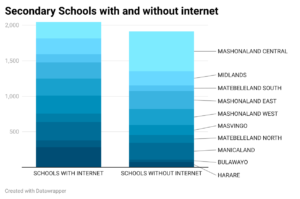
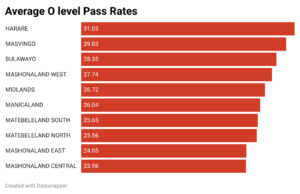
Harare and Bulawayo provinces recorded the highest levels of internet connectivity in secondary schools, with more than 70 percent of schools connected. Coincidentally, these provinces also recorded the highest average pass rates in the 2025 Zimbabwe School Examinations Council (ZIMSEC) O-Level examinations.
Sources:Ministry of Primary and Secondary Education Annual Statistical Report and Zimsec 2025 Provincial Average Pass Rates.
In contrast, Mashonaland Central and Matabeleland North provinces, where more than half of secondary schools remain without internet access, were among the country’s lowest-performing provinces in national examinations.
While the figures do not prove a direct causal relationship between connectivity and academic performance, they have intensified concerns among education stakeholders that access to digital learning resources may be increasingly influencing educational outcomes.
Internet and the Heritage-Based Curriculum
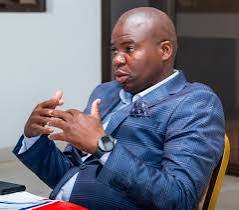
Ministry of Primary and Secondary Education’s Director of Communications and Advocacy, Mr. Taungana Ndoro.
Speaking in an interview, the Ministry of Primary and Secondary Education’s Director of Communications and Advocacy, Mr. Taungana Ndoro, said the observations mirror findings emerging from the ministry’s own monitoring systems.
“The debate that internet access in schools contributes to better educational performance aligns closely with what our own monitoring and evaluation systems are beginning to show. It reinforces exactly why expanding meaningful connectivity remains a central pillar of the ministry’s digital learning strategy,” said Ndoro.
He cautioned, however, against attributing examination success solely to internet access.
“Teacher quality, learning infrastructure, parental support and the availability of learning materials remain equally important factors influencing educational outcomes,” he said.
Ndoro explained that internet connectivity is now central to the implementation of Zimbabwe’s Heritage-Based Curriculum.
“Internet access is not treated as an add-on but as a critical enabler of our Heritage-Based Curriculum. The Ministry’s ICT in Education Policy Framework identifies connectivity as a prerequisite for delivering interactive digital content, virtual science laboratories and online continuous assessment tools,” he said.
The ministry is currently working with mobile network operators and development partners to expand digital infrastructure, particularly in under-served rural communities.
Rural Schools Left Behind
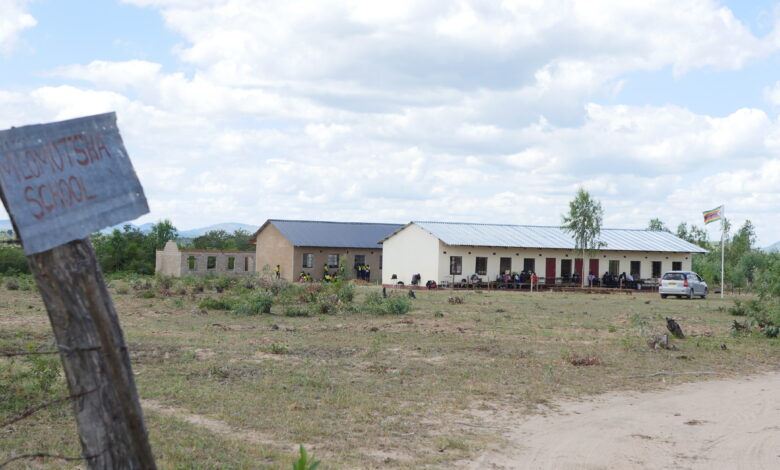
For many rural schools, however, internet access remains a distant reality.
A headmaster at a high school in Honde Valley, who requested anonymity, said connectivity could significantly improve learning outcomes where educational resources are scarce.
“The internet is very vital in improving the quality of education. Rural schools often have very few textbooks and high teacher-to-student ratios, so connectivity can make learning easier for students,” he said.
“The digital divide remains a major concern. We are not surprised that schools with no internet or erratic connectivity continue to record poor pass rates.”
He added that many rural learners enter examinations at a disadvantage because they have limited exposure to digital learning tools that are increasingly common in urban schools.
The challenges extend beyond students.
Josphat Chand, a teacher at Honde River Primary School, said poor connectivity affects his ability to access teaching materials.
“Most of the time I rely on WhatsApp to receive teaching material from colleagues in urban areas who have better internet access. Here, we are yet to be connected,” said Chando.
The Electricity Challenge
Even as government and development partners push to expand connectivity, another obstacle remains.
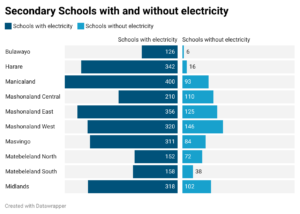
According to the Ministry’s 2025 Annual Statistical Report, 792 schools across Zimbabwe still do not have electricity. Although 2,693 schools,representing 77.27 percent of secondary schools, are electrified, the remaining 22.73 percent continue to face significant barriers to digital learning.
Without reliable electricity, internet connectivity alone cannot guarantee meaningful access to online educational resources.
Source:Ministry of Primary and Secondary Education 2025 Annual Statistical Report.
The report also shows that much of Zimbabwe’s school connectivity depends on satellite technologies due to inadequate broadband infrastructure in many parts of the country.
Harare dominates the distribution of broadband services, accounting for 26.78 percent of all ADSL-connected secondary schools, 29.5 percent of fibre-optic connected schools and 30.25 percent of LTE-connected secondary schools nationwide.
More Than Just Internet Access
Education analysts caution against reducing poor educational outcomes solely to internet shortages.
Secretary-General of the Amalgamated Rural Teachers Union of Zimbabwe, Robson Chere, said the urban-rural digital divide is a significant issue but only one of several factors affecting performance.
“There is an urgent need to address the yawning urban-rural internet divide so as to reduce disparities in pass rates,” said Chere.
“However, it would be an injustice to identify internet access as the only factor contributing to poor results. We know of schools, particularly in rural areas, where classes have more than 50 learners due to teacher shortages.”
South Africa-based educationist and university lecturer Danmore Chuma echoed similar concerns.
“In Zimbabwe, many teachers avoid working in rural areas because of poor working conditions. As a result, some schools end up relying on less qualified teachers, which contributes to lower pass rates,” he said.
A Growing Educational Divide
The available evidence does not prove that internet access directly causes improved examination performance. However, it does reveal a consistent pattern: provinces with stronger digital infrastructure generally record better educational outcomes than those where large numbers of schools remain disconnected.
As Zimbabwe accelerates its digital transformation agenda, the challenge extends beyond simply connecting schools to the internet. Ensuring reliable electricity, improving teacher deployment, strengthening digital literacy and distributing educational resources more equitably may prove just as important.
For learners like Tanaka Mudzonga, internet access opened a pathway to academic success. For thousands of others in disconnected schools across Zimbabwe, that opportunity remains out of reach.
Disclaimer:Tafadzwa Muranganwa is a NUST/HRE POLY,BTech MassCom student.The article is a project under the Data Journalism module and hence this publication sorely reserves the rights of the story to the aforementioned parties.
HARARE – City Parking chief executive Simon Muzviyo has graduated with a Doctor of Philosophy (PhD) from the University of Zambia, adding a major academic milestone to his growing list of professional achievements.
Dr Muzviyo’s PhD thesis focused on
“The effect of innovation on financial performance of firms listed on the Zimbabwe Stock Exchange.”
The City Parking boss is credited, among other things, with recently leading his company to ISO 9001:2015 certification as part of its wide modernisation drive and overseeing technological upgrades across the firm’s operations.
Meanwhile, the Institute of Corporate Directors of Zimbabwe (ICDZ) issued a congratulatory message on Dr Muzviyo’s PhD attainment.
“Your dedication, hard work and commitment to excellence continue to inspire many,” ICDZ said.
“This remarkable achievement is a true testament to your vision, leadership and passion for professional growth.
“Wishing you continued success as you lead, inspire and make an even greater impact in the business world and beyond.”
Fountain of knowledge: Dr Muzviyo’ Kodak moment in front of the University of Zambia library
Muzviyo’s doctorate comes at a time City Parking is pushing a modernisation agenda, with ISO certi?fication and tech-driven systems aimed at improving efficiency and customer service in Harare’s parking management .
People’s Unity Party (PUP) leader Herbert Chamuka has pledged to construct a bridge for residents of Matenda in Zvishavane after learning about the challenges they face crossing a local river, particularly during the rainy season.
Chamuka made the commitment during a recent visit to Matenda, where community members raised concerns about the poor state of road infrastructure and the dangers posed by the river when water levels rise.
Residents told the opposition leader that during heavy rains, the river becomes impassable, cutting off communities from essential services.
Some villagers revealed that they are sometimes forced to carry coffins by hand across the river when transporting deceased relatives for burial because vehicles cannot pass through the flooded crossing.
The situation has long been a source of concern for local residents, who say it affects access to healthcare facilities, schools, markets and other important services.
Responding to the concerns, Chamuka pledged to facilitate the construction of a bridge that would improve connectivity and reduce the hardships faced by villagers.
“We cannot ignore the daily struggles that people are facing. Development should not be a privilege reserved for a few communities.
“A bridge here will improve the lives of many families and ensure that people can move safely throughout the year,” said Chamuka.
Traditional leader Chief Blessing Matenda welcomed the pledge, describing it as a positive step towards addressing a long-standing challenge affecting the area.
“We are grateful for this commitment. The bridge will greatly assist our people, especially during the rainy season when movement becomes extremely difficult,” said Chief Matenda.
A local resident, aslo a PUP shadow councilor Jestina Makumbo, also expressed appreciation for the initiative, saying the community had endured the problem for many years.
“This is something we have been crying for. We are thankful that our concerns have been heard and that there is now hope for a solution,” she said.
The bridge project is the latest in a series of community-based initiatives associated with Chamuka. During the COVID-19 pandemic, he distributed food aid to vulnerable families in various communities.
Through his social assistance programme, popularly known as “Baba Pfuurai Napano,” Chamuka has also been providing food items and financial assistance to struggling households.
According to Chamuka, the programme was established to offer immediate relief to families facing economic hardships while longer-term development projects are pursued.
In addition, the PUP leader recently launched a housing initiative aimed at constructing two-roomed cottages for elderly citizens living in difficult conditions. The programme reportedly began in Makoni District in Manicaland Province and is expected to expand to other parts of the country.
During his visit to Matenda, Chamuka also pledged to provide food assistance to vulnerable families in the area, saying no community should be left behind in efforts to improve livelihoods.
Zimbabwe continues to face significant infrastructure challenges in many rural areas, with inadequate roads, bridges and public services often limiting economic opportunities and access to essential services.
Development experts have repeatedly highlighted the importance of rural infrastructure in improving livelihoods, reducing poverty and enhancing access to healthcare and education.
For residents of Matenda, Chamuka’s pledge has sparked optimism that a solution may finally be found to a problem that has affected generations.
As the community awaits the implementation of the project, villagers say the construction of a bridge would not only improve transportation but also restore dignity and safety to families who have long struggled with the challenges posed by the river.
HARARE – The City of Harare will bill both a borehole drilling company and a homeowner after a drilling operation ruptured a major municipal water pipeline, triggering a massive leak and significant water loss, Mayor Jacob Mafume has said.
Mafume said the two parties would be held liable for the damage, blaming the incident on their failure to get council approval before drilling.
“We will bill this borehole company and the house owner to the extent of the damage and loss,” Mafume said.
He said the incident underscores why residents must consult the city before sinking boreholes.
“How do you site a borehole over municipal water? This is the reason why we ask you to come to council first before drilling,” he said.
Mafume warned the outcome could have been worse. “Imagine if this was over a sewer pipe,” he said.
Videos circulating on social media showed water gushing high into the air after the pipeline was struck. Council is yet to disclose the cost of the damage.
By Staff Writer HARARE – The United African National Council (UANC) has called on the government to withdraw Constitution Amendment Bill No. 3 (CAB3) or subject it to a national referendum, arguing that public consultations have revealed widespread opposition to the proposed constitutional changes.
The party’s call comes amid growing resistance to the Bill, including opposition from retired liberation war commanders and generals who issued a statement on Tuesday rejecting the proposed amendments.
In a press statement, UANC Secretary General and party spokesperson Aliphios Mapuranga said the outcome of the 90-day public consultation process showed that Zimbabweans were not in favour of the Bill.
“The ninety days of public consultation on the CAB3 Bill are over and the public has spoken their will. Political stakeholders have also spoken, civil society has also put its weight and above all the international community has also spoken their hearts out,” said Mapuranga.
“The one resolution is clear: drop it or go to the referendum period.”
Mapuranga accused Cabinet of creating a political crisis by endorsing constitutional changes without a clear mandate from the people.
“As UANC we warned that Cabinet had no mandate to push for constitutional change. Today the country is at a crossroads because of that. Cabinet has put both ZANU PF and government in a very precarious position,” he said.
The opposition party also welcomed the intervention of retired military commanders who publicly opposed the Bill, saying their position reflected growing national concern over the proposed amendments.
“As UANC we would like to thank the retired generals who have stood their ground and said no to the Bill. It is clear that the Bill is not welcome,” Mapuranga said.
He added that former liberation fighters from different political and military formations had fought for democratic principles that should not be compromised.
“Despite the fact that we went to the liberation war in different groups and affiliations, we were all fighting for our land and above all for one man, one vote, not what the Bill advocates for,” he said.
The party urged President Emmerson Mnangagwa to heed public sentiment and abandon the proposed amendments.
“As UANC we would like the President not to try the people who claim to have given him the mandate to lead. He should listen to them and do the right thing by dropping the Bill. The voice of the people is the voice of God, so respect it,” said Mapuranga.
UANC also called on Members of Parliament to support calls for a referendum, arguing that elected representatives should respect the wishes of their constituents.
“The people you represent are saying bring the Bill back to us to decide through a referendum. We warn you to respect the people who trusted you by standing with them and voting for the Bill to go back to a referendum,” he said.
The party further argued that constitutional amendments affecting the office of the sitting President should be subjected to a referendum and should not directly benefit the incumbent.
As UANC we believe the Constitution is clear that such matters involving the sitting President should go to a referendum. Also, the law is clear that the sitting President should not benefit from such an amendment,” Mapuranga said.
The debate over CAB3 has intensified in recent weeks, with civil society organisations, opposition parties and some former senior military figures expressing concern over provisions they argue could alter key constitutional safeguards and governance principles.
UANC concluded by urging Zimbabweans to remain united in defending constitutional democracy.
“We urge the whole country to remain united and say no to this controversial Bill that seeks to silence you in choosing your leader,” said Mapuranga.
HARARE – Geo Pomona Waste Management has added 10 new compactor and front loader trucks to its fleet, but its chief executive officer and executive chairman Dr Dilesh Nguwaya says equipment alone will not solve the capital’s waste problems without a shift in residents’ habits and behaviour,Express Mail Zim can report.
Speaking after taking delivery of the trucks in Harare Dr Nguwaya said the new vehicles would bolster operations, while stressing that the company now wants to widen its focus to “triggering behaviour change” among residents.
“First let me start by acknowledging our government led by President Emmerson Mnangagwa and thank him for supporting the waste management project. As you are aware we started in 2022 but as you can see we have made a lot of progress,” Dr Nguwaya said.
He confirmed the latest consignment brings additional capacity to the firm’s operations. “Remember in December we procured 45 compactor trucks and these 10 trucks will complement the fleet we have, it’s 10 compactor trucks and front loaders.”
However, Dr Nguwaya emphasized that expanding the fleet is only part of the solution. The company is now prioritizing public education on household waste handling.
“What we need is behaviour change so that residents know how to manage waste until it gets here to us,” he said.
Dr Nguwaya said Geo Pomona wants residents educated on managing waste “from the residence to the dumpsite,” highlighting that improper handling at household level undermines collection efforts even as truck capacity increases.
Geo Pomona took over the Pomona dumpsite in 2022 under a government-backed waste management project. The company has since invested in landfill upgrades and collection equipment, including the 45 compactors acquired in December.
The 10 new trucks are expected to improve waste collection efficiency in Harare suburbs, while the company’s behaviour-change campaign will target how residents store, separate and put out waste for collection.