Tag: ZTA

  • “Tourism is soft diplomacy”: Minister Rwodzi announces School of Excellence , compulsory refresher courses for practitioners

    “Tourism is soft diplomacy”: Minister Rwodzi announces School of Excellence , compulsory refresher courses for practitioners

    By Nigel Pfunde

    MAZOWE — Government has laid plans to set up a School of Excellence in Tourism as part of its human capacity building drive and efforts to strengthen service standards by industry practitioners in line with ever-changing global trends, Express Mail Zim can report.

    This strategic initiative is expected to reshape the tourism and hospitality sector of Zimbabwe, alive to the fact that the bedrock of any thriving tourist destination lies not just in its natural attractions, but in the caliber of its human capital.


    In a country blessed with iconic landmarks like Victoria Falls and rich cultural heritage, the establishment of this institution holds critical importance of nurturing a workforce that can deliver world-class service, thereby enhancing the nation’s competitive edge on the global stage.

    The School of Excellence is envisioned as a pivotal engine for national economic development, as tourism remains a key pillar for foreign currency earnings and job creation and its success is intrinsically linked to the proficiency and adaptability of its practitioners.

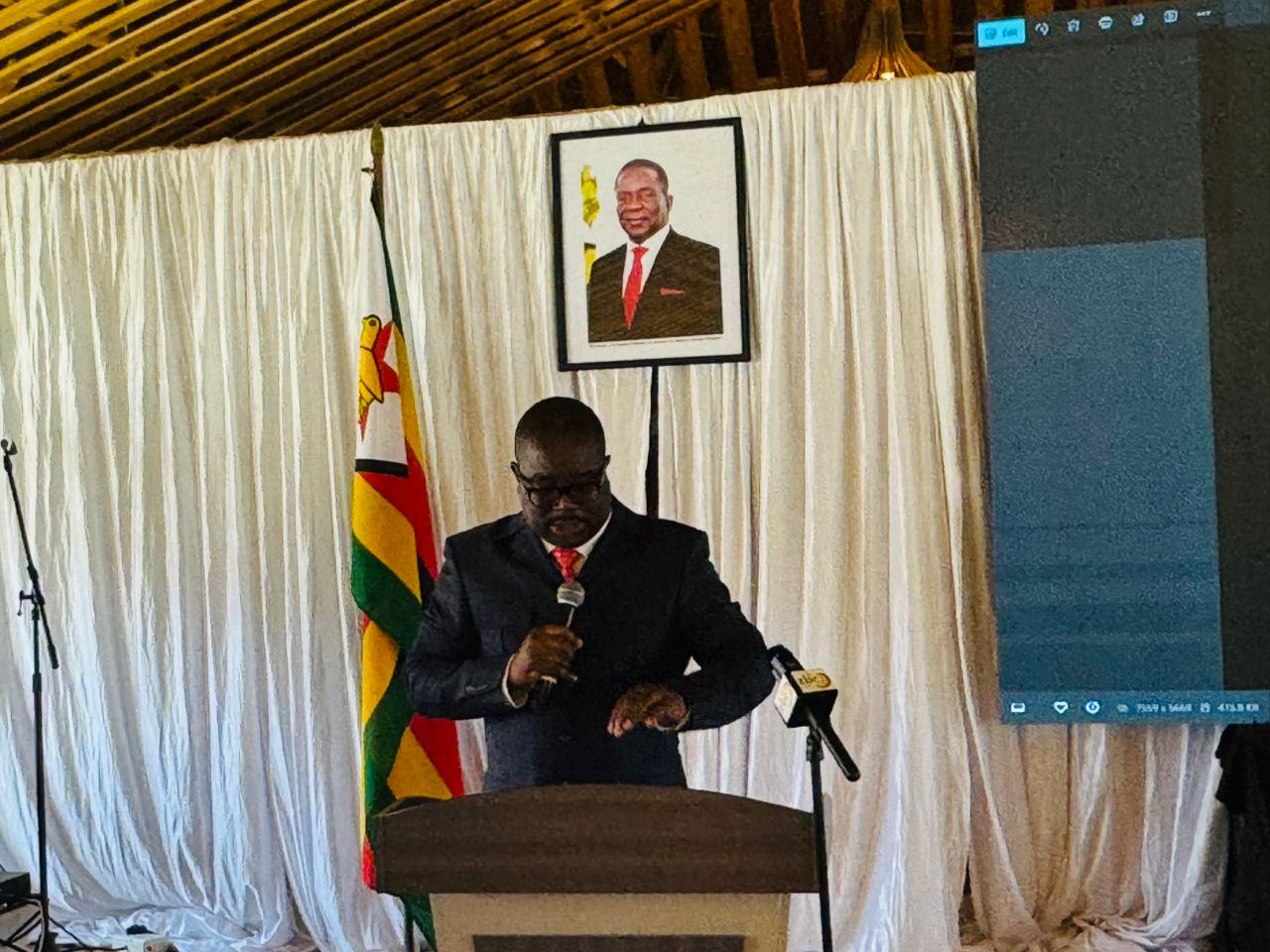
    Law Number 1: Deputy Minister of Tourism and Hospitality Hon. Tongai Mnangagwa pays undivided attention as his boss  Hon Rwodzi delivers strategy issues to delegates in Mazowe on Monday

    Suffice to say it made a 10 percent contribution to the national Gross Domestic Product according to latest statistics.

    This was revealed by the Minister of Tourism and Hospitality Industry, Barbara Rwodzi in her engagement with delegates at the National Tourism Strategy Stakeholders’ Consultation workshop (2026-2030) held in Mazowe on Monday.

    “We want to catch up with changing trends and improve excellence in all tourism and hospitality sectors. As such we will have a school of excellence in tourism to keep practitioners abreast with changing trends and up the quality of service to push tourism growth,” said Rwodzi.
    Tourism Minister Barbara Rwodzi speaks to journalists outside Baradzanwa Culture Centre Conference Room on Monday


    The emphasis on continuous learning is further amplified through mandatory refresher courses for existing practitioners, a policy that acknowledges the dynamic nature of the industry where guest expectations and technological advancements evolve rapidly.

    These courses are not merely an academic formality but a strategic tool to ensure that the workforce remains relevant, skilled and capable of exceeding the sophisticated demands of modern travelers from digital check-ins to personalized experiential offerings.

    “We will have compulsory refresher courses because trends are changing. We can’t have a student as a manager at a hospitality institution where he or she might fail to cope with pressure, but with human capital development we will have wholesome quality service that lures tourists,”* she said.

    Linking training to foreign policy, Minister Rwodzi said tourism must be used as a tool of “soft diplomacy” to rebrand Zimbabwe globally.

    “Tourism is soft diplomacy. When a tourist comes here and gets excellent service, they go back and tell 10 people. That is how we market Brand Zimbabwe,”* Rwodzi told delegates.

    “We need to sell our story. Zimbabwe is open for business and we must use our culture, our people and our hospitality to win friends for the country.”

    By institutionalizing lifelong learning, the country aims to eradicate service complacency and foster a culture of excellence that can significantly boost tourist arrivals, repeat visits and positive word-of-mouth, ultimately creating a virtuous cycle of industry growth and economic prosperity.

    Beyond the immediate focus on education and training, Minister Rwodzi’s address at the Mazowe workshop painted a comprehensive picture of the government’s holistic vision for the sector, touching on critical areas such as marketing, product diversification and stakeholder collaboration in a “whole of government and society” approach.

    She emphasized the need for a robust and aggressive marketing strategy to reposition Destination Zimbabwe, highlighting that while the country is open for business, the narrative must be compelling and consistent to attract both regional and international markets.

    “We need to aggressively market our destination and ensure that our products are competitive,”Rwodzi said.

    She also zeroed in on the necessity of showcasing the country’s unique selling points, from its pristine wildlife and stunning landscapes to its vibrant culture and warm hospitality.

    Furthermore, she stressed the importance of product diversification to extend the tourist season and spread economic benefits across all provinces, encouraging the development of niche tourism products such as cultural tourism, heritage trails, and MICE (Meetings, Incentives, Conference, and Exhibitions) tourism.

    In that regard, this year’s Sanganayi/Hlanganani World Expo will be held in Masvingo as part of ‘devolution’ in tourism destinations.

    “The world usually only talks about Victoria Falls but Zimbabwe has lots of wonders like the Great Zimbabwe and so on and this year we moved Sanganai/Hlanganani to Masvingo.

    “Its gonna (sic) be a big and unique event where we will host a tertiary institutions sports tournament a week before and the winners will neet the national teams in all sporting disciplines.This is inline with boosting our sports tourism,” she told delegates.

    Rwodzi also reiterated government’s commitment to creating an enabling environment for investment, streamlining regulatory frameworks and fostering public-private partnerships to unlock the full potential of the sector.

    She highlighted that the success of the strategy hinges on a whole-of-government approach, where all ministries and departments work in synergy to address infrastructure deficits, improve ease of doing business and ensure the safety and security of tourists.

    “Tourism is a multi-sectoral industry; we need collaboration from all stakeholders, including local communities, to realize our vision,” she said.

    She called for collective ownership of the strategy to ensure its successful implementation and the realization of a US$5 billion tourism economy by 2030.

    The deliberations at Mazowe thus painted a forward looking roadmap, with the School of Excellence, mandatory refresher courses
    and soft diplomacy serving as the foundational pillars for a transformed, resilient and prosperous tourism industry that can significantly contribute to Zimbabwe’s wide socio-economic development goals under NDS2 as envisaged by President Mnangagwa ‘s vision.


  • Kariba houseboat operators call for ‘one-stop shop’ licensing as govt slashes tourism fees

    Kariba houseboat operators call for ‘one-stop shop’ licensing as govt slashes tourism fees


    By Nigel Pfunde

    MAZOWE — Houseboat operators on Lake Kariba are calling on the government to establish a one-stop shop for registration and licensing procedures, citing the cumbersome regulatory framework that requires them to navigate multiple government offices to meet over 20 statutory obligations before they can legally operate, Express Mail Zim can report.

    The operators who aired their challenges at the National Tourism Sector Strategy Stakeholders Consultation Workshop held at Baradzanwa Cultural Village on Monday, argued that the current fragmented system is stifling business growth and deterring potential investors from entering the lake tourism sector, which they say has immense potential to contribute to Zimbabwe’s economic development.

    “There are 21 statutory obligations for one to operate a houseboat and one has to move from office to office,” said  Cephas Shonhiwa  chairperson of Kariba Tourism and Business Indaba .

    Deputy Minister of Tourism and Hospitality Hon Tongai Mnangagwa follows proceedings

    He expressed frustration at the bureaucratic hurdles that characterise the current licensing regime.
    “There is a need for a one-stop shop and duplication of requirements from ZimParks, EMA, ZTA and so forth,” he added.

    The operators’ concerns come amid government efforts to streamline tourism sector regulation. The Tourism and Hospitality Industry Ministry has said it is working to consolidate permits and simplify the licensing process for operators, as it moves to facilitate the growth and sustainability of the tourism sector. Under new reforms, the Zimbabwe Tourism Authority has been designated as the primary regulatory authority for all tourism businesses.


    Inclusivity:ZTA officials brainstorming with stakeholders at the consultative seminar at Baradzanwa Culture Village on Monday

    Tourism and Hospitality Industry Minister Barbara Rwodzi acknowledged the challenges operators face, saying that licensing processes have previously forced operators from Masvingo, Hwange, or Binga to travel long distances to Harare.
    “Time and money are being lost as people pursue the process, repeating the same procedures now and again.
    One-stop-shops are the best way forward” as part of the government’s ease of doing business drive.

    The government has taken concrete steps to address the cost burden on operators. Finance, Economic Development and Investment Promotion Minister Mthuli Ncube recently announced a package of Ease of Doing Business reforms targeting the tourism sector in Statutory Instrument 27 of 2026, including the scrapping of the US$600 annual Commercial Boat Permit and a 50 percent cut to the Houseboat Permit, now US$1,250, down from US$2,500. The External Tour Operators Licence was also reduced from US$3,000 to US$1,500. All local authority licence fees were also reduced by 50 percent.

    Despite these fee reductions, operators maintain that the administrative burden remains a significant obstacle. According to operators, a permit to operate a boat from the Zimbabwe Parks and Wildlife Management Authority costs about US$1,500, while other statutory fees including those from the Zimbabwe Tourism Authority and the Postal and Telecommunications Regulatory Authority add to the total cost. These costs, combined with the time lost travelling between offices, have been blamed for the high charges for tourism activities in Kariba. The ZTA has set boat and houseboat registration fees at US$300 under the new schedule.

    The houseboat industry plays a vital role in both local and international tourism in Zimbabwe. Lake Kariba, one of southern Africa’s most iconic water bodies, draws thousands of tourists annually,  with houseboat charters forming a cornerstone of the lake’s tourism offering. Tourism is the main economic activity in Kariba, creating jobs and sustaining livelihoods for many households.

    The lake’s fleet includes vessels ranging from four-berth houseboats to luxury craft with 18 or more cabins, each staffed by captains, cooks and deck hands.

    For international visitors, houseboat holidays on Lake Kariba offer a signature African experience with slow, serene journeys through wild, untouched landscapes where travellers can spot elephants, crocodiles and hippos along the shore.

    The lake’s warm, year-round climate appeals to international travellers and its proximity to major regional tourism circuits including Victoria Falls, Hwange, and Livingstone enhances its appeal.
    Meanwhile, the global cruise industry is valued at over US$64 billion, and Zimbabwe has the potential to leverage Lake Kariba as a competitive cruise and lake tourism powerhouse.

    Locally, houseboats provide employment for communities around the lake and support a value chain that includes catering, fuel supplies, boat servicing and transfers. The vessels are popular for family holidays, fishing expeditions and even corporate events. However, operators warn that without meaningful regulatory reform, the industry’s potential will remain unrealised.

    The operators’ call for a one-stop shop aligns with the government’s stated commitment to improving the ease of doing business. Cabinet has approved the review of the boating services value chain specifically to “remove unjustifiable licences and permits” and “streamline duplicative and overlapping licences”. As one operator summed up the frustration shared by many in the industry: “We are not asking for favours. We are asking for efficiency so that we can focus on growing our businesses and contributing to the economy.”

  • ‘Tourism must balance economic growth with environment preservation’ says Deputy Minister Mnangagwa

    ‘Tourism must balance economic growth with environment preservation’ says Deputy Minister Mnangagwa

    By Nigel Pfunde

    MAZOWE – Zimbabwe’s tourism expansion must be anchored in responsible practices that reconcile economic growth with environmental stewardship and cultural safeguarding, Deputy Minister of Tourism and Hospitality Industry Hon Tongai Mnangagwa said Monday.

    He insisted that success depends on a coordinated all‑of‑government, all‑of‑society approach.
    making the opening address of the stakeholder consultations on the National Tourism Sector Strategy (2026–2030) at Baradzanwa Cultural Centre, Mnangagwa stressed that the new blueprint cannot be a narrow sectoral document but must mobilise every state institution, private player and community to pursue tourism that protects the country’s natural and cultural assets while generating prosperity.

    “Promote responsible tourism that balances economic growth with environmental protection and cultural preservation, safeguarding our heritage for future generations,” the Deputy Minister declared, placing that principle at the heart of the strategy.

    He said this balance is only achievable through a unified national effort:

    “A unified vision for tourism development in Zimbabwe ensures that government, private sector and communities are aligned in their efforts, working towards shared national goals.”

    Mnangagwa made it clear that responsible tourism is inseparable from inclusive development. He reiterated that communities must be empowered as active participants not passive onlookers and that job creation, support for small enterprises and grassroots cultural promotion are non‑negotiable pillars of the strategy.

    He also appealed to all including local authorities, development partners and civic groups to contribute their ideas, so that the final strategy is both technically robust and responsive to local realities.

    The Deputy Minister reaffirmed the government’s commitment to fostering an enabling environment, but cautioned that long‑term success hinges on every citizen and institution embracing their role in preserving Zimbabwe’s unique heritage while reaping tourism’s economic dividends.

    “Tourism must deliver inclusive benefits like creating jobs, supporting small businesses and promoting cultural heritage at the grassroots level,” he said.

    “Your contributions today will therefore be instrumental in ensuring that this Strategy is both technically sound and responsive to the needs and opportunities of the sector.”

    The National Tourism Sector Strategy is expected to be finalised later this year, with the responsible tourism and whole‑of‑society principles now firmly embedded as its guiding philosophy.

  • Govt to set up Advisory Council to “oversee’ management of Tourism Fund

    Govt to set up Advisory Council to “oversee’ management of Tourism Fund

    By Nigel Pfunde

    HARARE- Government is set to establish an Advisory Council to ‘oversee’ the management of the Tourism Fund, Express Mail Zim can report .

    The landmark resolution was revealed at the historic inaugural Zimbabwe Tourism Authority AGM convened in Harare on Wednesday, for the first time since the Authority’s inception in 1996.

    The proposed Advisory Council is a hybrid body comprising both private and public sector players and will advise the Tourism Minister in her capacity as Trustee of the Fund.

    The measure is one of several critical interventions aimed at closing systemic gaps that had previously undermined public confidence in the previous dispensation.

    “We are awaiting the new Tourism Bill to be signed by President Mnangagwa, and in our quest to restore accountability of the Tourism Fund, we will set up a Council to advise the Trustee,” revealed Dr Takaruza Munyanyiwa, Permanent Secretary of the Tourism Ministry, who stood proxy for Minister Barbara Rwodzi at the meeting. “The advisory council will be a hybrid consisting of both private and public sector players.”

    The announcement came in response to concerns raised by legislator Joana Mamombe (who was in the house) , Chairperson of the Parliamentary Portfolio Committee on Tourism, Environment, Climate and Wildlife, signaling a new era of stakeholder engagement and parliamentary oversight.

    Dr Munyanyiwa made it unequivocally clear that the AGM was not merely a procedural formality but a fundamental reset for ZTA, founded on stakeholder confidence, performance excellence and uncompromising accountability.

    In a candid appraisal of past failures, Dr Munyanyiwa subtly but firmly pointed to systemic accountability lapses under the stewardship of the late chief executive Karikoga Kaseke, revealing that proper financial protocols had been routinely bypassed.

    “The procedure is the collected levies belong to the State and the Trustee is the minister; it’s not ZTA money,” he explained. “The chief executive then awaits authority from the minister after submitting budgets, and it seems such was not the case.”

    The Advisory Council, alongside other governance reforms, is designed to permanently seal such loopholes, ensuring that the Trustee’s authority is respected and that public funds are subjected to rigorous scrutiny and oversight.

    Delivering Minister Rwodzi’s formal address, Dr Munyanyiwa said that the raft of measures adopted at the AGM, from the Advisory Council to enhanced financial protocols and board restructuring, constitutes a comprehensive governance overhaul.

    “This gathering marks a significant milestone in strengthening governance, accountability, transparency and stakeholder engagement within our tourism sector,” he said. “The convening of this inaugural AGM reflects the Authority’s commitment to sound corporate governance, institutional renewal and responsible leadership.”

    The minister acknowledged the governance challenges that necessitated the suspension of the previous Board, revealing that Government had undertaken a comprehensive reform process aimed at restoring accountability, institutional credibility, and public confidence which is a process that has now culminated in the appointment of a substantive Board and Chief Executive Officer.

    “We are pleased that this process has culminated in the appointment of a substantive Board and Chief Executive Officer, laying a firm foundation for a stronger and more effective Authority,” Munyanyiwa said.

    The Board Chairperson, Mr. Farai Chimba, Management led by Dr George M. Manyaya, and the entire ZTA team were commended for their “commitment to rebuilding systems, strengthening governance structures, and restoring stakeholder confidence.”

    The minister emphasised that good governance remains the cornerstone of sustainable institutions, urging the Board and Management to continue fostering a culture of professionalism, integrity, ethical leadership, and prudent stewardship of public resources. With the Advisory Council now poised to become a reality upon the signing of the new Tourism Bill, the inaugural AGM has effectively served as the launchpad for a new era where the old systems of unchecked authority and opaque management are definitively swept aside in favor of a transparent, accountable and stakeholder-driven future.

  • Historic: ZTA set to convene first AGM as govt deepens parastatal reforms

    Historic: ZTA set to convene first AGM as govt deepens parastatal reforms

    By Nigel Pfunde

    HARARE — The Zimbabwe Tourism Authority will hold its inaugural Annual General Meeting on June 17, marking a major institutional milestone that mirrors growing momentum behind Government’s parastatal reform agenda and efforts to strengthen accountability in public entities.

    The virgin meeting comes as Government implements reforms under President Mnangagwa’s Vision 2030 of an empowered upper-middle-income economy through National Development Strategy 2, with emphasis on corporate governance, transparency and performance management.

    “The convening of this meeting is timely as it continues with implementation of the Public Entities Corporate Governance framework, reinforced through the Corporate Governance Unit and Results Based Management systems designed to improve efficiency and accountability within public institutions,” an industry player said.

    In 2019, President Mnangagwa warned underperforming State enterprises against complacency, urging a culture of stewardship. Following legacy challenges, Tourism and Hospitality Industry Minister Barbara Rwodzi revitalised the Authority, leading to the appointment of a new board chaired by Mr Farai Chimba in December 2025. The board subsequently appointed Dr George Munyaradzi Manyaya as Chief Executive Officer effective February 1, 2026.

    ZTA board chair Farai Chimba

    The Authority recently released its First Quarter 2026 infographic showing growth in tourist arrivals, receipts and investment inflows.

    “This positive momentum comes amid increasing recognition for the sector’s leadership, with Minister Rwodzi recently receiving recognition among leading women achievers and being honoured among the country’s best-performing ministers, and that is healthy for ZTA when the line minister is performing to the zenith,” said another industry player who operates safaris in the Lowveld.

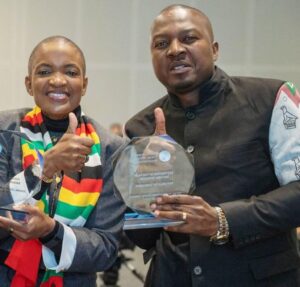
    Zimbho: Tourism minister Barbara Rwodzi pictured with ZTA chief executive Dr George Manyaya celebrating a double award victory at ITB Berlin festival recently

    Under Government’s heritage-based tourism drive, ZTA has intensified compliance inspections targeting unlicensed operators to safeguard standards and revenue streams.

    According to a ZTA notice, the AGM

    “will focus on strengthening governance, accountability and institutional performance through the consideration and adoption of key corporate, financial and compliance reports covering the 2023–2024 period.”

    It further states that Ordinary business includes the Chairperson’s remarks, CEO’s Report, Financial Report, Governance and Compliance Report, Auditor’s Report, ratification of auditor’s fees, and board fees. Minister Rwodzi is expected to deliver a ministerial statement.

    “The meeting will provide stakeholders an opportunity to review organisational performance, reinforce corporate governance compliance and align expectations for the ensuing year as the Authority continues implementing reforms aimed at strengthening Zimbabwe’s tourism sector,” further reads part of the notice.

    Industry experts said the meeting is a great leap forwars towards institutional renewal.

    “This inaugural AGM is more than a governance milestone. It represents a critical step in institutional renewal under Minister Rwodzi’s stewardship, positioning the Authority under chairperson Farai Chimba and CEO Dr Manyaya to advance tourism as a strategic pillar for Zimbabwe’s economic transformation,” Takaendesa Fundira an industry player.