Category: News

  • Harare residents enjoy a winter of running water- despite ZHLR legal aul

    Staff Reporter

    For over a decade, Harare’s winter nights told a story of endurance.

    Thousands would rise as early as 0400 hours to queue at boreholes, braving the cold to secure water.

    This winter, the story is different, multitudes across the capital are heaving a collective sigh of relief as taps flow with a consistency unthinkable just years ago.

    Yet even as residents celebrate, a legal storm is brewing.

    On 15 June, the Zimbabwe Lawyers for Human Rights filed a High Court application seeking to suspend the prepaid water meter rollout, arguing it is unlawful under the Harare Water By‑Laws of 1913 and the Urban Councils Act.

    The ZLHR contends that the city cannot introduce a new billing regime without amending existing by‑laws through proper legislative processes.

    But on 16 June, the Zimbabwe National Organisation of Associations and Residents Trust (ZNOART) issued a statement firmly backing the initiative.

    “Prepaid water systems have the potential to improve revenue collection, reduce billing disputes, eliminate estimated charges, minimise water losses, encourage responsible water consumption and generate resources necessary for infrastructure rehabilitation, maintenance and expansion,” said ZNOART National Chairman Shepherd Chikomba.

    The voices of residents themselves tell a story of profound gratitude.

    In Warren Park 1, Elvis Mukawa said, “I am delighted by the fact that as residents we will only get water that we paid for, which means there are no fears of being overcharged.”

    In Westlea, Sharon Mhlanga echoed, “We are happy with the prepaid water meters as they will make residents responsible, at the same time people will receive what they would have paid for, thus reducing estimates which most residents did not agree with.”

    Fellow Westlea resident Tinashe Moyo added, “Now, I only pay for what I actually use. It brings fairness back to the community.”

    The system, similar to prepaid electricity, allows residents to buy water credits via mobile platforms, eliminating contentious estimated bills.

    More than 23 000 smart meters have been installed, with suburbs including Warren Park, Westlea, Belvedere, Mabelreign and the Avenues already benefiting.

    Over 21 000 meters and 20 kilometres of new piping have been laid, and Helcraw Water is replacing 106 kilometres of ageing pipes.

    Harare Mayor Jacob Mafume has called it “the best solution for Harare residents.”

    ZNOART Chairman the human rights argument head‑on:

    “Water is a fundamental human right. However, that right can only be fully realised when local authorities possess the financial and technical capacity to treat, distribute, maintain and expand water infrastructure. Sustainable financing mechanisms are therefore essential,” he said.

    “As residents’ representatives, we believe that Public‑Private Partnerships (PPPs) offer a practical and sustainable model for improving service delivery.”

    The juxtaposition is stark.

    In the same week that ZLHR argues prepaid meters commercialise a basic right, residents in suburbs like Westlea and Warren Park celebrate a winter of running water, something many had not experienced in decades.

    For those who once spent freezing pre‑dawn hours queuing at boreholes, this winter has brought the simple dignity of turning on a tap and finding water.

    As one elderly resident reflected on four decades of struggle, “For all the years since I started staying here, more than 40 years ago, this is the first time I have managed to see water coming from our taps.”

    Whether the courts will halt the rollout remains to be seen.

    But for now, across Harare’s sprawling suburbs, the queues at boreholes have dwindled, the early morning chills no longer carry the dread of a waterless day, and residents are quietly enjoying a winter that feels, for the first time in years, like a season of hope.

  • OneMoney expands access,through bank partnerships across Zim

    OneMoney expands access,through bank partnerships across Zim

    By Kudakwashe Matizanadzo

    Harare- NetOne’s mobile financial services platform OneMoney is orchestrating a three-pronged transformation across Zimbabwe’s financial landscape, leveraging an extensive distribution network that combines traditional banking infrastructure with mobile money agility to expand financial access, generate employment and streamline transactions for millions of Zimbabweans.

    The State-owned mobile network operator has forged partnerships with six banking institutions including AFC Commercial Bank, POSB, NBS Bank, BancABC, FBC Bank, and Crown Bank to enable seamless Bank-to-Wallet and Wallet-to-Bank integrations

    Industry observers note that the initiative’s true differentiator lies in the physical density of its distribution channels, which now span 79 traditional bank branches, hundreds of Point-of-Sale (POS) terminals at retail outlets and NetOne’s own retail presence across virtually every district in the country.

    POSB operates 45 branches across all provinces, while AFC Commercial Bank contributes another 34 locations, with significant concentration in growth points and rural agricultural hubs. Beyond the brick-and-mortar footprint, NBS Bank and POSB offer branch-based account linking, enabling customers without smartphones or internet connectivity to participate in the digital financial ecosystem.

    The distribution strategy has generated substantial employment opportunities through its agent banking framework. Every bank branch integrated with OneMoney requires additional transaction marshals or financial advisors, while agents at multiple levels earn commissions on cash-in, cash-out, bill payments, and transfer services.

    The recent implementation of agent interoperability has effectively doubled service points: POSB and AFC agents now offer OneMoney services, while OneMoney agents provide access to POSB and AFC transactions, creating a reciprocal arrangement that has generated thousands of direct and in direct jobs across the country.

    “This initiative is not just about transaction, it is about empowering communities,” said Ms Tracy Madziwa, Head of Sales and Marketing at OneMoney.

    “Every branch we connect, every agent we onboard, is a local job creator. Our intense distribution network ensures that no Zimbabwean walks more than a few kilometres to access formal financial services, while also earning a living by offering those services.”

    The dense distribution network has particular significance for rural communities and informal traders who have historically faced barriers to formal financial services. A vegetable vendor can receive payments directly to her OneMoney wallet from customers using a POSB or AFC POS machine, while cross-border traders can instantly move earnings between bank accounts and wallets to pay suppliers without carrying cash. Parents can pay school fees in seconds from their phones, and families in rural areas receive remittances without spending a day travelling to the nearest bank because the nearest bank might now be a NetOne shop just down the road.

    Joseph Machiva, General Manager for NetOne Financial Services and Acting Chief Commercial Officer of NetOne, emphasised the strategic importance of the initiative:

    “Our mission is clear: financial inclusion for all. By combining the credibility of banks with the agility of mobile money and backing it with 79 bank branches, hundreds of agents, and NetOne’s own retail footprint we are removing traditional barriers to banking. And as this ecosystem grows, so do opportunities for employment.”

    OneMoney has implemented a float rebalancing framework with POSB and AFC as Super Agents, ensuring that all distribution points remain liquid and service delivery remains uninterrupted even in the busiest rural markets. The ease of transfer is instant. A salaried worker with FBC or Crown Bank can use the FBC Yo app to fund their OneMoney wallet, then send money to relatives in rural areas who can withdraw cash at any POSB branch, AFC branch, NetOne shop, or authorised agent nearby. Reverse transfers from wallet to bank are also supported, giving users full control of their funds.

    Edmore Makanha, Head of Operations at NetOne Financial Services, highlighted the operational impact: “With Bank-to-Wallet and our dense distribution channels, customers no longer need to queue at banking halls or travel long distances. They can fund wallets instantly from home and withdraw or deposit cash at a point within walking distance. That ease of doing business whether for a parent, a farmer, or a small retaileris what drives real economic participation.”

    As adoption continues to grow, OneMoney plans to onboard additional banking partners and expand its agent network further, deepening financial inclusion and job creation across Zimbabwe’s formal and informal economies. The platform’s strategy represents a significant bet on the integration of traditional banking infrastructure with mobile financial services as a pathway to broader economic participation in a country where a substantial portion of the population remains unbanked or underbanked.

  • The Polygamist:  ‘One job our neighbours didn’t mind to lose to a foreigner’

    The Polygamist: ‘One job our neighbours didn’t mind to lose to a foreigner’

    Opinion by Kudakwashe Matizanadzo

    SOUTH AFRICA has become a battlefield between locals and foreigners as the locals feel foreigners are invading their space and taking their jobs.
    The foreigners in this instance are fellow Africans, who for various reasons, mainly economic ones have found themselves seeking greener pastures in South Africa.

    Dear reader, it is an open secret that tensions are at an all time high, with the March and March Movement, an anti-immigration organization founded by Jancinta Ngobese – Zuma in 2025 having declared that all ‘undocumented’ foreign nationals should leave South Africa by the 30th of June using the #Abahambe!

    The deadline, though not government sanctioned has sparked panic and raised tensions among major South African cities such as Johannesburg, Pretoria and Durban.
    Most African embassies have already started offering their citizens willing to leave escape plans by providing transport for their repatriation back home.
    However, many people still do not see how those with proper documentation will survive should this vigilante group ,which is not sanctioned by the government,keep putting matters in their hands.They will obviously be ‘blind’ and attack all foreign nationals.

    You may also want to read: How many jobs have you created?’ — Julius Malema tackles South Africans who engage in xenophobic attacks

    One just prays that the forces of reason will somehow prevail and prevent what seems likely to be a bloody face-off between the proponents of #Abahambe and the perceived illegal immigrants.

    I digress now to the real story behind this write up.

    There is a story by a foreigner that has been adapted into a series with 22 episodes on Netflix. The aforementioned series has been the talk of the town all weekend and is still trending on number 1; even as the Soccer World Cup is ongoing.
    Imagine trending more than the most premier world football showcase!

    The series titled ‘The Polygamist” is an adaptation of Zimbabwean author, Sue Nyathi ‘s 2012 debut best selling book going by the same title.

    After years of trying to find a willing publisher to publish her book without success, Nyathi eventually took a bet on herself and self – published her book in 2012.
    Without doubt, when she did this she just wanted satisfaction of having her book published no matter the reception it would receive from readers.

    If you had asked her back then whether or not she ever dreamt of her book being adapted into a series,let alone on Netflix, Nyathi would have prolly laughed you off ….

    However, as fate would have it, a decade plus later Nyathi’s book found its way on to our screens as a 22 episode Netflix series adapted by Stained Glass Productions, a South African film production company.
    I repeat with deliberate emphasis South African production house!

    Capturing global attention within hours of its release, the series has many attesting to its relatability to our society today.
    “The Polygamist” has received rave reviews from critics and fans alike as it brings everyday experiences to life; experiences where the wealthy and powerful get their way using their influence and money.
    It mirrors our African society where women hide their troubles, worries and insecurities despite them tearing them on the inside and literally internalise oppression.

    The series follows wealthy, self-made CEO Jonasi Gomora. His seemingly perfect marriage to social media influencer Joyce begins to unravel as his secret second wife, mistresses and hidden webs of deceit collide in spectacular, explosive fashion.
    So many are asking, had it not been because of this riveting story by a foreigner, Sue Nyathi; would such a super series have been possible? Talk about the numerous jobs created by Stained Glass Productions because of this foreigner’s novel?
    By optioning a Zimbabwean novel and centralising it into a global Netflix release, Stained Glass Productions created work for South African crew and cast members. The production also opened doors for upcoming South African talent like Sibusisiwe Shangase (Essie), Linda Mkhize (Magesh Gomora) and Lwazie Tsebesha (Sarah) who critics have singled out for breakout performances.
    Add to that, the veterans Gugu Gumede (Joyce) and Sdumo Mtshali (Jonasi) finally got the recognition their talents deserve as they set the pace with heart stopping performances on the number 1 trending supernovela.
    Truth of the matter is we are now living in the age of globalization where people move to where their talents are most appreciated.
    The earlier the proponents of #Abahambe get a grip of this fact, the better society will become alive to the power of collaborations across our people.

    To my sister, Sue; the sky is the limit! You outdid yourself on this one, and many thanks for betting on yourself taking that leap of faith to self publish your book.
    Now that the world’s attention is laser focused on you ,not even the sky is the limit my Sis, your name shall echo in many corridors..
    Onto the next…Hoping more of your work especially Gold Diggers get to be adapted on to the screen.
    #Mbokodo!

  • FEGMA Mining deploys emergency supply chains to stabilise Chikomba’s infrastructure deluge

    FEGMA Mining deploys emergency supply chains to stabilise Chikomba’s infrastructure deluge

    By Kudzai Jakachira

    CHIKOMBA— Fegma Mining has launched a massive logistical rescue mission throughout the Chikomba Rural District, dispatching heavy equipment and essential construction materials to halt a dangerous structural emergency that threatens local schools and clinics.

    This urgent deployment happens at a crucial turning point for the miner, because by showcasing elite logistics and an adaptable disaster-relief strategy, Fegma is proving it possesses the operational maturity required to launch its planned expansion into highly regulated global markets.

    Fegma’s ability to rapidly re-route vast quantities of premium quarry stone comes from its major commercial role in the Harare–Beitbridge Highway expansion, which is a multi-million-dollar national transport project. Utilizing this active industrial pipeline, the enterprise efficiently reassigned its heavy-duty trucking fleet from national highway construction to regional emergency aid, creating a masterclass in how global mining corporations can weaponize their primary industrial assets to protect local communities during public crises.

    Internal tracking records show that the focused intervention successfully reinforced multiple damaged properties. In the schooling sector, Chokuudza Primary School was secured with forty cubic meters of quarry aggregates for vital foundation reinforcement, while Runyaro Primary School was supplied with ninety tonnes of stone for urgent structural building.

    Makumimavi Primary School was provisioned with two water boreholes and earth-moving machinery to guarantee clean water and speed up terrain leveling, just as Chigara and Tagwinya Primary Schools were granted twenty cubic meters of aggregate each to restart paused structural repairs. Furthermore, Daramombe and Nhakayedu High Schools were provided with over thirty tonnes of combined supplies and transport aid to reconstruct storm-ravaged classrooms.

    The medical relief network was equally reinforced across the region. Mashayamvura Clinic was sustained with twenty cubic meters and a subsequent thirty tonnes of stone for foundation restoration and pedestrian paths, while Chipisa Clinic was boosted by seventy-five tonnes of material, which jumpstarted a frozen project to bring healthcare access closer to nearby residents. Finally, Munyati, Kadungure, Gamanya, and Chavagona Clinics shared over one hundred and ten tonnes of specialized aggregate to lock down unstable foundations and accelerate delayed medical expansions.

    Outside of raw building materials, Fegma buttressed the region’s civic sector by funding the logistics for the local Independence Day festivities, and this economic safety net protected a heavily burdened local government budget, enabling regional leaders to keep public funds focused on wider municipal recovery.

    The magnitude of this help was verified by the Acting District Development Officer, Mrs. Chambok, who categorized Fegma’s ongoing aid as indispensable to the community’s survival, emphasizing that multiple critical projects would have completely failed without this corporate intervention.

    For international finance groups and overseas regulatory bodies, Fegma’s efforts in Chikomba offer concrete proof of sophisticated Environmental, Social, and Governance capability. By taking swift, quantifiable responsibility for local emergencies, the firm directly integrates its corporate activities with the United Nations Sustainable Development Goals, specifically satisfying Sustainable Development Goal six for clean water and sanitation via water well drilling, and Sustainable Development Goal nine for industry, innovation, and infrastructure through rapid supply distribution. This verified history of turning corporate social responsibility into organized, practical execution gives Fegma a powerful edge as it works to earn its social license to operate in incoming global markets.

  • Firm Faith 20th anniversary celebrations :A night of glitz, gospel, and pure vocal magic at Hippodrome

    Firm Faith 20th anniversary celebrations :A night of glitz, gospel, and pure vocal magic at Hippodrome

    Lifestyle Reporters

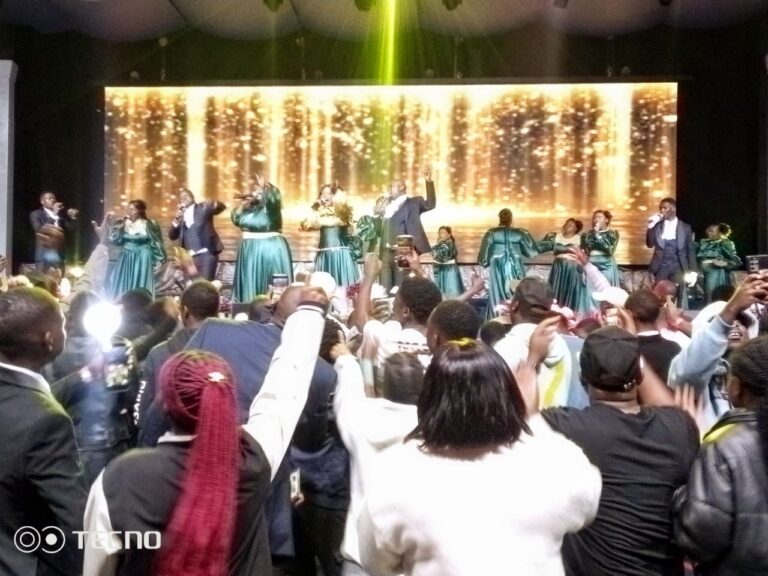
    Harare – It was a celebration of two decades in the making, and Firm Faith did not disappoint on Saturday. The award-winning acapella sensation transformed the Hippodrome Amphitheatre into a dazzling sanctuary of sound, proving that experience truly is the best teacher as they marked 20 years of ministry with a breathtaking performance.

    The event shattered records as  arguably one of the  largest Seventh Day Adventist-affiliated musical gathering outside the annual Celestial Celebrations. Every seat was filled, every soul lifted and the atmosphere buzzed with electric anticipation.

    From the moment guests stepped onto the red carpet, it was clear this was no ordinary gospel show. The who’s who of Harare’s business elite mingled with devoted fans, all dressed to impress. Glitz and glamour reigned supreme with women in shimmering gowns, men in sharp tailoring but the real treasure was the music!

    The night kicked into high gear with a surprise appearance from acapella legends Shower Power, whose warm-up set raised the energy to fever pitch. Then director of ceremonies Ms Becky continued priming the crowd for the main event.

    If there was a moment that brought the house down before Firm Faith even appeared, it was Sharon Manyonganise Cherai. The songstress unleashed her inimitable, spine-tingling voice and the entire amphitheatre rose to its feet with a standing ovation before the headliners had sung a single note.

    Music and Worship:Part of the crowd that thronged the event


    Then came the moment 20 years had built toward. Dressed in stunning coordination of female members radiant in flowing green, the men crisp in black suits and white gloves Firm Faith stepped into the spotlight. The crowd erupted into an ecstatic frenzy.

    Their deportment was five-star, their harmonies even more so. Midway through the set, they introduced Probeats, a crowd-favourite beatboxer who wove his rare, rhythmic magic as the group dipped into a semi-gospel hip-hop track, sending fans on a joyful nostalgia trip.

    From Ngena Noah to Gare Gare and Whispering Hope, the group ran through their decorated discography with flawless stage communication, each note dripping with soul and worship.

    From Joburg with love: SA gospel outfit Reality 7 belts it out on stage in Harare


    Reality 7 from South Africa, closed the night with sing-along anthems, ensuring the celebration ended on a euphoric high. But the night truly belonged to Firm Faith, a ministry that has grown from humble Harare roots into a global streaming phenomenon.

    The numbers speak volumes. With over 16,000 monthly listeners on Spotify and Whispering Hope alone surpassing 427,000 streams, Firm Faith’s reach extends far beyond the amphitheatre.

    Recent albums Munesimba and Muumbi Wehari (both 2024), Shoko Rengirozi Nhatu (2022), and 2025/2026 singles Tsitsi Dzenyu Ngadziuye and What Heaven Means to Me prove the group is still creating, still climbing.

    Founding member Marshall Matsilele addressed the glittering crowd with humility and fire: “From our early days to now streaming platforms, YouTube, live stages across borders, this is all grace. We thank the church, our families, and every fan who has walked with us for 20 years.”

    He called the Hippodrome celebration not just a milestone, but a launchpad for Firm Faith’s next chapter of ministry.

    Twenty years in, Firm Faith’s voice has never sounded sweeter. Here’s to the next two decades of worship, wonder and world-class acapella.!

    Ready to join the celebration? Firm Faith’s entire catalogue is available on Spotify, Apple Music, and SoundCloud. Catch official videos and live performances on their YouTube channel (Firm Faith Music) and stay updated via Facebook @firm.faithzim.

  • Musician Njonda Power vows to protect Nicholas Zakaria’s  legacy

    Musician Njonda Power vows to protect Nicholas Zakaria’s legacy

    By Nigel Pfunde
    Harare — The late sungura maestro Nicholas “Madzibaba” Zakaria’s rich music legacy won’t fade into obscurity. Several of his protégés are stepping up to protect the artistic wealth he left behind in the cutthroat music industry, now the latest to carry the torch is Njonda Power (real name Patrick Mupindu) who spoke to Express Mail Zim Lifestyle in a wide ranging interview over the weekend.

    Njonda Power  says the mentorship he received from Madzibaba has shaped both his sound and his mission. That relationship goes back more than two decades.

    “I met Zakaria in 2001,” Njonda recalls. “That meeting on social circles led to him assisting me on my first single, which was in memory of my late parents. I had written six pages and he said no, trim it down and just hit the message you want to deliver. He was a friend who became brother, father and Senior Lecturer. Memories of him still linger, but we will implement what he taught us, and Sungura and Khiama music will live on.”

    It was that early break that pulled him into sungura’s inner circle and gave him a first-hand lesson in discipline, songwriting, and stagecraft.

    Over the years he built a discography that carries the Khiama DNA. His albums include Rauya Gen’a, Matare Mirai, Hupenyu Hwangu, ZvaMwari Hazvipikiswe, and his latest project, Minzwa YeNungu.

    The six-track Minzwa YeNungu project bears the talismanic touch of legendary producer Bothwell Nyamhondera, the same producer who worked closely with Zakaria during his Khiama Boys era.

    “It’s pregnant with powerful lyrics which touch on social issues,” Njonda said.

    On ZvaMwari Hazvipikiswe, he penned “Fanika Iwe” to address drug abuse — a topic he speaks about bluntly off-stage as well.

    Asked on how he got the name Njonda Power, he said: “The name came from the people after they saw that I’m very, very generous. I believe in helping others.”

    He calls himself a “son of Khiama.”

    “Mdara (Zakaria )started off as a friend who became a brother, father and Senior Lecturer and his death pained me. He coined me mwana weKhiama. As I grew up I always loved Khiama music, and it was easy for me to adopt. Madzibaba taught me the theoretical and management aspect of music that is how to assemble a band, lead it, arrange shows and so forth. And when the time came for him to teach me the practical side of playing the guitar, he unfortunately had health challenges leading to his death that still hurt me up to now, but we will carry on the music legacy with what he taught us.”

    Teacher and student:Njonda Powers poses for a picture with his mentor the late Sungura maestro Nicholas Zakaria

    The devout Catholic says his faith shapes his art. “That is why my music revolves around Christianity, love and unity.”

    Turning to the local music industry, the bulky musician, international truck driver and farmer said there is need for support from both the corporate world and from artists themselves to unite. He also took a swipe at young musicians abusing drugs and substances.
    ]

    “Music industry in Zimbabwe needs a very big boost and support from all responsible stakeholders. Lack of support to our talent is letting us down. And also some of those artists who are taking drugs — I say no, that is very dangerous, it kills career and life at the same time. Collaborations between artists is powerful, but lack of unity is the problem. When you approach an artist more popular than you, he or she gives you terms that you can’t afford, and this kills the culture of music collaborations. Back then the artists used to work together, collaborating differently. Look at Tuku and Chimbetu on that song ‘Ndoda kuchata naye’, it was some form of collaborating. Personally, given the opportunity, I would want to collaborate with the likes of Kofi Olomide.”

    “This album is basically reaffirming my wish to maintain mdara’s music legacy and implement what he taught us,” he said of Minzwa Yangu. “I was mainly touching on the need to maintain the sungura music game in this jungle where lots of genres are coming up and it’s a dog-eat-dog situation where ahwina ahwina.”

    With Rauya Gen’a, Matare Mirai, Hupenyu Hwangu, ZvaMwari Hazvipikiswe and now Minzwa YeNungu in circulation, Njonda Power is positioning himself as the next link in the Khiama chain.

    Njonda Power is optimistic the game will change for the better in the music industry and said passion will keep him soldiering on.

  • Harare-London route: Mutapa Investment Fund-driven Air Zim  route relaunch set to boost diaspora ties, tourism,jobs

    Harare-London route: Mutapa Investment Fund-driven Air Zim route relaunch set to boost diaspora ties, tourism,jobs

    By Nigel Pfunde 

    HARARE – The impending resumption of direct Air Zimbabwe flights between Harare and London Gatwick, facilitated by the Mutapa Investment Fund (MIF), is expected to deliver major economic dividends for the national economy, including strengthened diaspora linkages, a surge in tourism arrivals, and significant employment creation across the aviation value chain.

    The route, which remains on course for relaunch after a 14-year hiatus, will see Spanish carrier Plus Ultra Líneas Aéreas provide an Airbus A330 under an Aircraft, Crew, Maintenance and Insurance arrangement, while Air Zimbabwe markets and sells tickets under its own flight code.

    MIF Chief Executive Officer John Mangudya said the service aligns with a wider strategy to revive strategic state entities under the fund’s portfolio for instance positive inroads being made in breathing life to the National Railways of Zimbabwe which was in comatose.

    “The service would return in the first half of 2026 as part of a broader airline revival strategy, which includes the sale of certain aircraft to streamline operations,” Mangudya said.

    Economic analysts note that the direct link is poised to strengthen connections with Zimbabwe’s sizeable diaspora in the United Kingdom, directly supporting remittances, trade, and investment flows. The route is also expected to revive the export channel for horticulture and other perishables, which historically reached United Kingdom shelves within a day of harvest.

    In the tourism sector, industry players have hailed the development as a catalyst for growth.

    “This route is a game-changer for inbound tourism. Direct access from the UK will make Zimbabwe a more attractive package for tour operators and will drive arrivals into Victoria Falls, Hwange and our cultural sites,” a senior official with the Zimbabwe Council for Tourism said. “More visitors mean more bookings, more guides hired, and more revenue circulating in local communities.”

    The whole aviation sector will benefit and it also helps connectivity as we move into a global village.

  • Former H.I.T Pro-Vice Chancellor Prof Garikayi honoured by at the ZimCEO Awards.

    Former H.I.T Pro-Vice Chancellor Prof Garikayi honoured by at the ZimCEO Awards.

    By Kudakwashe Matizanadzo

    Harare-NetOne Cellular Non-Executive board member and former Pro-Vice Chancellor at Harare Institute of Technology Professor Talon Garikayi was honoured with the Outstanding C-Suite Academic/Tertiary award at the just ended ZimCEOs Network awards held in Victoria Falls from June 10 to 13.

    The award was in recognition of his pioneering contributions to engineering, innovation, research and the development of practical home-grown technology solutions.
    His achievement has been hailed as a reflection of the depth of expertise and thought leadership that continues to strengthen NetOne’s governance and strategic direction.
    “This honour reaffirms NetOne’s commitment to visionary leadership, innovation excellence and nation building as we continue connecting communities and empowering Zimbabwe’s digital future” wrote the telecoms giant on their X account.

    The main excellence and innovation awards ceremony took place at the Victoria Falls Safari Lodge, honouring top business executives, C-Suite leaders and entrepreneurs who are driving economic transformation in Zimbabwe.
    Professor Garikayi is a former Pro-Vice Chancellor at the Harare Institute of Technology (HIT) and currently the Deputy Chancellor of Africa University.
    He is a certified Design Thinking Methodology Expert from Hasso Plattner Institute, Germany and holds a PhD in Mechatronics from Stellenbosch University specializing in Bionics, Artificial Intelligence and their applications in Biomedical engineering.
    He has a strong bias towards firmware and hardware designs for IT embedded systems.

  • Tungwarara’s calculated gamble pays off: A masterstroke that safeguards the President’s image

    Tungwarara’s calculated gamble pays off: A masterstroke that safeguards the President’s image

    Staff Reporter

    In a move that can only be described as a high-stakes gamble for the greater good, Presidential Investment Advisor Dr Paul Tungwarara has orchestrated a quiet but profound victory not just for himself, but for the dignity of President Mnangagwa. By sacrificing his personal Toyota Land Cruiser 300 Series to ardent government critic Rutendo Matinyarare, Tungwarara turned a potentially explosive situation into a diplomatic masterclass.

    Matinyarare, once a relentless antagonist whose unsubstantiated allegations threatened to tarnish the President’s image with unwarranted and malicious jabs, had been waging a public campaign fueled by personal grievances. Yet, where others might have resorted to legal confrontation or public mudslinging, Tungwarara chose a path of wisdom and restraint: asset-based diplomacy.

    The luxury vehicle, complete with a requested chrome cover, became the unlikely bridge to Matinyarare’s long-overdue Damascene Moment. In accepting the gesture, Matinyarare has finally seen the light—returning to the basics, to reason, and to the right state of mind. No longer is he the bitter critic; instead, he has been reframed as a reluctant but now clear-thinking partner in dialogue.

    “Tungwarara has not only protected the President from further malicious attacks but has also given Matinyarare a dignified exit from his own folly,” observed political strategist R. Chingono. “Any further criticism from Matinyarare would now be nothing short of rank ingratitude.”

    By publicly praising Matinyarare’s “right mental attitude” and “real commitment” to President Mnangagwa, Tungwarara has accomplished what legal briefs never could the disarmament of a foe through magnanimity. The gamble has worked. The President’s image stands shielded. And Matinyarare, once lost in the wilderness of baseless accusations, has finally come back to his senses.

  • “I am not fighting anyone, only protecting President’s name,” says Tungwarara

    “I am not fighting anyone, only protecting President’s name,” says Tungwarara

    Own Correspondent

    Harare- Presidential advisor Paul Tungwarara has declared that he is not fighting anyone but is solely focused on protecting the name of President Emmerson Mnangagwa, as he extended a rare goodwill gesture to former government critic Rutendo Matinyarare in the form of a Toyota Land Cruiser 300 Series.

    In a public exchange that has drawn widespread attention, Tungwarara made it clear that his mandate is to defend the President’s reputation and that he harbours no personal grievances against any individual. His offer of the luxury vehicle came with an invitation to a roundtable discussion aimed at de-escalating months of sustained attacks on the President.

    “Because you have shown the right attitude, I hope you are going to de-escalate the attacks on the President and everyone else,” Tungwarara wrote to Matinyarare. “You’ve demonstrated a right mental attitude and a real commitment to this country and President E.D. Mnangagwa. As a first condition for our upcoming roundtable meeting, I want you to come and collect your Toyota 300 series. Let me know when you are in Harare so we can arrange for you to pick up your car.”

    Tungwarara emphasised that his actions are not driven by conflict. “I am not fighting anyone,” he said. “I am protecting the President’s name.”

    He acknowledged that he has followed Matinyarare’s work with admiration but expressed unhappiness with the continued direct and indirect attacks on President Mnangagwa. Tungwarara also criticised the use of social media as a platform for resolving disputes, stating, “Ndozvataramba izvi” (I reject these things).

    In his response, Matinyarare accepted the offer and conceded that frustration had driven him to use social media as a medium of dispute resolution. He explained that he had previously carried out sensitive assignments for presidential advisors and envoys, putting his life and business interests at risk while defending Zimbabwe internationally. He said his business was isolated by global corporations because he stood firm for the country.

    “When it came time for me to get my agreed remuneration — which foreign lobbyists who failed to do what I did got — all the princes, advisors and envoys ran into ivory towers, and I was left standing alone like an abandoned slave,” Matinyarare said.

    Nevertheless, he welcomed Tungwarara’s intervention. “I acknowledge and accept that let us have a round table and resolve what is clearly an issue that can be resolved amicably if hearts and minds are focused on reconciliation, nation building, and unity,” Matinyarare said.

    Tungwarara reiterated his readiness for a constructive dialogue. “I am ready for a constructive roundtable discussion with you to hear your concerns. For now, please de-escalate, and let us sit down,” he said.

    The presidential advisor has consistently framed his role as one of defence, not offence. His offer of a vehicle and a roundtable meeting has been widely seen as a mature effort to turn public confrontation into private conversation, reinforcing his position as a protector of the President’s name rather than an adversary to any individual.

    Matinyarare has since indicated that arrangements have been made for a family member to collect the vehicle in Harare.