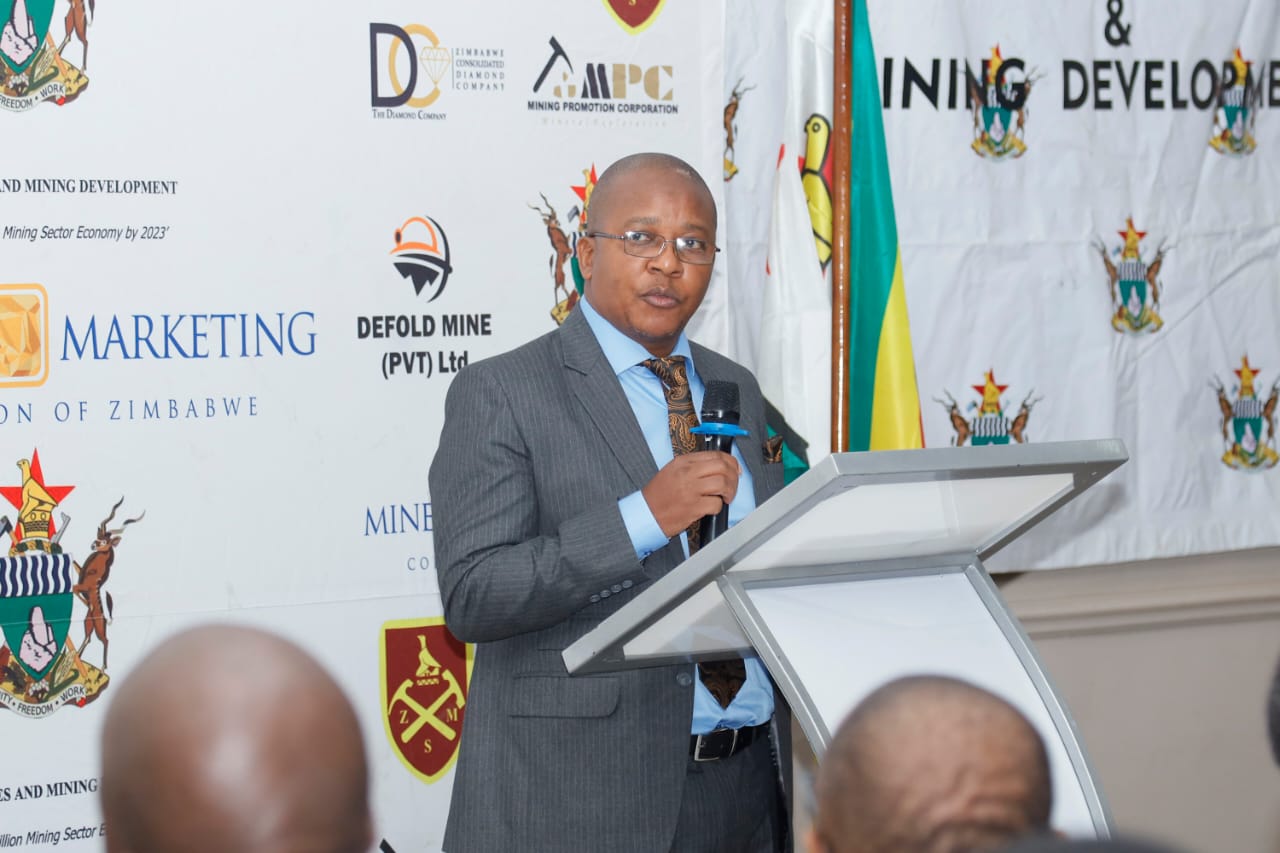
By Ziyambi Ziyambi
INTRODUCTION
Mr. Speaker Sir. This is a defining moment in our constitutional evolution: a journey rooted in the liberation struggle fought and won by the heroic sons and daughters of the soil, shaped by the aspirations of our people, and given formal expression in the Constitution we adopted by and for ourselves as Zimbabweans in 2013.
Constitutions, by their very nature, are not monuments cast permanently in stone.
They are living instruments of good governance, designed to respond to changing realities, to emerging challenges, and to the ever-evolving needs and aspirations of society. The true strength of a constitutional democracy lies not in rigid permanence, but in its capacity for lawful, reasoned and progressive adaptation.
Mr. Speaker, this Bill is therefore not an abandonment of our constitutional order in any way, shape or form, but a continuation of it. It is the product of practical experience, of institutional reflection, and of the honest recognition that after more than a decade of implementation, certain provisions of the 2013 Constitution require refinement to enhance their functionality, their coherence, and their service to national progress.
I ask this Honourable House to weigh the Bill in that spirit. A Republic confident
before you, is not a leap into the unknown, but a measured step, informed by the realities of constitutional governance, by lessons drawn from our history and comparable jurisdictions, and by our shared determination that the supreme law of our land should remain an instrument for development rather than an obstacle to it.
Let me begin, Mr. Speaker, as candour requires, not with what the Bill does, but with what it does not do, because a great deal of what has been said about it, beyond the walls of this Chamber, bears little resemblance to the text that lies before Honourable Members.
|I WHAT THE BILL DOES NOT DO
Mr. Speaker Sir, there have been many claims about this Bill, circulated in the press and in the public square, especially on social media platforms, which are simply not true.
Before I commend a single clause to this Honourable House, I want to place those claims beside the text and answer them plainly. Let me state, clearly and without qualification, five things this Bill simply does not do.
First, it does not give the President a term extension or a third term.
Second, it does not take away the right to vote, which is enshrined in the time
honoured principle of universal adult suffrage.
Third, it does not at all concern itself with succession in any political party.
Fourth, it does not postpone the nation’s elections to some distant or unknown year.
Fifth, it does not concentrate power, or the running of our elections, in the hands of
the President.
None of these things is true of the Bill before this Honourable House. I will return to each of them in its place, and I will show, clause by clause, why each charge fails against the text. But I wanted Honourable Members, and the members of the public who are following our proceedings, to hear at the outset and in plain terms what this Bill does not do.
III WHAT THE BILL DOES
What, then, does the Bill do? Mr. Speaker Sir, the Bill contains 22 clauses; effectively 21, if we discount its title. This does not mean it does 21 things, because when all is said and done, it actually seeks to do two main things, around which it aligns with the constitutional text.
First, the Bill reforms the manner in which we choose and hold our highest office, so that the President is elected by the people through their Parliament: the chamber that the people themselves elect, and remains continuously answerable to it.
Second, the Bill reforms the length of our national electoral cycle, extending the term of office of the President and the lifespan of Parliament from five years to seven, so that the people’s Government has the time to plan, to build, and to be judged on what it has delivered.
Let me develop each of these, for they are not slogans; they are reforms with important reasons behind them. The first reform speaks to the temperature of our politics. For more than three decades, the direct national contest for the Presidency has been the single most divisive event in our public life: the moment at which the nation divides against itself. By drawing the election of the President into this Parliament, the Bill ties the highest office to the confidence of the people’s elected representatives, and replaces a winner-takes-all electoral contest with a model that fosters and rewards consensus, coalition building, and the ability to command broad support across this Honourable House in the national interest. The President so chosen is accountable not once in an election after several years, but continuously within an electoral cycle, through the confidence of Parliament.
The second reform speaks to the work of governing. Under a five-year electoral cycle such as the one we currently have, the first year is consumed by transition, forming a Government, settling its administration, and too often litigating the election that just concluded. By the fourth year, attention turns to the next contest; by the fifth, the nation is immersed in campaigning. The window left for the actual business of governance for development is narrow indeed. A trunk road, a dam, a power station, the reform of a school or health system: these are works of long horizons. Roads are not built in cycles of polarising political campaigns, and power stations do not come online according to electoral calendars. Extending the electoral cycle to seven years creates the constitutional space for strategic planning, disciplined execution, and measurable delivery. It allows a Government to spend less of its strength contesting power in a perennial survival mode, and more of it governing well and delivering requisite services to the people. These are the two reforms. I now turn to why they are necessary.
IV THE MISCHIEF BEING ADDRESSED: WHY THIS BILL IS BEFORE THE HOUSE
Mr. Speaker Sir, no Parliament should amend the supreme law of the land without first being satisfied that there is a real and serious mischief to be cured. So let me put the mischief squarely before Honourable Members. It is not abstract. It is the lived experience of this nation across more than three decades, and it can be traced to a single root: the way we have chosen our President since 1990, and the short, dysfunctional and restless electoral cycle in which we have done so.
Since the introduction of direct presidential elections in 1990, our public life has been gripped by five connected afflictions: five afflictions that have stood between this country and the development and progress its people deserve. They are not separate problems.
They feed one another, and each electoral cycle has made them worse.
The first is the perennially disputed presidential election. Every contest for the presidency this nation has held since the turn of the century, in 2000, in 2002, in 2008, in 2013, in 2018, and again in 2023, has been marred by relentless allegations of violence, of rigging, and of opacity, eroding public trust and the legitimacy of the result. This is not my characterisation alone; it is documented notably in the observer reports of the African Union (AU), of the Southern African Development Community (SADC), and of the Commonwealth, which have linked these disputes to economic sanctions against our country and to the flight of investment. By some estimates as much as USD 50 to 70 billion of investment opportunities lost over those years. And the scholarship agrees: Cheeseman and Dodsworth, writing in the Journal of Modern African Studies, find that electoral disputes of this kind foster chronic instability.
The second affliction is policy paralysis born of perpetual campaigning. Our short five-year terms tend to trap those in office in a continuous election mode, derailing and delaying the long programmes a developing nation such as ours critically depends upon: our own National Development Strategy 1 and 2, our own Vision 2030. This is not campaigning in the ordinary sense; it is a perpetual posture of destructive contest that crowds the work of governing out. The Commonwealth Secretariat, reporting in 2002, and SADC, reporting in 2018, both identified post-election polarisation as a major bottleneck in development: a drag estimated, on some analyses, at 30 to 40 billion United States dollars in forgone productivity, with the African Development Bank putting the cost of our electoral cycles at two to three percent of GDP in every year they consume.
The third affliction is the grip of corruption, amplified by instability. Where political survival is in perpetual question, accountability weakens and the conditions in which graft flourishes are created and recreated with every electoral cycle. Electoral patronage feeds it. Transparency International estimated in 2023 that corruption costs this country between one and two billion United States dollars in every year that passes, and the Zimbabwe Election Support Network (ZESN) has documented the predictable spikes in irregular tenders that accompany an election: some 150 million United States dollars’ worth in 2023 alone. Instability and corruption are not separate diseases; the one feeds the other.
The fourth affliction is bureaucratic inefficiency and the politicisation of the public service. A public service that should be neutral, professional and continuous is, in a State held in permanent contest, disrupted by purges and by favouritism, a pattern noted in Commonwealth, African Union and SADC reporting across 2005 and 2013. The Election Resource Centre (ERC) has estimated the resulting productivity losses at some 600 million United States dollars a year, and the historian Brian Raftopoulos has linked this politicisation to inefficiencies of real and lasting weight. The citizen who simply needs a service from the State is the one who pays.
And, last but not least, the fifth affliction is societal polarisation. Each disputed election, each season of perpetual electoral conflict, drives the nation further apart, fuelling emigration and unrest. The work of Norma Kriger in the African Studies Review, and the reporting of the AU and SADC, trace the cost of this division, in economic terms, and in the human capital our country has lost to emigration, which the International Organization for Migration has counted in the billions. A society asked, every few years, to divide itself in a bitter national contest does not easily heal in the short interval before the next election.
Mr. Speaker Sir, these five afflictions, perennial disputed presidential elections, policy paralysis, instability-fuelled corruption, a politicised bureaucracy, and a polarised society, took root with the introduction of direct presidential elections in 1990, and their toxicity intensified sharply from 2000 onward.
They are not separate problems; they are structural and interconnected, each feeding the others, and all rooted in the same electoral toxicity. Their cumulative cost to this nation has been estimated, conservatively, at between 150 and 200 billion United States dollars in lost output, productivity and human capital. Whatever the precise figure, the direction is not in doubt: the enemies our liberation was fought to defeat, the hunger, the poverty, the disease and the ignorance that still shadow too many of our communities, cannot be driven back by a Government held in a five-year window of which the better part is spent defending itself and preparing for the next election that promises more conflict. That is the mischief we are dealing with.
It is real, it is documented, and it is no longer one this nation can afford to carry. The question this Bill answers is what kind of remedy does such a mischief demand?
V A STRUCTURAL RESPONSE THROUGH CONSTITUTIONAL REFORM
Mr. Speaker Sir, when a problem is structural, the remedy must be structural too. This is the point on which I most wish to be understood, because it is the point most often missed.
When critics are told that this country has suffered from the affliction of perennially disputed elections, from corruption, from instability and division, some invariably reply that the answer is simply for good people to replace the bad people and hold office; that the Government should employ honest officials, that leaders should behave with greater virtue, that all of us should become better Angels. That is not an answer, Mr. Speaker. It is a wish. Five afflictions that have persisted across three decades and seven presidential elections, deepening with each electoral cycle, are not the product of bad people who just need to be replaced by good ones. They are the product of a structural malaise: of the incentives, the pressures and the conflicts that our constitutional arrangements themselves create and breed. To keep doing the same thing, election after election, while hoping for a different result, is not statesmanship. It is the very definition of folly.
A structural problem is cured by changing the structure that produces it, by reshaping the arrangements within which those who hold power must act. That is what this Bill does.
It does not ask anyone to become an angel. It changes the structural design so that the ordinary conduct of office produces stability rather than conflict, construction rather than perpetual contest. The two major reforms at the heart of this Bill, the manner of electing the President, and the length of the national electoral cycle, are structural responses to structural ills that have produced the structural afflictions that have bedevilled our country. And these reforms in the Bill are not experiments. They are informed by our own experience of seven presidential elections since 1990, each more contested than the previous, and by the tested constitutional practice of the most stable democracies in our neighbourhood and across the world. It is to those two reforms, and the clauses that give them effect, to which I now turn.
VI CORE AMENDMENTS: CLAUSES 3, 4, 9 AND 10
Mr. Speaker Sir, these four clauses are the heart of the Bill. They should be read together, because they are harmonious and mutually supportive, each reinforcing the others, each doing a part of the same work. Clause 3 reforms the manner in which we choose our highest office. Clauses 4, 9 and 10 reform the length of the national electoral cycle within which that office is held and align the calendar of our elections accordingly. Together they constitute a single, coherent structural response to the five persistent and pernicious afflictions this country has carried since 1990.
Clause 3: the election method
Clause 3 provides that the President shall be elected by Parliament, in a joint sitting of the Senate and the National Assembly, by a clear majority of members, with a run-off where no majority is reached, and under the supervision of the Zimbabwe Electoral Commission.
The people’s voice is not removed by this reform; it travels by a different and steadier route. The people elect Parliament. Parliament, in turn, elects the President and holds the President to account, not once every several years, but continuously, through the confidence of Parliament. Executive authority continues to derive from the people, which is the very principle section 88 of our Constitution lays down. Only the transmission mechanism changes.
For too long, our presidential elections have been framed as zero-sum contests in which victory by one side means total exclusion of the other. Such a culture breeds division, mistrust and policy paralysis. A parliamentary mechanism changes those incentives from the ground up. It encourages consensus-building, coalition-making and constructive engagement across political lines. It rewards leadership that can command broad-based support, rather than leadership grounded solely in electoral mobilisation. A President who must continuously hold the confidence of Parliament cannot govern against it. That is accountability made permanent, not periodic: the doctrine of responsible government that underlies every mature constitutional democracy.
This is the settled practice of our nearest neighbours, where South Africa elects its President from Parliament; and Botswana’s President is the leader of the party commanding a parliamentary majority. Both are arguably the most stable, best-governed democracies on our continent. And let me correct a misconception being deployed against this clause. The direct popular election of our President is not a founding feature of our constitutional settlement. Zimbabwe was governed from independence through a parliamentary model. Direct presidential election was introduced only in 1987, through Constitutional Amendment Number 7, in the context of the Unity Accord and the then anticipated one-party state. Those defending direct election as an axiomatic democratic principle are defending an arrangement younger than our independence, adopted for a purpose this House would not today endorse.
Mr. Speaker, Sir, the current system of directly electing the President harbours three profound risks and vulnerabilities that are entirely eliminated when Parliament assumes the solemn responsibility of choosing the nation’s leader.
First, as we witnessed during the 2023 harmonised general elections, a high-profile regional, continental or international observer mission can deploy as few as 68 observers to cover a mere 172 polling stations out of more than 12,374 nationwide. From this extremely narrow sample, such a mission can issue a sweeping, hostile and damaging verdict on the freeness, fairness and credibility of the entire national election. This glaring vulnerability has repeatedly sown the seeds of the electoral disputes that continue to haunt our democracy.
Second, direct election opens the door for an “independent candidate”-even one potentially sponsored by the country’s adversaries —who commands no seats whatsoever in this House to capture the presidency. Such an outcome would fundamentally destabilise the governance of the Republic and fracture the vital link between the executive and the legislature. The method by which we select our President must never permit so grave a possibility.
Third, the present arrangements allow four provinces to decide the presidency by themselves through sheer numerical weight. Based on the 2023 voter register, Harare, Manicaland, Mashonaland West and Midlands together accounted for 3,540,507 of the country’s 6,623,511 registered voters-more than half the national total. In a direct popular vote (with a possible runoff if no candidate reaches 50%+1), it is entirely possible for a candidate to secure outright victory with overwhelming majorities in just these four provinces while losing the other six entirely—or even if large parts of the Republic cast no votes at all. This structural flaw risks leaving vast regions of our nation politically marginalised and should concern every fair-minded citizen committed to true national cohesion and unity.
By contrast, election through Parliament draws every province, every region and every voice into the choice; leaving no one and no place behind. It ensures balanced representation, strengthens institutional legitimacy and safeguards our democracy against these serious threats.
On the law, Mr. Speaker, the Bill reforms the method of election by amending section 92, which sits in Chapter 5. It is not to amend Chapter 4, the Declaration of Rights, nor section 328 itself. The Constitutional Court, in the Mupungu judgment of 2021, affirmed that the referendum requirement in section 328 is triggered by the constitutional text which is amended, not by the consequences said to flow from it. On that footing, this reform proceeds by the two-thirds majority this House holds the power to give.
Clauses 4, 9 and 10: the term length or electoral cycle
Mr. Speaker, these three clauses must be taken together, for they are one reform expressed three times. Clause 4 amends section 95(2) of the Constitution to extend the presidential term length, that is the electoral cycle, from five to seven years. Clause 9 does the same for Parliament by amending section 143(1), so that the two branches rise and fall together rather than drifting out of alignment. Clause 10 aligns the seven-year election calendar. Their coherence is the point: a seven-year Presidency alongside a seven-year Parliament, on the same electoral cycle, planning and delivering together.
Here I must draw the distinction on which this entire debate turns, and I will draw it as plainly as I can, because much of the criticism of this Bill rests on a confusion between two things that sound alike but are wholly different: the length of a term, and the limit on terms. Mr. Speaker, Sir, permit me to share an image, for it has helped me, and it may help Honourable Members.
Picture a great Presidential Runway: a permanent, purpose-built platform at the very heart of our constitutional order. That runway is the office of the President itself: the critical infrastructure from which the nation is served and led. Section 95(2)(b) is its architect and guardian. It defines the runway’s length: how long each authorised use may last, from the swearing-in to the next election. It does not choose or restrain any particular operator; it simply ensures that the runway exists as a disciplined, open, permanent public structure belonging to the people of Zimbabwe, available at predictable intervals, so that no operator, however popular, can ever claim permanent rights over it.
Now consider the airline that operates on that runway. That airline is the office-holder: the individual President. Section 91(2) speaks to the airline alone, and it issues a firm and personal command: the airline may hold an operating contract, one term, renewable once and once only, if the people, through Parliament, choose to re-appoint it. Two contracts in a lifetime, whether served consecutively or years apart, and never a third, under any circumstances.
Here is the point. Lengthening the runway does not give any airline an extra contract.
Extending the term changes only the length of each contract; it does not change the number of contracts an operator may hold. The limit remains two. Section 95(2)(b) governs the runway: the term length. Section 91(2) governs the airline: the term limit. The Bill lengthens the runway. It does not touch the limit on the airline. The two-term cap stands exactly where it has always stood. This Bill does not amend section 91(2) by a single word.
I will not pass over the question I know is in the minds of some Honourable Members: does the longer term reach the office as it stands today, or only a future occupant? It reaches the office as it stands. A Constitution cannot hold one President on a seven-year cycle and the next on a five. The Bill provides for this openly, in the same plain language the Constitution used for the continuation in office of our superior judges in Constitution Amendment No.2 Act of 2021. It does not hide behind silence, and it takes nothing from the limit on terms, which this Bill does not touch.
Why seven years? Because it is not an arbitrary number but a tested governance architecture. First, between 1990 and 2008, the term length of the Presidency was six years; not much different from seven years. In September 2025, Guinea adopted a new constitution with a seven-year electoral cycle. France operated a seven-year presidential term for the better part of 127 years. Ireland has elected its President to a seven-year term since 1937. A five-year cycle, properly counted, yields at best two years of genuine uninterrupted governing: the first consumed by transition, the last by the next campaign.
Seven years gives a Government the time to see a major programme through from design to delivery and to be judged not on what it promised but on what it built.
Consider what that time makes possible. Time to plan beyond the next ballot, so that a budget serves a decade and not a season. Time to build the roads, the dams and the power that a developing nation cannot complete in the gap between two campaigns. Time to carry a programme such as Vision 2030 through to completion. Time, in the end, simply to govern.
VII THE ADMINISTRATIVE ELECTORAL ECOSYSTEM: CLAUSES 2, 11, 12, 13 AND 17
Mr. Speaker Sir, the next section of clauses concerns the institutions that surround or support our elections. Clause 2 returns the registration of voters, and the keeping of the voters’ roll, to the Registrar-General: the office that already holds the record of every citizen’s life, from birth to death.
This is not a novelty, and it is not a partisan measure. I want to say so plainly, and I want to give this Honourable House the proof, because it answers directly the charge that this Bill concentrates the running of elections in the hands of the Executive. The proposal to return voter registration to the Registrar-General did not originate with this Government. It first came from the opposition benches of this House. On 18 May 2023, in the Ninth Parliament, during the committee stage of the Electoral Amendment Bill, the Honourable Charlton Hwende moved precisely this transfer. He was supported, strongly and on the record, by the Honourable Tendai Biti and the Honourable Allan “Rusty” Markham, who pointed out that the Registrar-General had already registered well over a million citizens, and that everything the Commission was doing in this field, the Registrar-General was already doing. It is recorded in the Hansard of that day, a public document, and any Honourable Member, and any member of the press or public following these proceedings, may check it for themselves.
And I told them then what I tell this Honourable House now: I agreed with them.
There is no need for the Zimbabwe Electoral Commission to register voters; it is better to have the separation, and the Registrar-General, as the keeper of the nation’s civil records, is the natural registrar of voters. The function was placed with the Commission in the first instance not on any principle of electoral independence, but out of mistrust of one official, just one individual, Mr. Tobaiwa Mudede, in his day. In moving it, we threw out the child with the bathwater, at considerable and continuing cost, for the Commission cannot so much as clean its roll of the deceased, or enrol those who newly come of age, without going to the Registrar-General to do it. That one individual is long gone. The Registrar-General biometrically, and therefore accurately and reliably, registers every citizen continuously as the law requires, from birth onward; the Commission, by contrast, appears only when there is an election, and without the primary data. The sensible course was plain to both sides of this House. The only reason we did not take it then is the very reason we are gathered here today: the Constitution gives this function to the Commission, and only an amendment to the Constitution can move it. That moment has now come. We are completing, through the proper door, what this House had already, across its divisions, found common ground to do.
Clauses 11, 12 and 13 carry the same logic
And, last but not least, the fifth affliction is societal polarisation. Each disputed election, each season of perpetual electoral conflict, drives the nation further apart, fuelling emigration and unrest. The work of Norma Kriger in the African Studies Review, and the reporting of the AU and SADC, trace the cost of this division, in economic terms, and in the human capital our country has lost to emigration, which the International Organization for Migration has counted in the billions. A society asked, every few years, to divide itself in a bitter national contest does not easily heal in the short interval before the next election.
Mr. Speaker Sir, these five afflictions, perennial disputed presidential elections, policy paralysis, instability-fuelled corruption, a politicised bureaucracy, and a polarised society, took root with the introduction of direct presidential elections in 1990, and their toxicity intensified sharply from 2000 onward.
They are not separate problems; they are structural and interconnected, each feeding the others, and all rooted in the same electoral toxicity. Their cumulative cost to this nation has been estimated, conservatively, at between 150 and 200 billion United States dollars in lost output, productivity and human capital. Whatever the precise figure, the direction is not in doubt: the enemies our liberation was fought to defeat, the hunger, the poverty, the disease and the ignorance that still shadow too many of our communities, cannot be driven back by a Government held in a five-year window of which the better part is spent defending itself and preparing for the next election that promises more conflict. That is the mischief we are dealing with.
It is real, it is documented, and it is no longer one this nation can afford to carry. The question this Bill answers is what kind of remedy does such a mischief demand?
V A STRUCTURAL RESPONSE THROUGH CONSTITUTIONAL REFORM
Mr. Speaker Sir, when a problem is structural, the remedy must be structural too. This is the point on which I most wish to be understood, because it is the point most often missed.
When critics are told that this country has suffered from the affliction of perennially disputed elections, from corruption, from instability and division, some invariably reply that the answer is simply for good people to replace the bad people and hold office; that the Government should employ honest officials, that leaders should behave with greater virtue, that all of us should become better Angels. That is not an answer, Mr. Speaker. It is a wish. Five afflictions that have persisted across three decades and seven presidential elections, deepening with each electoral cycle, are not the product of bad people who just need to be replaced by good ones. They are the product of a structural malaise: of the incentives, the pressures and the conflicts that our constitutional arrangements into the drawing of electoral boundaries.
They establish a dedicated Zimbabwe Electoral Delimitation Commission, chaired by a judge of Supreme Court standing and composed of members chosen for defined expertise in law, in administration and governance, and in demography or cartography. Here too there was agreement in this House that crossed the aisle: that the Commission’s proper task is to conduct elections, and that the drawing of boundaries, a distinct and technical discipline, belongs with a body built for it. The Bill also extends the interval between the drawing of boundaries and the election that follows, from six months to 18, so that no one who runs the race also draws the field, and so that the field is settled well before the contest begins.
And finally, on this section, Clause 17 completes the rearrangement. It removes from the Commission the functions now placed elsewhere, and leaves it free to do its central work: the conduct and supervision of every election and referendum, without distraction. This is not the hollowing-out of the Commission that critics allege; it is the focusing of it.
A commission that conducts and supervises every election in the land has not been weakened by being relieved of a record-keeping function and a boundary-drawing function that sit more naturally elsewhere. The custodian of the civil record is the Registrar-General; the drawer of boundaries is a dedicated expert commission; the conduct of the election remains, wholly and securely, with the Zimbabwe Electoral Commission. The right to vote is untouched. The separation of these functions, custodian, delimiter, administrator, is the practice of mature electoral democracies, and it is a model that strengthens credibility rather than diminishing it.
VIII JUDICIAL ALIGNMENT: CLAUSES 7, 14, 15, 20 AND 21
Mr. Speaker Sir, the next section concerns the institutions of justice, and aligns each
with the standard its office demands. I take its five clauses in turn.
Clause 7 raises the qualification and status for the office of Attorney-General to the standard required of a judge of the Supreme Court. The Attorney-General is the State’s principal legal adviser; she or he represents the nation’s interests before our highest courts, drafts the legislation this House considers, and defends Zimbabwe’s legal sovereignty in regional and international forums. She or he sits, too, on the Judicial Service Commission, beside the most senior judges in the land. It is right that the qualification for such an office should match the company it keeps and the responsibility it discharges.
Clause 14 widens the door of the Constitutional Court. It permits that Court to hear any matter that raises an arguable point of law of general public importance, where the Court grants leave. This enlarges access to justice; it does not narrow it. It allows our apex court to settle, with authority, the questions that matter the most to citizens and to commerce, while a disciplined requirement of leave keeps the Court the master of its own roll. A constitutional democracy is better served when its highest court can speak clearly on the questions that most divide it.
Clause 15 concerns the appointment of judges. It refines the process, setting aside the public interview and the binding shortlist: while leaving wholly intact the guarantees that truly secure judicial independence: security of tenure, the protection of conditions of service, and freedom from interference once a judge has taken the bench. This aligns with Constitution Amendment No.1 Act of 2017, regarding the appointment of the Chief Justice and Deputy Chief Justice. The Judicial Service Commission continues to be consulted on every appointment. The model this clause restores, appointment by the President after consultation with the Commission: is the model that prevailed in this country before 2013, and the model that prevails across much of the Commonwealth today. Judicial independence does not reside in the manner of a judge’s appointment; it resides in the protections that surround that judge for every day of service thereafter. Those protections this Bill does not so much as approach.
Clause 20 addresses the appointment of the Prosecutor-General, and here I must correct a misunderstanding directly. At present, the President appoints the Prosecutor-General on the recommendation of the Judicial Service Commission, a body composed of the most senior judges in the land. But those same judges are the very persons before whom the Prosecutor-General’s decisions will come, in trials, in bail applications, in reviews and in appeals. To have the judges who will adjudicate the prosecutor’s cases also select the prosecutor is not a safeguard of independence; it is a structural conflict of interest written into the constitutional text. Clause 20 removes that conflict. And let me be precise, because critics have conflated two separate things: the independence of the Prosecutor-General, guaranteed in section 260, which provides that the office is not subject to the direction or control of any person, is left entirely untouched by this Bill. The guarantee of independence stands in full. It is only the conflicted appointment procedure that goes. No comparable democracy in our region, not South Africa, not Kenya, not Botswana, not Ghana, requires a judicial commission to select the prosecutor. Clause 20 brings us into line with them.
Clause 21 concerns our traditional leaders, and it resolves a contradiction that sits on the face of the present Constitution. The most powerful fact in this debate is one the critics do not engage: our chiefs are already, by the Constitution’s own design, actors within the State and within constitutional politics. Eighteen of them sit in this Parliament, in the Senate. Their votes are counted in the very two-thirds majority that amends this Constitution: including the majority that will decide this Bill. They preside over courts of customary law; they administer communal land on behalf of the State; they sit on the National Council of Chiefs. Yet one provision, section 281(2), pretends that these same chiefs are private persons who must stand wholly outside political life. A Constitution that seats traditional leaders in its amending chamber while stripping them of the civic standing of ordinary citizens is internally contradictory. Clause 21 removes the contradiction.
Now I must be candid with this House about what is repealed, for the provision did more than one thing. Among its words was a prohibition on traditional leaders violating the fundamental rights of others. Let me be plain: that protection is not lost. It is restored to where it belongs and where it binds every person equally: in Chapter 4, the Declaration of Rights, which by its own terms binds the State and every person and institution in Zimbabwe, traditional leaders among them. The duty of a chief to respect the rights of those he serves does not depend on a special clause singling chiefs out; it rests, as it rests for every one of us, on the Declaration of Rights itself. What Clause 21 removes is an unenforced prohibition on the civic participation of a class of citizens. What it leaves untouched is the constitutional command, in section 281(1), that traditional leaders act with independence, impartiality and dignity, a command Parliament will give effect to through an enforceable code of conduct. An unenforced prohibition is replaced by an enforceable standard. That is a strengthening of accountability, not a weakening of it.
IX RECALIBRATING THE LEGISLATURE: CLAUSE 8
Mr. Speaker Sir, Clause 8 permits the President to appoint ten additional senators, chosen for their professional skills and competencies, raising the Senate from 80 members to 90.
It has been said that this dilutes an elected chamber. The objection does not survive examination, and I want to give the House three reasons why.
The first is the nature of the Senate itself. The Senate has never been a directly-elected chamber. Under the present Constitution, the electorate casts no direct ballot for any individual Senator. Sixty Senators are allocated to political parties by proportional representation, from party lists the voter has no hand in composing. Sixteen are traditional chiefs, elected by the provincial assemblies of chiefs. Two hold their seats by virtue of office, and two are chosen by an electoral college to represent persons with disabilities. The Senate was constituted, in 2013, as a chamber of indirect representation.
Clause 8 adds one further indirect method, appointment for expertise, to a chamber that has always been filled indirectly.
The second reason is that the appointment power is not unbounded. The text requires that these ten Senators be chosen for their professional skills and competencies. That is a constitutional qualification, and it is justiciable: an appointment that cannot be referred to genuine professional skill or competence relevant to the work of the Senate may be challenged and set aside by the courts. This places the new seats squarely within an honourable comparative tradition: the nominated members of the Indian Council of States, who must have special knowledge or experience; the life senators of Italy, who must have brought honour to the nation; the Taoiseach’s nominees to the Irish Senate.
The purpose is to bring into the service of the House the expertise that modern governance demands: in finance, in science, in law, in technology, in public health, expertise that the ordinary contest of politics does not always return, and from which the pool of those available for ministerial service is widened.
The third reason is arithmetic, and it is decisive. Even with these ten appointees, the Senate remains very nearly nine-tenths non-appointed. Across both Houses of this Parliament, the bicameral legislature remains more than 97 percent non-appointed. And the National Assembly: the directly-elected chamber, the chamber closest to the people, is not touched by this clause at all. Ten expert voices in a Parliament of 370 do not dilute the people’s representation. They enrich the quality of the legislation that representation produces.
X THE FUNCTION OF THE ZIMBABWE DEFENCE FORCES: CLAUSE 16
Mr. Speaker Sir, Clause 16 amends the words that describe the function of our Defence Forces, replacing the phrase “and to uphold this Constitution” with the phrase “in accordance with the Constitution.” It has been suggested that this weakens the constitutional position of the military. The truth is precisely the opposite: the amendment strengthens the subordination of the military to the Constitution, and I want to explain why, because the point is important and it is widely misunderstood.
Consider the question honestly. Either the Defence Forces are subject to the Constitution, or they are co-equal guardians of it, standing alongside the elected President, the elected Parliament and the appointed courts. If they are subject to the Constitution, as in every constitutional democracy they must be, then “in accordance with the Constitution” is the correct expression of that subordination, and the old wording, which cast the military as an independent upholder of the Constitution in its own right, was the anomaly. The institutions whose function it is to uphold the Constitution are the elected and appointed civilian institutions: the President takes an oath to uphold it; judges take an oath to uphold it; Members of this House take an oath to uphold it. The Defence Forces protect the nation within the constitutional framework that those civilian institutions uphold and interpret. They are not a parallel constitutional authority. To suggest otherwise is to invite exactly the danger our history warns against.
Nor is the constitutional anchor of civilian control removed by this clause, for that anchor was never section 212. It is section 208, which has required since 2013 that every member of the security services act in accordance with the Constitution and the law, that none act in a partisan manner, and that none further the interests of any political party.
Section 208 is not touched by this Bill. It stands entire. Clause 16 simply harmonises the language of section 212 with the standard section 208 already sets, and in doing so it reinforces sections 213 and 214: the provisions that place the deployment of our forces in the hands of the elected President, subject to the oversight of this Parliament. The Bill’s own memorandum states this purpose plainly: the amendment is intended to reinforce sections 213 and 214. The civilian and constitutional control of the military is not weakened by Clause 16. It is made textually consistent, and thereby strengthened.
XI CONSEQUENTIAL ALIGNMENT: CLAUSES 5, 6, 18, 19 AND 22
Mr. Speaker Sir, the Bill closes with a section of clauses that align and complete the constitutional text, each following from a decision taken elsewhere in the Bill, aligning with a previous amendment to the Constitution or correcting an arrangement that experience has shown to be unsound.
Clause 5 removes the word “first” before “Vice-President”: a remnant of the running-mate system this House set aside in Amendment Number 2 of 2021. With that system gone, the ranking the word implied has no further work to do, and the text is best tidied.
Clause 6 aligns the rules of succession with the new method of election, so that a vacancy in the Presidency is filled by the same constitutional pathway that fills the office in the first place.
Clauses 18 and 19 consolidate the work of the Zimbabwe Gender Commission within the Zimbabwe Human Rights Commission. Mr. Speaker Sir, I know this is among the most keenly contested proposals in the Bill, and it deserves a careful answer rather than a slogan. Let me give the House the single most important fact, the one the critics do not engage: the constitutional commitment to gender equality does not reside in the Gender Commission, and it is not touched by this Bill. Gender equality is a founding value of our Constitution under section 3, which cannot be amended without a referendum. The right to equality and non-discrimination is entrenched in section 56, in the Declaration of Rights. The rights of women are entrenched in section 8o. The State’s duty to promote gender balance is in section 17. Not one of these provisions is amended by so much as a word. They remain exactly where the founding framers of the Constitution placed them, justiciable in every court in the land.
What Clauses 18 and 19 change is not the commitment, but the vehicle. The gender mandate is not abolished; it is written, expressly and at constitutional level, into the mandate of the Human Rights Commission, in the amended section 243. This is consolidation, not abandonment, and it is the practice of many of the world’s respected democracies. The United Kingdom, Australia, Canada and New Zealand each pursue gender equality through an integrated human-rights body rather than a standalone commission. Kenya combines its gender mandate with equality, disability and minority mandates in a single body. The international instruments our critics cite, the Convention on the Elimination of Discrimination against Women, the Maputo Protocol, the SADC Protocol on Gender, require appropriate and effective machinery for gender equality; not one of them prescribes a standalone commission as the only permissible form. This reform places them where human rights are protected, at the centre of our human-rights architecture rather than at its periphery.
Clause 22 draws the curtain on the National Peace and Reconciliation Commission.
This was, from the outset, a transitional institution. When this House created it in 2013, it was given a defined ten-year mandate: a body built for a season, not for perpetuity. But Clause 22 does not abandon the work of reconciliation; it does the opposite. The duty of the State to promote national reconciliation, peace and unity is set out in section 10 of the Constitution, which this Bill does not touch, and that duty endures. What Clause 22 does is to carry the work of reconciliation out of a single time-bound commission and into the permanent responsibility of the State, where it can be pursued through dedicated legislation purpose-built for the task or under the auspices of the Human Rights Commission. Reconciliation, peace-building and national healing are too important to be confined to one commission with a closing mandate. They must become enduring obligations of the State itself. That is what this clause secures.
CONCLUSION
Mr. Speaker Sir, this Bill is best understood not as an act of invention, but as an act of completion. When this nation gave itself a new Constitution in 2013, it promised itself a modern, multi-party democracy built to deliver development and social progress. Yet it carried forward, untouched, two features fashioned for a country that no longer exists: an electoral cycle so short that the next campaign began the moment the last one ended, and an institutional design left half complete, with mandates that overlapped and offices placed in quiet tension with one another. We know the price the country has paid: a generation of perennially contested elections, of capital that took flight, of confidence withheld, of potential left waiting on the next ballot.
What this Bill seeks to do is to recalibrate the architecture of our democracy, so that it serves the work of governing and the task of development rather than the endless fighting of elections. And it does so for the institution and never for the individual: for the steadier season it creates belongs to the office, and to the Republic, and to no person at all.
Consider what the nation stands to gain. A disciplined and continuous season of government, in which a programme such as Vision 2030 can be carried through to completion. A calmer way of choosing its highest office, drawn from the settled practice of mature democracies such as Botswana and South Africa, which lowers the temperature of national politics and ties the executive to the confidence of the people’s own elected chamber. A cleaner and more trustworthy voters’ roll, kept where the records of every citizen’s life already live. Boundaries drawn by a dedicated and expert hand, and settled well before any contest, so that no one who runs the race also draws the field. A highest court able to speak with authority on the questions that matter most. Institutions that are each clearer and stronger for having a single task they can discharge well. And a place, once more, among the African and Commonwealth democracies whose tested practice these reforms reflect.
This is the choice before the House: between a Constitution built for the endless electoral conflict, and a Constitution built for the long work of development; between a Republic that begins itself anew every few years, and a Republic permitted, at last, to finish what it starts. I do not ask this House to take a leap. I ask it to take a step: a measured step, a lawful step, an overdue step, within the power this Parliament holds.
For what this Bill offers, in the end, is the one thing a developing nation can never buy back once it has been spent. It offers time. Time given to the office and not to the person; to the Republic and not to the moment. Time, not to perpetually campaign, but to build.
Mr. Speaker Sir, this Bill is sound in its law, it is principled in its purpose, inspiring in its aspirations, and it is overdue in its time. Therefore, I commend the Constitution of Zimbabwe Amendment (No. 3) H.B.1. Bill, 2026, to this Honourable House, and I accordingly move that the Bill be now read a second time.